
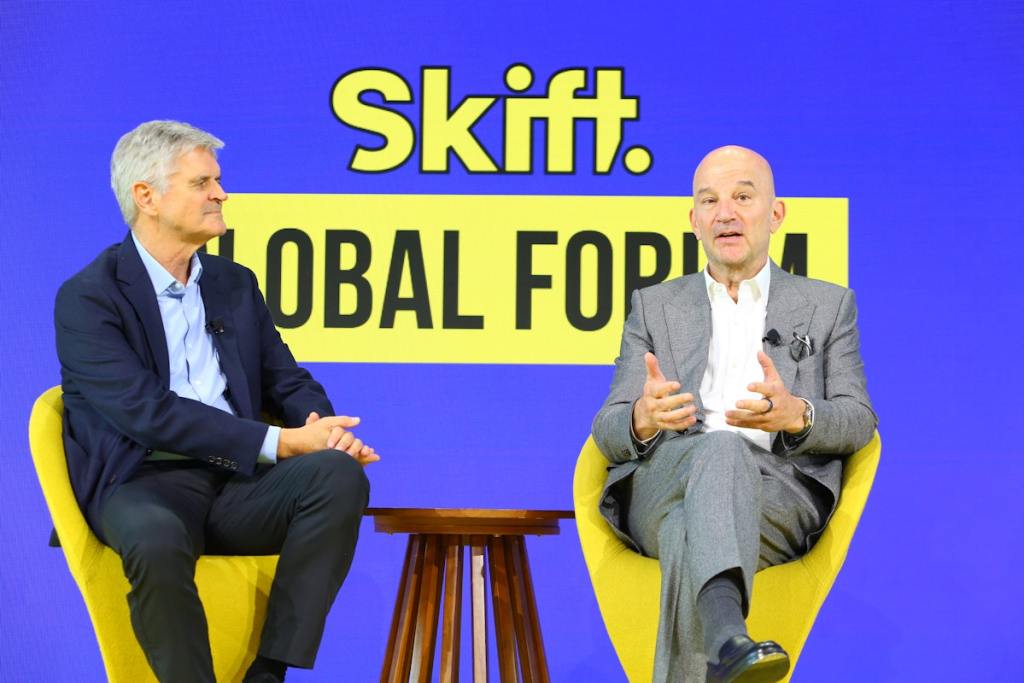
The Decision Brief Steve Case, Chairman & CEO, Revolution Greg O’Hara, Founder & Senior Managing Director, Certares Moderated by Seth Borko, Head of Research, Skift THE VERDICT AI is reshaping how travel is discovered, booked, and serviced. The investors betting the largest sums are putting their money elsewhere. Case and O’Hara both said no to investing in an AI trip planner — Case called it “a great service, but it’s not really a durable company.” Their shared thesis: physical assets, curated experiences, and trained human expertise are the most durable investments because AI makes them more valuable. PATHS FORWARD Invest where demand is rising and supply is hard to replicate. O’Hara described his framework as “HALO assets” — heavy asset, low obsolescence. He said Certares bought European high-speed rail because a potential €500 billion infrastructure buildout is expanding the market, and rolling stock is harder to get than a 777. He said his wellness and longevity portfolio has grown to 14, with revenue growing 30–35%, because “the TAM is rising and there’s not enough inventory.” The investment logic: find rising demand with constrained supply and fill it. Build platforms around curation. Case said Revolution’s Exclusive Collective — Exclusive Resorts, Inspirato, and Onefinestay — targets high-end travelers who “do not want more choices.” He said people want “a trusted partnership with a company or a person that they really can rely on to help them navigate through this.” Curation is a premium offering. “People … want less decision-fatigue.” Use AI to make existing expertise more efficient. O’Hara described the $6.3 billion sale of Amex GBT to Long Lake as validation that AI’s highest value is in amplifying trained humans. He said travel service businesses have “a lot of knowledge inside” that becomes training data for better agentic tools. Capital for AI in travel is not only going to start-ups, but also into the existing service businesses. WHAT TO WATCH Case said the 2028 presidential election will include “a referendum on AI” and that the politics are “moving against AI, against technology.” He said 10 states have already passed AI legislation, and without federal action, 50 states will write 50 different rules. Travel companies building AI strategies without accounting for regulatory risk are planning around only half the picture. Both investors said no to an AI trip planner and no to space tourism. Both said yes to members-only clubs. O’Hara said yes to an OTA “if it was named Booking or Expedia.” The lightning round was informal, but the pattern is clear: smart capital is flowing toward assets with scarcity and trust, and away from technology plays that are easy to replicate. Access all the Skift Takeaways from this event, as well as full session videos, presentation documents, and more editorial coverage at our Skift Global Forum attendees hub.
Capital Allocation: How Should Travel Invest in Its Future?
Full Article
Original Source
Read the full article at Skift →KhanList aggregates and links to publicly available news content. We do not host full articles from third-party sources. Always verify important information with original sources.