
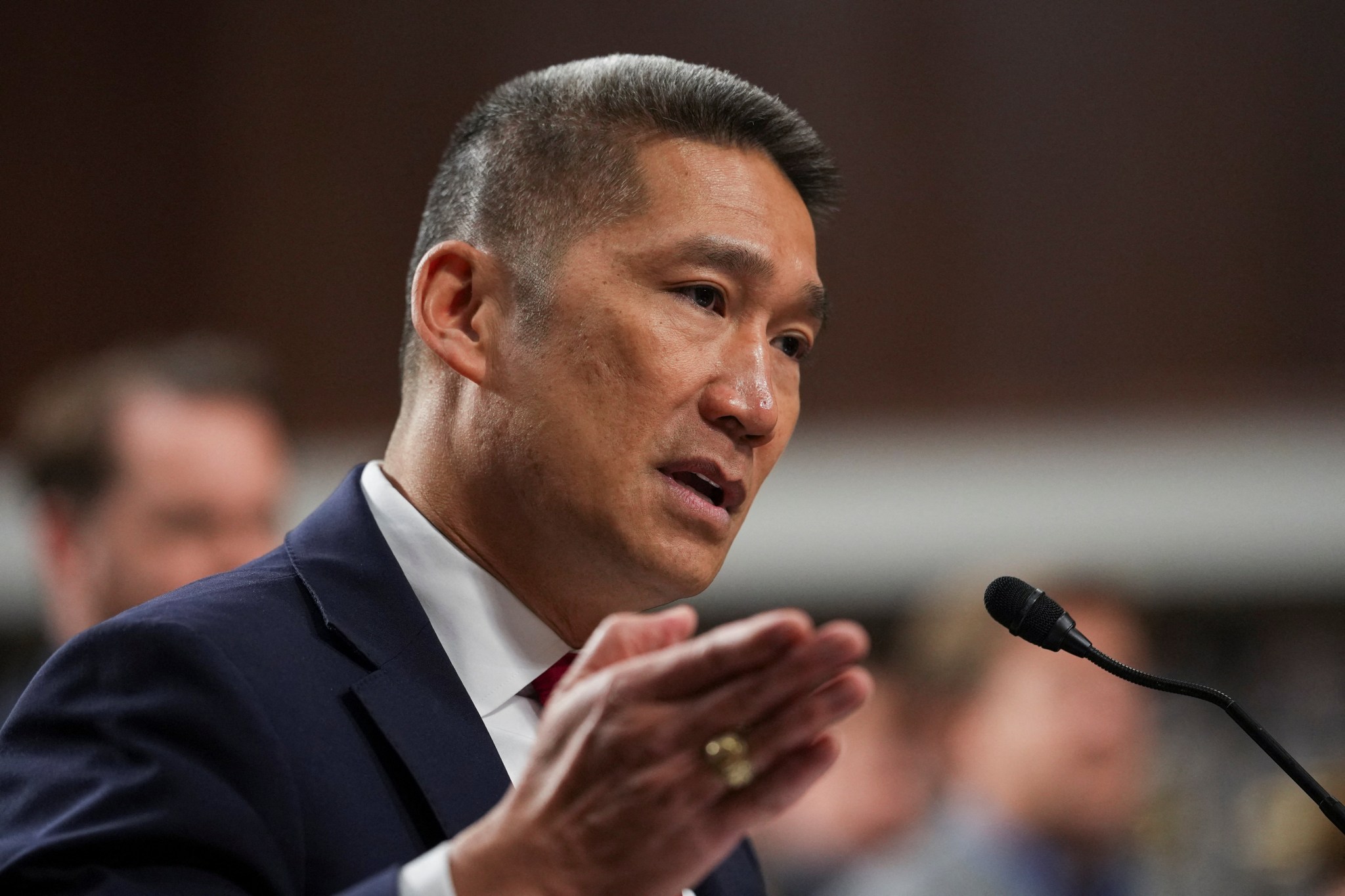
The nominee for Navy secretary faced questions from lawmakers Tuesday about sailors’ mental health, prolonged deployments and the service’s failure to notify Congress about the removal of a submarine’s command team. Before a Senate Armed Services Committee confirmation hearing, Acting Navy Secretary Hung Cao emphasized his commitment to providing adequate mental health resources to service members as the service continues to extend the time sailors are at sea. Cao also addressed the Navy’s move to keep lawmakers in the dark after firing three senior leaders aboard the Virginia-class attack submarine USS South Dakota for undisclosed reasons. “I have done deployments to Iraq, Afghanistan, Somalia,” Cao said. “I understand what our sailors and Marines are going through and I put mental health at the top of my concern.” Cao has publicly affirmed his commitment to the Navy’s Suicide Prevention and Response Task Force and acknowledged his own struggles with PTSD. A special operations veteran with over 25 years of service in the military, Cao took over for previous Navy Secretary John Phelan after he was fired on April 22. Mental health and long deployments After Military Times and several other outlets reported that sailors were jumping overboard off the Nimitz-class aircraft carrier USS Abraham Lincoln in the Middle East, Sen. Kirsten Gillibrand, D-N.Y., submitted an inquiry into conditions aboard the ship. In a Sept. 22 response letter, Cao publicly acknowledged to lawmakers that eight sailors aboard ships from the USS Abraham Lincoln carrier strike group attempted suicide during the Iran war. During the hearing, Cao said that most carrier strike groups deal with one to two suicides during deployments. With Lincoln, that number was zero because of the mental resources aboard ships. The aircraft carrier USS Abraham Lincoln leads a formation of ships from the Abraham Lincoln Strike Group as they transit the Indian Ocean. (Petty Officer 2nd Class James Evans/U.S. Navy) The nominee touted the chaplains and mental health professionals onboard ships as adequate tools to combat psychological strains service members may be facing as a result of their extended combat deployments. “You see it as eight suicide attempts; I see it as eight suicide mitigations,” Cao told Sen. Richard Blumenthal, D-Conn. Gillibrand scolded Cao for his chosen phrasing. “Please don’t call [them] attempted suicide mitigations,” she said. “That is such an insult. It’s an insult to these men and women who are devoting their lives to the armed services. When you say it’s mitigation, you’re compartmentalizing something that is clearly a mental health failure.” Lawmakers were also concerned over a trend of extended deployments. The USS Abraham Lincoln’s deployment lasted 321 days, 286 of which were lived without a port call. An MH-60S Sea Hawk helicopter takes off from the flight deck of USS Spruance in support of Operation Epic Fury, March 5, 2026. (U.S. Navy) The USS Spruance just set a post-World War II record for U.S. Navy destroyer deployment. And family members of troops aboard the USS George H.W. Bush, currently stationed in the Middle East, were told on Nov. 9 during a town hall meeting that they should prepare for a year-long deployment. Regarding these extended departures, Cao said they were in part due to the Navy’s fleet size, which currently has 286 ships. The sea service has deemed that it needs 355. In the interim, Cao said the Navy was employing several methods to reduce deployment times. “We are trying to accelerate… the unmanned surface vessels in order to relieve the 17 destroyers that are supporting the blockade right now, so we can put unmanned surface vessels out there to take their place and ensure that we can reduce the strain on the fleet,” Cao said. The Navy was also working to accelerate shipyard maintenance availabilities, the nominee said. Food shortages Cao was also asked about alleged food shortages during recent Navy deployments. Sen. Mark Kelly, D-Ariz., said concerned family members of sailors aboard the USS George Washington and USS Boxer said their children had lost significant amounts of weight because the ship didn’t have enough food. One parent said their child had lost more than 45 pounds, while another family member said their loved one was so malnourished that they were forced to rely on sustenance from care packages to maintain normal nutritional levels. Cao chalked up some of these instances to being picky. “It’s like my kids opening up the refrigerator door and saying, ‘There’s nothing to eat there,’” Cao said. Kelly rejected the characterization and said it didn’t align with shedding such a large quantity of weight. Hung Cao, the acting Navy secretary, fielded questions about his handling of updates to Congress and got into a verbal scuffle about suicide “mitigations” during his Senate confirmation hearing. When asked how Cao currently addressed food supply concerns for ships in the Middle East, the nominee said he received a brief every day about conditions aboard ships, including the number of days they had left before rations ran out. He cited the Arleigh Burke-class destroyer USS Gonzalez as a ship he had his eye on, as it only had a week’s supply left. Cao said he didn’t like for that number to dip below two weeks and assured Kelly that ships always had food. “It has never gotten to zero,” Cao said. “Not once.” Cao pledged to work with Kelly, if confirmed, to ensure that sailors received every resource they needed to remain healthy while serving their country aboard ships. USS South Dakota dismissals The Navy secretary nominee also attempted to explain why the Oct. 14 dismissal of the Virginia-class attack submarine USS South Dakota’s commander triad had not been disclosed to Congress. Ranking member Sen. Jack Reed, D-R.I., expressed concern that the Senate Armed Services Committee received no notification that the commanding officer, executive officer and chief on board were fired. They’d also yet to be debriefed on the circumstances that led to the shake-up. Cao confirmed that there was a “near mishap issue” and that an investigation was ongoing. But he said the decision not to relinquish information about the firings came from a desire to shield the relieved service members from negative media attention and the destruction of their careers. Reed appreciated the sentiment, but saw holes in it. “The reality is that when word leaks [about] the commander, the [executive officer] and the chief aboard the South Dakota, those names are easily correlated,” Reed said. “So denying us information about a very significant event in the Navy is not justified by protecting those individuals.” Later in the hearing, during a back-and-forth with Sen. Tim Kaine, D-Va., in which he once again pressed the nominee on the issue of not communicating the dismissals, Cao took ownership of the mistake. “There’s no excuse, Senator,” Cao said. “We will come up with procedures so I can inform you in a timely manner. I just didn’t want it to be blasted out on Navy Times.”
Cao addresses Navy suicide prevention, extended deployments and USS South Dakota firings during hearing
Full Article
Original Source
Read the full article at Militarytimes →KhanList aggregates and links to publicly available news content. We do not host full articles from third-party sources. Always verify important information with original sources.