
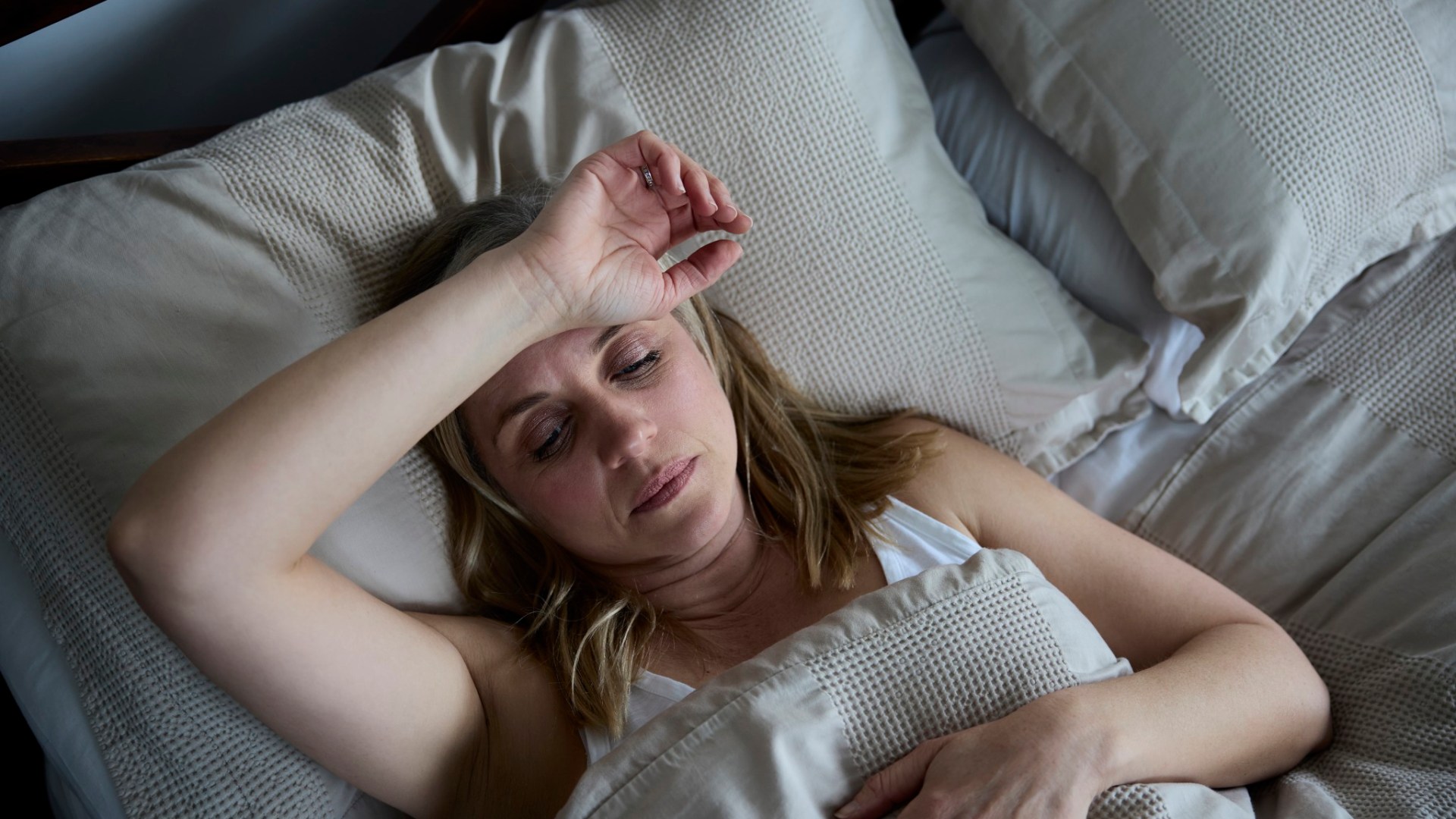
YOUR sugary diet, wind-down routine (or lack of), a screaming baby and even that pre-bed wine can all impact your sleep. But ever thought about the impact your external environment is having on your kip? Alongside diet and exercise, there are things in your bedroom that can also affect your sleep Credit: Getty Aside from the heat, there are six other reasons that your sleep is being disrupted Credit: Getty A UK survey by Vitawell revealed that the average adult in the UK now gets just six hours and 36 minutes of sleep per night, much lower than the seven to nine hours recommended by the NHS. What’s worse is that just 3 per cent of people say they wake up feeling completely refreshed. Sign up for the Health newsletter Thank you! “How you feel when you wake up is probably the best barometer of how well you are sleeping,” says Dr David Garley, GP & director of The Better Sleep Clinic. “It’s best not to make this judgment immediately on waking because sometimes you just need a few minutes to shake off the sleep. “But if for most of the morning you are feeling energetic with good focus, good concentration and not feeling a strong urge to go back to bed before lunchtime, then these are good signs that you are probably sleeping OK.” On the flip side though, if you’re tired all morning, reaching for caffeine and struggling to focus, you might not be sleeping very well, even if you think you’ve got your sleep routine down to a tee. Watch out for these sleep saboteurs… The floordrobe Having a messy bedroom could be one of the reasons you’re struggling with your sleep Credit: Getty If your room is more squalor than serene, it might be wrecking your sleep. Most read in Health From piles of clothes on the floor to clutter on the bedside table, mess can play with your mind. “Some people say ‘tidy room, tidy mind’,” says Dr Garley. It’s been proven to improve sleep; research in the journal Sleep studied 1,052 adults who, over five days, completed surveys about their sleep quality and housekeeping habits. Those who reportedly de-cluttered their bedroom reported better sleep quality and fewer sleep problems. Dr Garley says that a messy room can make a busy mind “even busier”, and this can have a knock-on effect on sleep. “Having very active, and in some ways disorganised thoughts around the time you are trying to sleep can make falling asleep more difficult,” he says. James Wilson, also known as The Sleep Geek on social media, says: “I have worked with some people who find mess comforting, but generally, a tidier room gives us the physical security that allows us to feel emotionally safe.” Have a tidy before bed – even if it means stashing clutter in baskets and boxes to deal with later. If there’s no scope to tidy and your mind is racing, Dr Garley suggests sleep journaling. “Before bed, write down everything that’s circling in your head: worries, tasks, reminders or things you’re trying to figure out,” he says. “Then you either make a small plan for them or consciously decide they can wait until tomorrow. “This compartmentalises your worries to other parts of the day. “This is a lot like tidying your room, but for thoughts rather than scattered clothes.” Noise outside Noises such as dogs barking, cars revving and sirens could also be disrupting your sleep Credit: Getty A noisy neighbourhood, planes, revving motorbikes or a dog barking in the middle of the night aren’t things you can control, but they can make sleep difficult – even without you realising. James says noisy environments are “an overlooked part of what impacts our sleep”. “Hearing is like our ‘alarm system’,” he says. “It’s the sense that switches off last and switches on first, and it’s designed to protect us from predators. “So sudden or unfamiliar noises in our environment are a surefire way to wake us up.” Dr Garley explains that even if noises don’t necessarily rip you completely from sleep, they can pull you into shallower states, which are less restorative. “So you may still wake up in the morning feeling unrefreshed,” he warns. Long-term, this can affect your health. In a study of six million people living near Heathrow airport, researchers at St George’s University of London looked at whether long-term exposure to aircraft noise could trigger heart-related health problems. For every 10- decibel rise in nighttime aircraft noise, the risk of a cardiovascular-related hospital admission rose slightly, the study found. Noise disturbing sleep increases blood pressure and stress hormones, which puts strain on the heart, experts say. Blocking out noise should be a priority come bedtime. “Some people find using either ear plugs or ear buds, or even a white noise machine or fan can help, as some people want silence and some people want a consistent noise that distracts the brain,” says James. “Earbuds can include features like Active Noise Cancelling Technology, which creates frequencies to counteract noises in the environment.” Bright street lights Artificial light could be shortening the number of hours your sleep at night Credit: Getty – Contributor There’s a reason many people prefer blackout blinds – they know it helps their kip. “Light works in a similar way to noise, in that perceiving light through our eyelids, even as you sleep, may not wake you up completely but may pull you to these shallower states of sleep which are less restorative,” says Dr Garley. A huge US study found that artificial light at night, known as ALAN, might be linked to shorter sleep duration. Researchers looked at more than 333,000 adults to see whether people living in brighter neighbourhoods were more likely to get too little or too much sleep. The research, published in the journal Environmental Research, found that women in the brightest neighbourhoods were 16 per cent more likely to report short sleep, while men were 25 per cent more likely to report short sleep compared to those living in darker areas. Another study in the same journal focused on more than 4,000 people living in the five largest cities in Bulgaria and examined whether brighter neighbourhoods at night were connected to poorer mental health. Participants were asked about sleep problems and satellite imagery was used to measure how bright each person’s neighbourhood was at night. The results found that people exposed to more nighttime light reported more sleep problems and these problems were also strongly linked to higher depression and anxiety scores. “Even dimmer lights that we may not even notice during the day can cause this sort of problem,” notes Dr Garley. If you have your TV on standby, a charging light or even a fire or smoke alarm in your room with a light, get rid of it. “Try fitting blackout blinds and curtains, or use an eye mask,” recommends James. “If a neighbour’s security light, for example, is shining into your bedroom, it would be worth starting out by asking them to adjust where it points.” The heat A bedroom temperature any warmer than 21 degrees could ruin your sleep Credit: Getty It’s hard in the summer months, but keeping your room cool is paramount for a good sleep. “The bedroom should feel cool,” says Dr Garley. “The reason for this is that as you move from your wake phase to sleep phase, your core body temperature drops by about 0.5 to 1.5 degrees celsius. “If you are very warm, you can struggle to make this transition into sleep. “This is also why it is so difficult to sleep during a heat wave.” Aim for a bedroom temperature of between 16 to 21C; any warmer, and sleep can be ruined. Even half a degree of extra warmth can impact sleep. Research in the journal Sleep analysed over 3.75 million nights of sleep from more than 34,000 adults in the US and found that as bedroom temperature increased, sleep got slightly worse, with more time spent falling asleep and more time spent awake during the night. To help keep your bedroom cool in the summer, keep curtains drawn and blinds closed during the day. Your furniture The placement of your bed in your bedroom could be another factor impacting your sleep Credit: Getty Clutter caused by too many shelves, drawers and cupboards is one thing, but the placement of your furniture might also cause some issues. “Ensuring the bed is in a place compared to the door that makes you feel safe is important,” says James. Feng shui, the ancient Chinese practice of creating harmony and positive energy flow, suggests your bed should always be placed so you can see the bedroom door. But your bed and door should not be lined up against the same wall. “If anything in your bedroom makes you feel on edge, or actively disrupts your sleep, then do something about it,” adds James. “A mirror reflecting into your eyes could cause a problem,” says Dr Garley. “You don’t necessarily need to remove a mirror from your room, but take a few extra steps to make sure your room is completely dark while you’re sleeping.” Your WFH set-up You should ideally be working in a different spot to where your sleep Credit: Getty If you live in a smaller home or flat, your work life might encroach on your sleep schedule. Ideally, you want to be working in a different spot to the one you sleep in. “Walking into an office to work can put you in the right frame of mind for work. “But if you use the same room as a bedroom, this can sometimes give rise to difficulties,” says Dr Garley. You might find it harder to switch off at night as you lie in bed thinking about work tasks which are sitting just across the room from you. Unfortunately, it’s not always possible to change your work location. If that’s the case, “try to use the room in a different way”, says Dr Garley. “This might mean not sitting on the bed whenever you work and making sure you have a comfortable chair to sit in,” says Dr Garley. “Different types of lighting can give the room a different ‘feel’ when you are sleeping, as opposed to when you are working.” Brighter, cool lighting can help you feel alert during work hours, while softer, warmer lamps work well in the evening, when you need to wind down. Comment now
Can’t sleep in summer? The 6 reasons your bedroom is destroying your sleep that have NOTHING to do with the heat
Full Article
Original Source
Read the full article at Thesun →KhanList aggregates and links to publicly available news content. We do not host full articles from third-party sources. Always verify important information with original sources.