
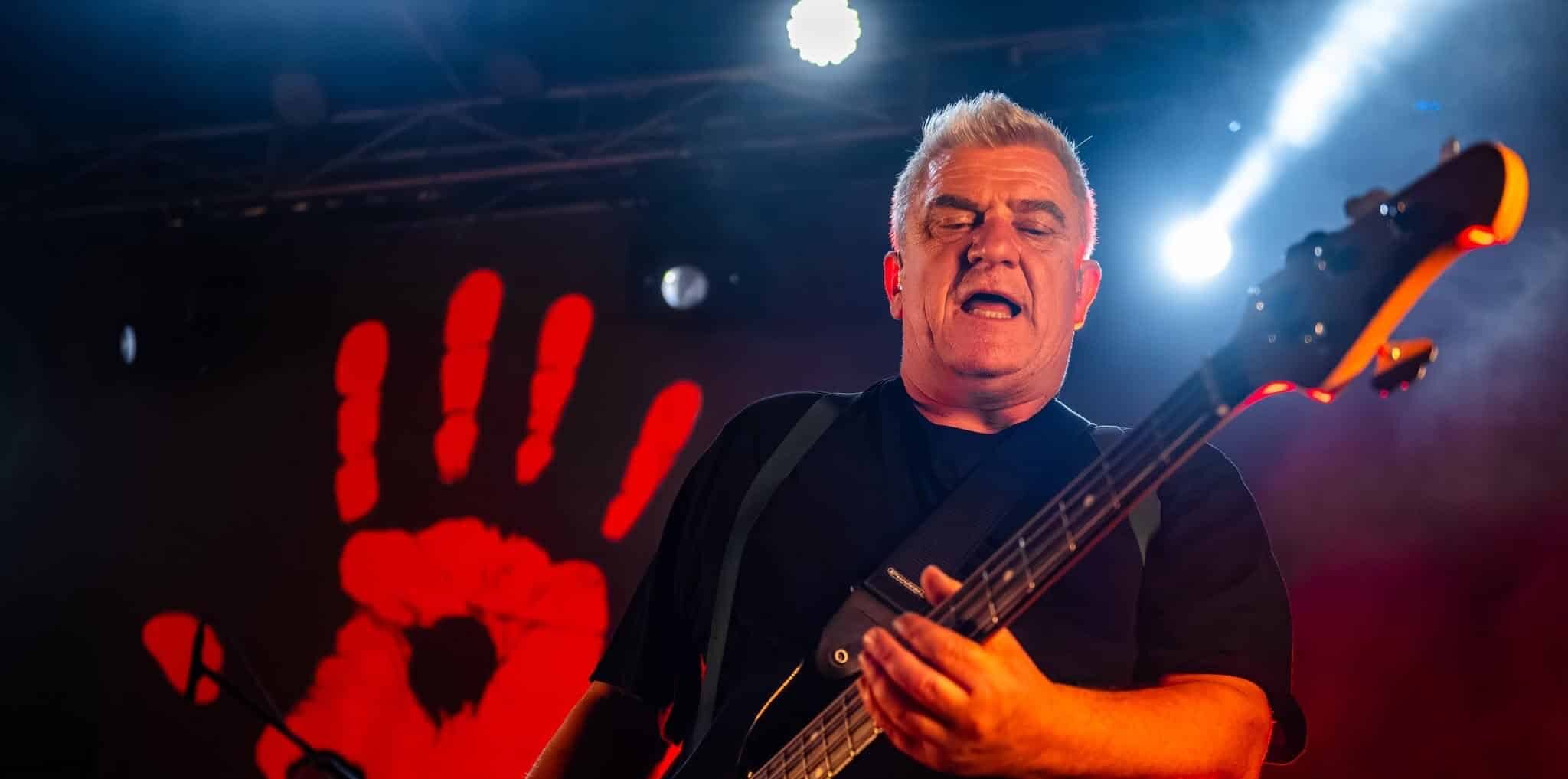
Music artists who have expressed support for anti-government protests in Serbia say live bookings have dried up as generous public funds are channelled to pop and folk performers aligned with the ruling party. Vladislav Kokotovic had been looking forward to performing at Nojz Fest in the eastern Serbian town of Negotin next month. The 56-year-old is the bass guitarist for legendary Serbian punk-rock band Goblini [Goblins], formed in 1992 just as socialist Yugoslavia was falling apart in war. Goblini’s songs became popular protest anthems during the repression, economic implosion and international isolation of the 1990s, and the band’s members are still highly vocal on issues of social injustice. Little surprise, then, that authorities in Negotin decided to pull the plug on this year’s Nojz Fest, the organisers of which have expressed support for ongoing student-led protests against the country’s ruling Serbian Progressive Party, SNS. Kokotovic said cancellations have become a regular occurrence since the protests began in late 2024 after a concrete canopy at a newly renovated railway station in northern Serbia collapsed, killing 16 people. “When they cancel your show, you feel miserable, like someone put their hand in your pocket,” Kokotovic told BIRN. “But culture belongs to us – it is the fabric of this country, not theirs. The only silver lining is that it shows they are completely terrified. Banning an artist is picking on the most vulnerable. Culture is not aggressive. It is something meant to fuel us with energy.” Not everyone is being cancelled, however: musicians and singers who have spoken out in support of the SNS and Serbian President Aleksandar Vucic are reaping the rewards, playing to often sparse crowds at concerts funded from local coffers. Indeed, public procurement data analysed for this story show a pattern of local public tourist organisations and cultural centres regularly bypassing public tenders to award contracts directly to ‘desirable’ musicians. ‘There’s no way you’re playing’ Miroslav “Mire” Mijatovic performs with his band, Ritam Nereda, at a rally organised by high school students in Novi Sad in April 2025. Photo: Dragana Prica Kovacevic The outpouring of anger over the fatal canopy collapse has snowballed over the past 18 months into the most serious challenge yet to the 14-year rule of Vucic and the SNS, an offshoot of the ultranationalist Radical Party that shared power with Serbian strongman Slobodan Milosevic at the tail end of the 1990s. Vucic and the government have sought to portray the students and their supporters as anti-Serbian disruptors and puppets of foreign states bent on thwarting Serbia’s development. Parroted by pro-government tabloid media, SNS officials call the protesters blokaderi, or ‘blockaders’, in reference to their use of roadblocks as a protest tactic. It’s a term that has also been lobbed at the organisers of Nojz Fest, the Citizens’ Association S.U.P.A. On July 3, just over a month before the festival was due to happen, the organisers announced its cancellation on Instagram, saying “times have drastically changed” since Negotin authorities chipped in with funding in 2024 and 2025. “Nojz has never let politics influence its decisions when it comes to organising events or selecting artists and production,” they wrote. “Instead, every choice has been driven solely by quality and by what is most relevant at the moment. However, the core grievances against us come down precisely to that.” The City of Negotin did not respond to a request for comment. A host of artists and events have faced a similar fate, their concerts cancelled at commercial venues and their chances of being booked for events financed by the state all but erased. They include the alternative rock band S.A.R.S., Samostalni referenti, Marko Louis, Marcelo, and pop and folk stars such as Seka Aleksic, Natasa Bekvalac, Topalko, and Zejna. All of them have seen scheduled performances abruptly scrapped by local authorities under the uniform guise of ‘technical overhauls’, ‘venue restructuring’, or ‘sudden security and safety logistical constraints’. Novi Sad band Ritam Nereda, an earlier backer of the protests, is performing more in the wider Balkan region because opportunities in Serbia have dried up, said bassist Miroslav ‘Mire’ Mijatovic. “Our manager would receive phone calls with lines like, ‘If we bring you in, they’ll send every inspection in the world after us and we’ll lose our jobs’, or ‘The municipality called; they said there’s no way you’re playing’,” Mijatovic told BIRN. “After that, booking gigs became impossible. Quite simply, we are a problem,” he said. “We haven’t kept count of the cancellations, but the fact that we have only had two concerts in Serbia over the past six months, and have none scheduled for the rest of the year, speaks for itself.” The institutional squeeze on the domestic music scene did not spare the biggest festival in Serbia, the world-renowned EXIT Festival in Novi Sad. The rupture came when EXIT organisers chose to support the escalating protests. The state’s response was swift, punitive, and financial: the massive provincial and municipal budget allocations that the festival traditionally relied on to sustain its complex infrastructure were abruptly frozen. A quarter of a century after it was founded amid a groundswell of opposition to Serbian strongman Slobodan Milosevic in 2000, EXIT upped sticks and relocated to the Montenegrin coast, declaring the “gates of freedom” in Serbia closed. Hostile reception Singer Jelena Karleusa with Goran Vesic, then Serbia’s Minister of Construction, Transport and Infrastructure, at a Serbian Progressive Party rally in May 2023. Photo: Vesna Lalic/Nova.rs Some musicians are being booked, however. Municipal budgets, even in Serbia’s poorest regions, are tapped heavily to help finance open-air concerts on town squares during national holidays, summer festivals, and New Year’s Eve celebrations. By law, public institutions must issue a tender for interested bidders for any good or service worth more than a million dinars, or roughly 8,500 euros. This obligation can be waived in emergencies or if only one specific company can provide the particular good or service. Data from the Public Procurement Portal show that local authorities regularly skirted regular procurement procedures to award contracts to production agencies representing artists who have spoken out in the support of the SNS, for anywhere between 15,000 and 50,000 euros per concert. For example, turbo-folk diva Jelena Karleusa, who threatened to mow down protesters with her car, became the face of state-backed concerts in towns including Subotica, Loznica, Odzaci, and Vrnjacka Banja, reaping between 30,000 and 50,000 euros per event. Folk veteran Zorica Brunclik was paid some 18,400 euros to perform in Vranje and 16,900 in Surdulica; Ana Bekuta, whose late husband was a senior member of the co-ruling Socialist Party of Serbia, SPS, received 38,400 euros to perform in Cacak and 9,400 euros for a concert in Svilajnac. Another beneficiary is Gen-Z pop-trap star Andjela Ignjatovic, stage name Breskvica [‘Little Peach’] netted 40,000 euros to perform on New Year’s Eve in Vrnjacka Banja and 11,100 euros for an appearance at a grill festival in Leskovac. The choice of artist has sometimes backfired. In June last year, residents of the northern municipality of Odzaci overwhelmingly boycotted a two-day, 140,000-euro event at which Karleusa performed, while two months later, in Loznica, environmental activists blew whistles at another state-funded Karleusa concert, forcing the singer to cut short her set. Authorities have taken to deploying riot police to secure Karleusa’s public appearances. Similarly, in January this year, Ana Bekuta was pelted with snowballs and booed during a concert in Cacak. Several people were arrested. Rock performer Djordje David was given a similar reception during a state-funded event in the northern town of Sombor in October last year, when some in the crowd chanted anti-government slogans and turned their backs on David. Asked about the cancellation of artists supportive of the protests, David said such claims were “tendentious”. “People who do not support the ruling team are absolutely playing,” he said. An analysis of media reports shows that since the start of 2025 David has performed at eight events funded from local municipality coffers. Significantly more popular alternative acts, such as Ritam Nereda, Goblini, and Atheist Rap have not performed at any. Contacted by BIRN, David declined to comment on the hostile reception he has received at some concerts, saying: “This is old news; we’re moving forward.” BIRN contacted Karleusa, Bekuta, Brunclik and Ignjatovic for comment but received no reply. Neither the SNS nor any of the city or municipal authorities mentioned in this story responded to requests for comment. Self-defeating Serbian rapper Marcelo, who publicly supported the student protests and performed at a number of rallies, is one of the artists whose performances are being cancelled. Photo: Dragana Prica Kovacevic Mijatovic, from Ritam Nereda, said his band will endure, describing the challenges it faces as “new hurdles that we have to cross together with everyone”. “If that means there will be no concerts, believe me, that is the smallest sacrifice we are prepared to make,” he told BIRN. Kokotovic, of Goblini, said the ruling party tactics would ultimately backfire. “Every cancelled concert is a shot in their own foot,” he said. “Can they really ban someone from singing our songs in the shower or stop them from watching a banned actor in a movie on their computer?” The band will not waver in its support of the students, he said, framing it in terms of brain drain that has blighted Serbia since the 1990s as young Serbs leave in search of work, better pay, and the rule of law elsewhere. “It’s not even a question of whether we should support them or not – they are our children, and our own kids are exactly that age,” Kokotovic told BIRN. “My only son lives abroad, and he is doing well. But he should be here. Even if he wants to travel the entire world, he should ultimately be able to return to his mother and father.” Charity concerts not spared In October 2025, near Novi Sad, the Kisac Citizens’ Assembly, a grassroots body formed as part of a self-organisation drive triggered by the student protests, booked veteran punk band Atheist Rap for a charity concert to raise money for two local children in need of expensive medical treatment. Both the Assembly and the band have been vocal in their support of the protests. The concert had to be cancelled, however, because the Kisac local authorities refused to issue a permit. “The number of cities and venues where we can still perform and connect with our audience is shrinking at an alarming rate,” Atheist Rap said in a statement at the time. “The concert in Kisac is just one in a long line of cancelled or banned shows, but none has hurt quite like this one.”
Cancelled: Serbian Musicians Pay Price of Anti-Government Protest Support
Full Article
Original Source
Read the full article at Balkaninsight →KhanList aggregates and links to publicly available news content. We do not host full articles from third-party sources. Always verify important information with original sources.