
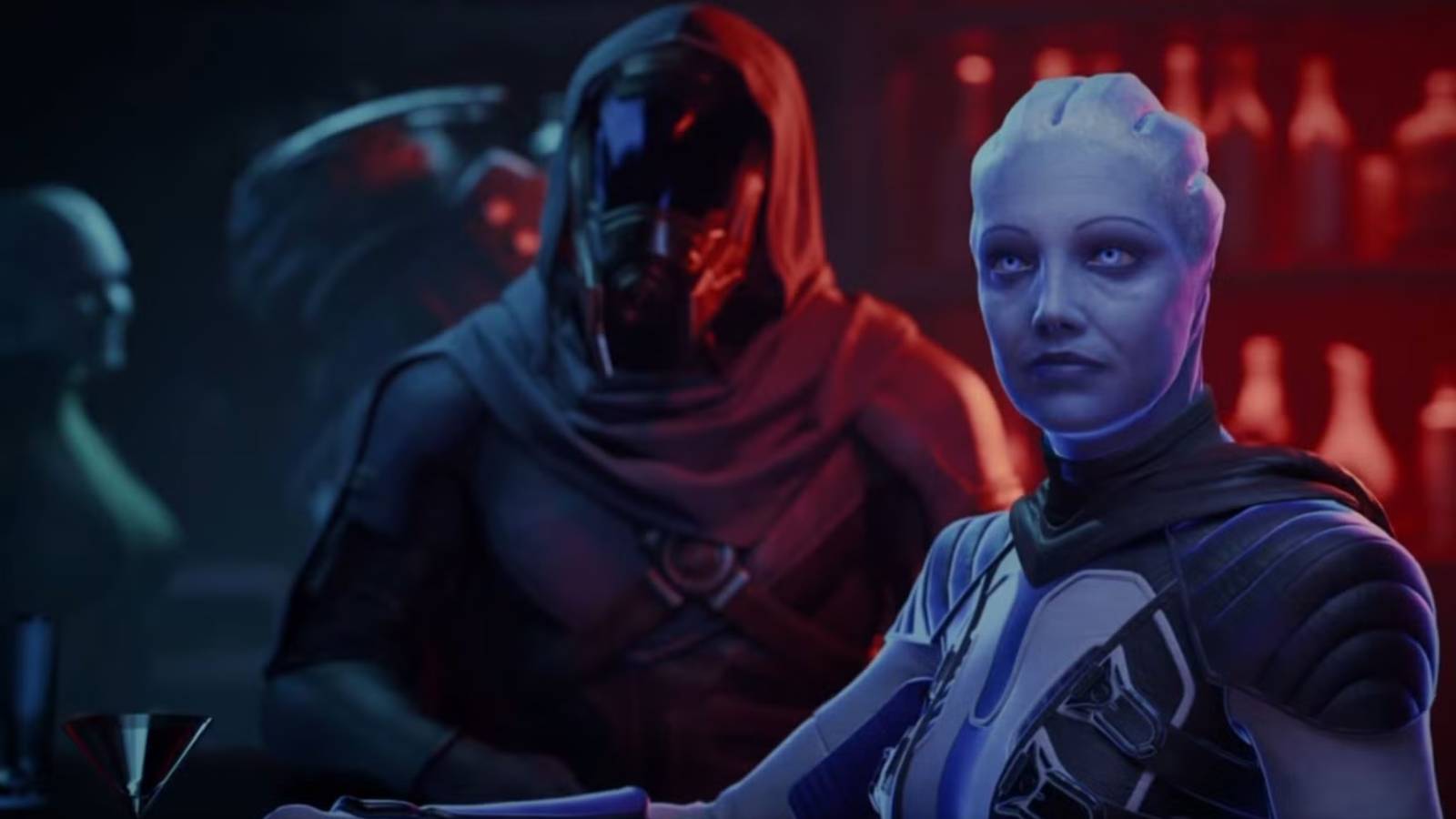
Published Nov 24, 2026, 10:28 AM EST Elijah is a freelance news writer at Polygon. He was an associate editor at The A.V. Club and Paste, and has been featured in outlets like Game Informer, Fanbyte, Unwinnable, and more. He loves media in all forms, from fighting games and horror flicks to slow cinema and visual novels. He's from the Greater Boston area. Universe would have likely featured more returning characters beyond Liara Image: BioWare Following the cancellation of the fifth mainline Mass Effect game, Mass Effect: Universe, fans can't help but wonder what could have been. In a recent Reddit AMA, Universe writer Cat Valente answered questions about the sequel, including how it would have addressed squad mates’ fates and Mass Effect 3’s controversial endings. Valente is an award-winning sci-fi and fantasy author and a Mass Effect series veteran, having previously written the 2018 novel Mass Effect: Annihilation. She worked on Universe for three years. How would Mass Effect: Universe handle existing characters? Image: BioWare/Electronic Arts While Valente was clear that she had to avoid certain specifics when discussing the canceled Mass Effect: Universe to avoid breaking NDAs, she hinted at which characters from previous Mass Effect titles would likely have appeared in the game. Universe would have been set 600 years after the original Mass Effect trilogy, but since certain species, like Asari and Krogan, can live 1,000 years or more, many characters from Mass Effect 3 could still be alive. Based on a leaked trailer, we already knew Liara T’Soni would appear in the game, but Valente hinted that other characters likely would as well. “I think the best way to answer your question is to say that any character who physically *could* survive, we considered allowing to survive into the new game and made decisions on them,” Valente said. “We thought about all the things you’d have wanted us to think about, and I hope you do believe that, because it’s the truth. Everyone in that room loved those characters, or loved to hate them, as much as any fan. We took each and every one of them and their fates very seriously.” Humans, Salarians, Turians, and Quarians don’t live long enough to survive for 600 years, so these characters were out of contention for a return. Beyond Liara, Grunt could certainly have appeared in Universe, as Krogan can live for centuries, and he was “only” a few hundred years old. Wrex is much less likely, given that he was implied to be close to a thousand years old already, and the same goes for the Asari Samara, but it's still possible in both cases. It’s unclear how the game would have handled synthetics like EDI, given how the ending of Mass Effect 3 hinges on the player’s choice about how to handle coexistence between organics and machine life. When asked if the writers had considered what would happen to other squad members who wouldn’t have survived until Universe, like Garrus, Tali, and Wrex, she said, “You would have been able to know everything you wanted to know about them.” “I don’t have headcanons about those fates, I have canon-canons," Valente added. “I know you’d have been able to find out about them because one of my jobs was to write all those fates and their possible variations (all then submitted to the room, workshopped with everyone, and sent to higher-ups for approval...).” How would Mass Effect: Universe handle Mass Effect 3's endings? Image: BioWare Beyond squad mates, Valente addressed how Universe would have handled the ending(s) of the Mass Effect trilogy, which she described as one of the game’s biggest writing challenges. She and the team “worked specifically, and for a very long and laborious time, on handling the endings in a way that wouldn’t piss everyone off, at least not piss them off completely, that wouldn’t make them feel like nothing mattered, wouldn’t privilege any one kind of player over another, but also allow us, somehow, to actually write a coherent story going forward, within the limits of having to do it in a playable mainstream video game and not a post-modern 3000 page novel.” “But we did our best, and I think we landed in a good place. There wasn’t one single solution, but several working together, and unfortunately I can’t say any more than that.” She added that “There was an answer, yes, I know it, as [sic] least inasmuch as I know what it was when I was working there, because part of it was my job, and we tried our damnedest to do right by the story and the fandom. That room was *full* of ambition and enthusiasm, and I don’t think it could have been in better hands. We knew all the discourse on the endings, of course we did, and I do think as a fan I would have been happy with the solution (at least what it was when I left) if I booted up the game having had nothing to do with it.” Mass Effect 3 infamously ended with a choice about future coexistence between humanity and synthetic life: destroy all intelligent machines, “control” them, or create a synthesis between organic and synthetic life. Valente also teased that the game would address lingering questions from Mass Effect: Andromeda, including the identity of The Benefactor, and introduce entirely new alien species. “I don’t think there’s a problem with saying of course there were going to be new aliens?” Valente added. “We all pitched new species and some were accepted and moved along to art etc and some weren’t. Same with the squad. All of us pitched squad members and our directors chose between the pitches. I can’t give you any more than that.” Although a tiny glimmer of hope remains that BioWare and Mass Effect: Universe could be revived — a politician alluded to the possibility of the Canadian government helping BioWare buy itself back from EA — a comeback still seems like a long shot. If nothing else, we now have a slightly better idea of where Universe would have gone next.
Canceled Mass Effect Addressed Squad Members’ Fates, Writer Reveals
Full Article
Original Source
Read the full article at Polygon →KhanList aggregates and links to publicly available news content. We do not host full articles from third-party sources. Always verify important information with original sources.