
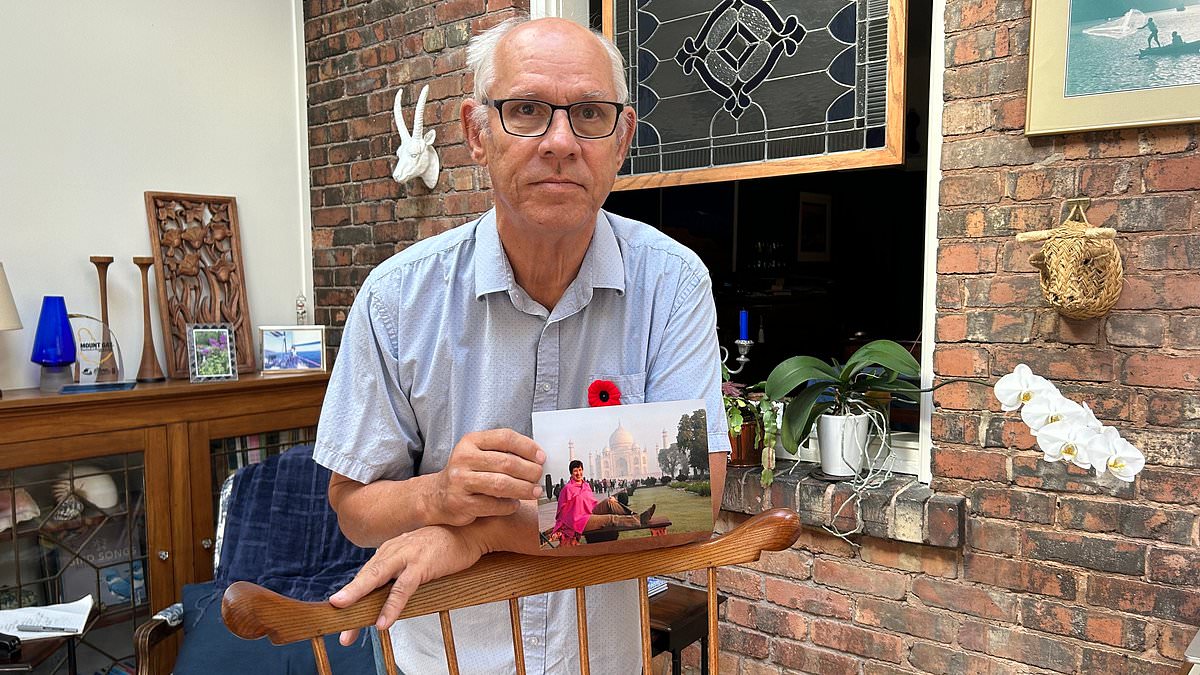
A Canadian widower, who lost his beloved wife to suicide, is calling on the government to offer people like her assisted suicide. Diane McDowell, 71, took her own life on October 25 after dealing with severe depression for decades. A month and a half beforehand, she had told her husband, David Slater: 'I don’t want to die, but I don’t want to live like this,' he recalled to The Canadian Press.McDowell was not eligible to apply for Medical Assistance in Dying (MAID), as mental illness is not among the approved list of conditions. However, Slater said it should be, and that he would have supported his wife's decision to end her own life with dignity. 'The fact that I couldn’t sit and talk to her about that on her deathbed. You know? That’s wrong,' he told The Canadian Press. Slater said he and his wife could have talked about one of their favorite cafes in Paris, where they would end up for ice cream and coffee at 2am on their visits to the city. Or even their other travels, as the childless couple often visited new places. 'When things really started to look poor, she did talk about MAID. I would have supported her in that,' he told the outlet. 'I told her I would.' David Slater is still mourning the loss of his wife, Diane McDowell, who took her own life on October 25 after suffering from depression for decades 'When things really started to look poor, she did talk about MAID. I would have supported her in that,' he told the outlet. 'I told her I would.' McDowell was not eligible for MAID Slater said his wife's life would have ended either way, but MAID would have let her die with the 'dignity with which she lived her life.' Canadian officials have previously considered expanding MAID for those with severe mental health conditions and it was scheduled to go into effect. However, in October, the government introduced legislation to stop the mental health expansion. Justice Minister Sean Fraser, who introduced the legislation to block the MAID expansion, has read McDowell's obituary and told The Canadian Press that it moved him. 'And you do your best to, in the presence of a wide range of opinions, take decisions that have the potential to preserve life where possible, without being inconsiderate towards people who don't see a path for themselves,' he told the outlet. Fraser said he had spoken with people who wouldn't be here today if MAID had allowed them to die. He also spoke with medical personnel, who told him that it would be extremely difficult to say with certainty a person's life couldn't get better with treatment. 'I'm not blind to the struggle that people have when they live with mental illness with deadly consequences,' he told the outlet. He had recently lost a close childhood friend, who had been battling mental illness for more than 20 years, to suicide. 'And they tried everything, too,' he said. Parliament member, Robert Oliphant, who has lived next door to Slater for 16 years, attended McDowell's funeral. Canadian officials are gearing up to vote on whether or not MAID should include mental health patients. Slater believes it should. Slater said his wife's life would have ended either way, but MAID would have let her die with the 'dignity with which she lived her life' Oliphant has been gearing up to vote on another MAID expansion, which would allow dementia patients to consent before the disease progressed too much, among other conditions. He said McDowell's death made the vote 'personal' to him. 'Maybe it does take the death of an innocent person to spark us to say, no, we have to help this to not happen to another person,' he said. Prior to her death, McDowell had been hospitalized twice for mental health, spending a month at Toronto General Hospital and later three months under intense supervision. McDowell also went to an outpatient program at the Homewood Health Centre, a mental health facility. She had even considered flying to Switzerland to participate in an end-of-life program, Slater said. Eventually, Slater said, he realized his wife's condition was going to be fatal. 'It took me a long time to understand. Probably. I knew she was ill and, you know, you’ve heard the old: "Oh, just snap out of it." Well, there’s no snapping out of it,' he told The Canadian Press. Prior to her death, McDowell had been hospitalized twice for mental health. Eventually, Slater said, he realized his wife's condition was going to be fatal 'And why would a woman who has had the life she had – had the most amazing retirement – why would she choose to lie on the bed and suffer?'There was no stone left unturned.' He also recalled being woken up in the middle of the night from the sound of the headboard banging on the wall. His wife was having a bad anxiety attack, causing the bed to shake, he said. Slater said his wife would not have had to suffer as long if MAID had been an option, and her family could have been around when she died. 'It could have been dignified,' he told the outlet. Canada's MAID program has faced plenty of controversy, as some families say it was too easy for their loved ones to end their lives through it. Doctors Gary Rodin and Madeline Li from the University of Toronto shared mounting fears among Canada's healthcare professionals over increasing cases of euthanasia approvals.The psychiatry professors said they aren't opposed to legalized MAID, but stressed that Canadian law does not require healthcare professionals to guide patients toward seeking alternative help.Parliament member, Robert Oliphant, who lives next door to the Slater for 16 years, attended McDowell's funeral and said her death will factor into his decision. Justice Minister Sean Fraser introduced the legislation to block the MAID expansion. He said McDowell's death moved himIn an opinion piece in The New York Times, the doctors said that the procedure is intended to provide a 'dignified' last resort, typically for those who are terminally ill.But, in recent years, 'too many people are receiving the procedure without the opportunity for careful reflection about it with a health provider,' Rodin and Li wrote.'In some cases, patients are being approved who should not be,' they added, citing mounting reports of euthanasia being approved for patients claiming loneliness or poverty.Rodin and Li said they saw how finding alternative help and counseling for a patient had saved their life from a low point in mental health.More than 200 people in Ontario alone chose to die within 24 hours of their approval in 2023, a 2024 Ontario report found, The Free Press first reported.Of the 219 deaths, 30 percent of them chose a same-day procedure.In 2024, across all of Canada, 16,500 people participated in the MAID program. The Daily Mail has reached out to Slater, Oliphant and Fraser for comment. If you or someone you know is experiencing suicidal thoughts or actions, please call the National Suicide Hotline at 988.
Canadian widower whose depressed wife died by suicide calls on government to offer people like her euthanasia
Full Article
Original Source
Read the full article at Dailymail →KhanList aggregates and links to publicly available news content. We do not host full articles from third-party sources. Always verify important information with original sources.