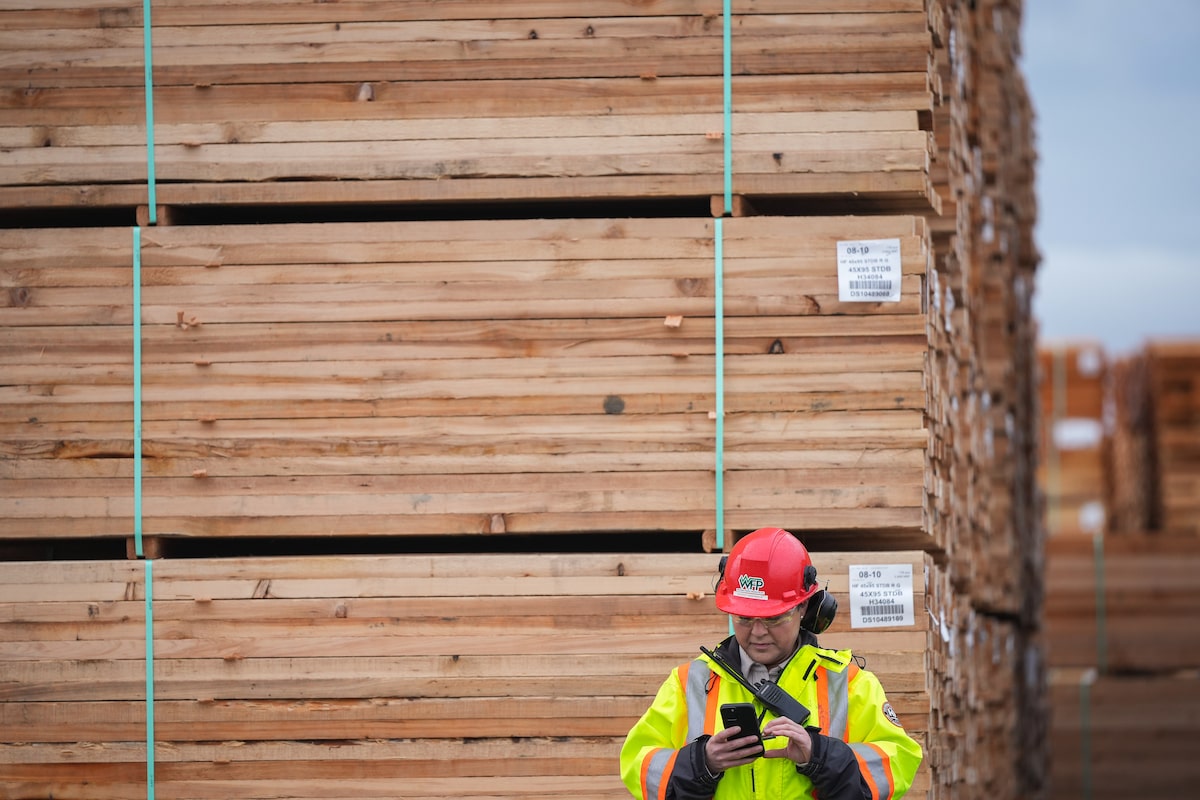
Open this photo in gallery:A worker stands near a stack of lumber at a sawmill, in Nanaimo, B.C., in March, 2025. Washington says that the tariffs on lumber should not be part of the current talks because a different set of levies on the industry are being reviewed.DARRYL DYCK/The Canadian PressCanada’s negotiating team remains hunkered down in Washington on Monday, seeking a trade deal that will avoid U.S. President Donald Trump’s latest round of tariffs from taking effect in less than two days time.Dominic LeBlanc, the minister responsible for Canada-U.S. trade, and chief trade negotiator Janice Charette are trying to land an agreement that would lower Mr. Trump’s tariffs on Canadian autos, steel, aluminum and forest products. In exchange, the U.S. has demanded that Canada concede on a list of trade demands, including ending retaliatory auto tariffs of its own, having provincial premiers return American alcohol to store shelves and stop Buy Canadian procurement policies, and change the way dairy licences are allocated.Mr. LeBlanc and Ms. Charette spent all last week in the U.S. capital, bargaining with U.S. Trade Representative Jamieson Greer and his officials. They held a virtual meeting on Sunday afternoon. Prime Minister Mark Carney arrived back in Ottawa on Sunday night after a week-long holiday in Italy.Mr. LeBlanc’s office did not respond to questions on Monday about when the pair would next meet with Mr. Greer.The Globe and Mail has reported that two of the sticking points in an agreement are autos and forestry.On autos, the U.S. has offered to lower tariffs from 25 per cent to 15 per cent and maintain an exemption for the value of U.S. content in Canadian-made cars. Canada has insisted that the tariff rate is still unsurvivable for the auto industry and also demanded an exemption for the value of all content made in the U.S.-Mexico-Canada Agreement zone.On forestry, the U.S. is insisting that the industry not be part of these discussions since a different set of tariffs on lumber are being reviewed by the Commerce Department. Canada, however, wants the current set of tariffs on lumber cut down.Also factoring in are U.S. demands that Canada offer it right of first refusal on critical minerals, consummate its long-delayed purchase of F-35 fighter jets, and buy U.S. gear to join the Golden Dome missile defence system. Many of the specifics of these are expected to be worked out in future deals, but progress on them could influence what Canada is able to get in the agreement currently under discussion.If there is no deal by Wednesday, Mr. Trump has threatened to impose tariffs on US$20-billion more of Canadian goods, including electronic equipment, alcohol and dairy. These levies would be done under Section 338 of the Smoot-Hawley Tariff Act, while Mr. Trump’s current sectoral levies on Canada use Section 232 of the Trade Expansion Act.If Mr. Trump’s 338 tariffs kick in, Ms. Charette has told Mr. Greer that Canada would stop negotiating and retaliate.Whether Mr. Carney would be able to sell a deal, should one be reached, is an open question. What’s on the table would mean Canada accepting some of Mr. Trump’s tariffs while also making concessions and not retaliating.The agreement of provincial premiers, meanwhile, would also be necessary to fulfil some of Mr. Trump’s demands.
Canadian negotiators remain in Washington as tariff deadline looms
Full Article
Original Source
Read the full article at Theglobeandmail →KhanList aggregates and links to publicly available news content. We do not host full articles from third-party sources. Always verify important information with original sources.