
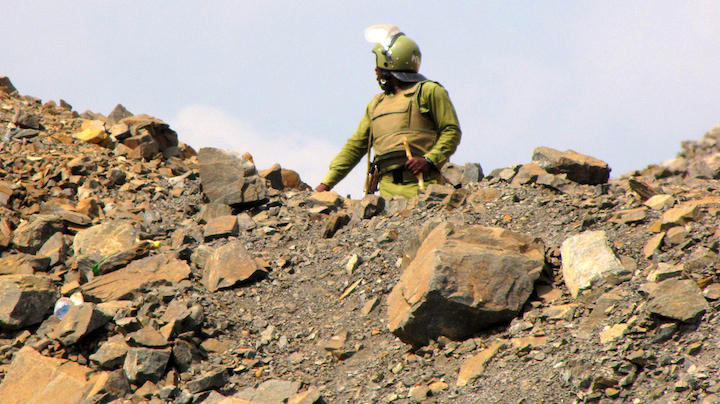
Canadian extractive industries have been linked to the displacement of at least 300,000 people in Africa over the past 30 years, the Justice and Corporate Accountability Project (JCAP) said in an October report. The York University-based group reviewed media reports, court documents and other sources to compile the 193-page report, which analyzed the Canadian government’s response to allegations of corruption and human rights abuses against 23 firms since 1996. The report said that Canadian officials repeatedly lent diplomatic support to companies accused of serious human rights abuses or lapses in worker safety. In 2017, for example, Canada’s High Commissioner to Tanzania met with the country’s Minister of Mines to advocate for Barrick Mining Corporation’s local subsidiary during a dispute over taxes and export policy, per the report. The meeting came just a year after a government inquiry heard reports that police guarding Barrick’s North Mara gold mine had killed dozens of people on its premises. “They always take the side of the company,” said report co-author Shin Imai, a professor at York University’s Osgoode Hall Law School, in an interview with Mongabay. “I have not seen an instance when they didn’t lobby [on their behalf].” In 2024, the advocacy group Human Rights Watch said that police guarding the North Mara mine were involved in a “growing number of unaccounted for killings.” The report’s annex included a 12-page response from Barrick that said it had been “targeted and criticized by irresponsible NGOs.” Canada’s enforcement of laws meant to prevent corporations from engaging in bribery and corruption have been sparsely enforced, the report said. It described a 2018 case where the U.S. Securities and Exchange Commission (SEC) settled with Canada’s Kinross Gold Corporation for a $950,000 fine over violations of the Foreign Corrupt Practices Act in its Mauritanian and Ghanaian operations. Despite the SEC’s investigation, the firm faced no penalties in Canada and was provided with up to $850 million in loans by a Canadian state-owned lender. Canadian policymakers have expressed rhetorical support for ethical corporate conduct, the report noted, but it described an environment of impunity for firms linked to human rights abuses. As reported by The Globe and Mail in Toronto, at the height of Ethiopia’s brutal campaign in the northern Tigray region, two Canadian mining companies sought gold concessions in the conflict zone. JCAP’s data showed that Canada’s National Contact Point for the OECD Guidelines on Multinational Enterprises has heard 22 complaints over the conduct of extractive companies, but none have led to meaningful sanctions or penalties. “If we let drivers self-report whether they’re meeting all the driving standards and had no checkup and no way of enforcing [the rules], it would be chaos because everyone would be self-reporting that they’re doing great,” Imai said. Mongabay reached out to Global Affairs Canada for comment, but the agency did not respond by our deadline. Banner image: Tanzanian police at Barrick Gold’s North Mara mine. Image courtesy Catherine Coumans/Mining Watch. Credits Topics
Canadian extractive firms displaced 300,000 in Africa since 1996, report says
Full Article
Original Source
Read the full article at News →KhanList aggregates and links to publicly available news content. We do not host full articles from third-party sources. Always verify important information with original sources.