
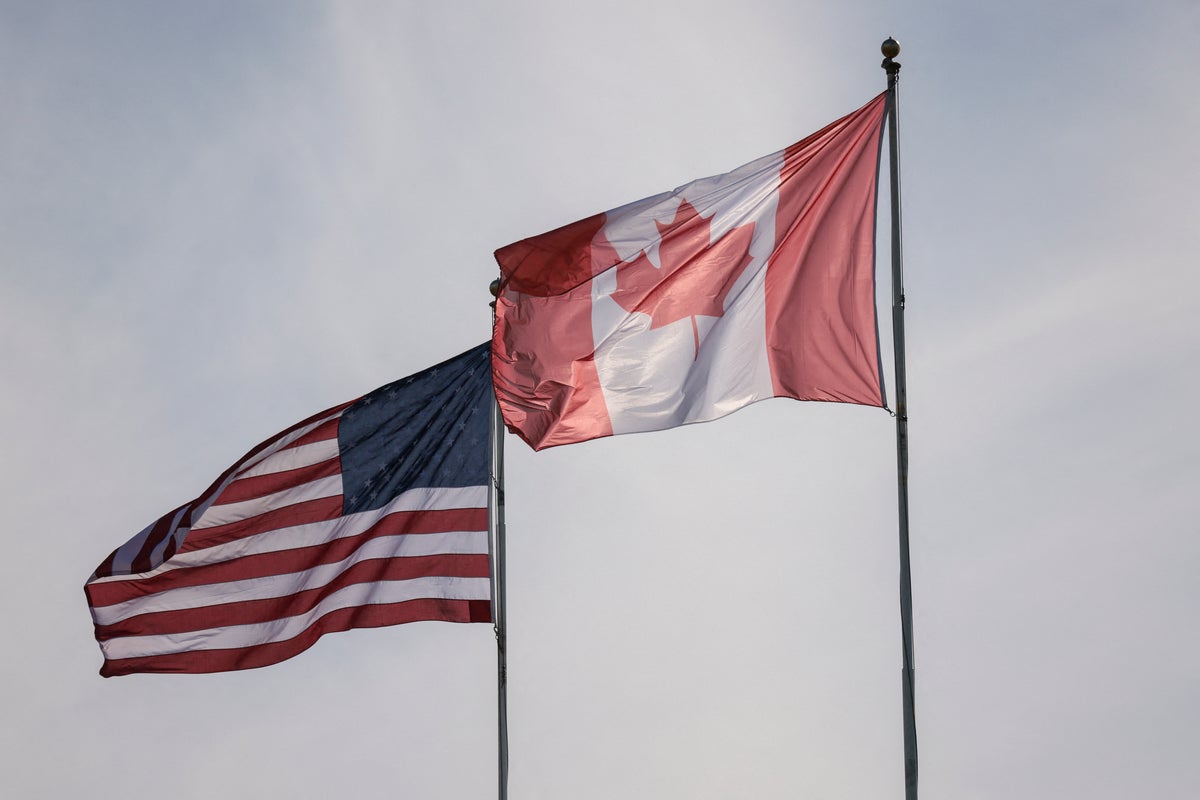
Canada is struggling to find senior military officers willing to take joint defense posts in the United States amid growing diplomatic tension between the two countries, according to current and former officials. The staffing shortages affect positions at the North American Aerospace Defense Command in Colorado Springs, known as NORAD, as well as other integrated combatant commands — posts that historically served as highly desirable assignments for top Canadian personnel.Current and former officials speaking on the condition of anonymity told The Atlantic that Canadian officers faced several deterrents. Personnel fear that assignments in the U.S. could limit their future career advancement if bilateral relations worsen, anticipate reduced security access due to political tensions and face resistance from family members concerned about anti-Canadian sentiment.“If you’re a two-star general in Canada, and you’ve got maybe one or two extremely important jobs left in your career, will you use one of them to take up a position in the States, where you might be underemployed, with little access and little meaningful work to show for it?” one Canadian officer said.Canada is struggling to recruit senior military officers for joint posts in the United States as diplomatic relations between the two countries deteriorate, officials say (AFP via Getty Images)Military analysts note that the strain on personnel could disrupt joint operations during a security crisis, particularly regarding potential troop movements to Alaska or collaborative responses to airborne threats from North Pole flight paths.“The day-to-day relationship has deteriorated,” defense analyst David Perry told The Atlantic. “There’s been a tangible change in the way the two countries interact on defense and security.”Christopher Sands, director of the Center for U.S.-Canada Studies at Johns Hopkins University School of Advanced International Studies, said that public exposure to political disputes had “poisoned people-to-people relations.” Former Chief of Canada’s Defense Staff Wayne Eyre characterized the current environment as “highly insulting” following public criticisms of Canadian military readiness from U.S. officials. “It’s sad, disappointing, and disturbing to see that deep relationship come under attack,” Eyre said. “In my view, it’s a case of the U.S. undergoing self-harm by discarding and calling into question its competitive advantage, which is this system of alliances.”Public attacks and policy directives from Donald Trump have pushed US-Canada relations to historic lows (Getty)Despite the staffing difficulties, operational military readiness remains intact. A NORAD spokesperson said that high-level Canadian roles at the command “remain fully staffed and highly regarded as career-enhancing opportunities, with Canadian personnel and their families fully integrated and operating with the systemic access required to execute binational defense operations for the homelands.”In response to trade and diplomatic disputes, Canada has paused its acquisition of U.S.-made Black Hawk helicopters, as reported by CBC News and Radio-Canada, and is reviewing its planned procurement of F-35 stealth fighters. Defense Minister David McGuinty said that while Ottawa is “obviously continuing to work with the U.S.,” the government is “now much more expansively looking to diversify” as it builds out its domestic defense supply chains.The tensions follow broader policy decisions and rhetoric from Washington, including a January 2025 executive order directing U.S. Northern Command to seal domestic borders, as well as public statements questioning Canadian statehood and military contributions. Canadian Prime Minister Mark Carney warned that ties with the US were in the ‘midst of a rupture,’ urging middle powers to align defense and economic strategies to counter American pressure (AFP/Getty)Undersecretary of Defense for Policy Elbridge Colby previously announced a pause in U.S. participation in the bilateral Permanent Joint Board on Defense, writing on social media that “a strong Canada that prioritizes hard power over rhetoric benefits us all. Unfortunately, Canada has failed to make credible progress on its defense commitments.”Prime Minister Mark Carney said earlier this year that “we are in the midst of a rupture,” urging middle powers to coordinate defense and economic strategies. One Canadian official, responding to a cartoon posted by Donald Trump depicting him striking Prime Minister Mark Carney with a hockey stick, called it “unimaginable conduct by the president of the United States, even in our most dystopian imagination.”Created in 1958 to guard against Cold War bomber threats over the North Pole, NORAD remains the primary defense command responsible for monitoring North American airspace against foreign military aircraft, missiles and airborne objects.
Canada can’t find senior officers to work with Americans and NORAD after Trump’s threats
Full Article
Original Source
Read the full article at Independent →KhanList aggregates and links to publicly available news content. We do not host full articles from third-party sources. Always verify important information with original sources.