
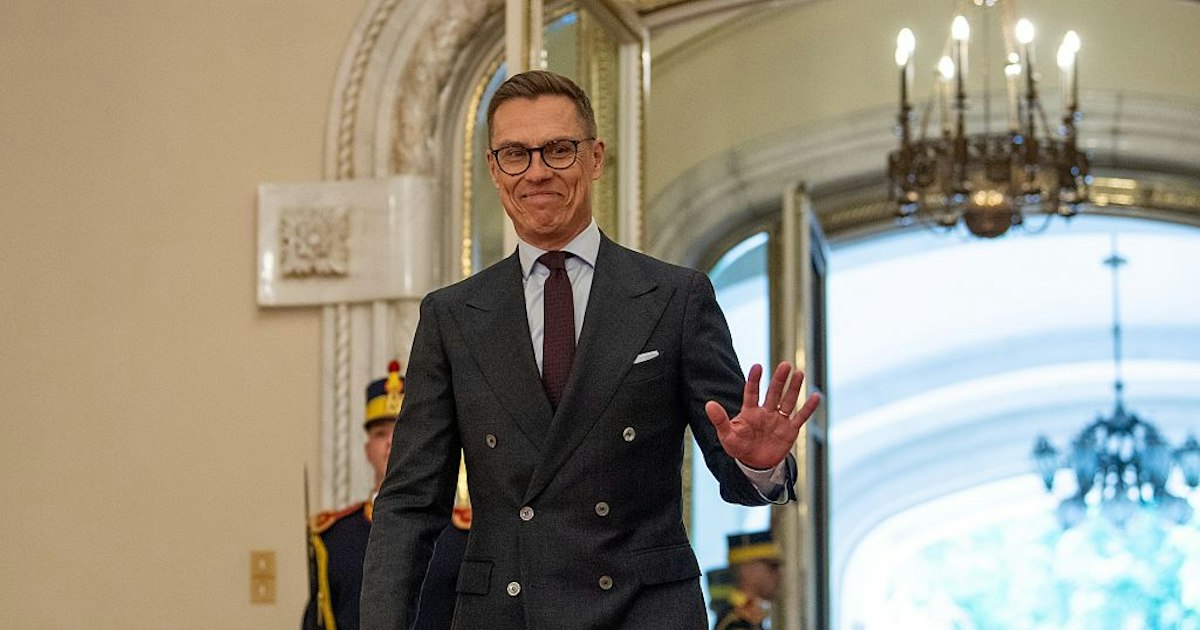
Ukraine Some European leaders have begun to understand the necessity of constructive dialogue with Russia. (Alex Nicodim/Anadolu via Getty Images) One consequence of last week’s midterm elections—which brought a historic rout of President Donald Trump’s Republican Party—has been the emboldening of European leaders who have spent much of his second presidency reluctantly appeasing him. This shift comes just as the Trump administration revives an ambitious effort to end the war in Ukraine. The question for Europeans now is whether to use Trump’s weakness to merely resist his diplomacy or to develop a diplomatic initiative of their own. In the days following the elections, Trump has suggested that a peace agreement in Ukraine may be near. Then, following consultations in Brussels between Jared Kushner, Trump’s son-in-law and adviser, and EU and NATO representatives, negotiations between the U.S., Russia, and Ukraine took place in Abu Dhabi this Tuesday and Wednesday. What distinguishes this attempt from previous efforts is that the discussions addressed not only ceasefire arrangements, territorial questions, and another exchange of war prisoners, but the wider architecture of European security. As Kushner posted on X, for more than 30 years, Europe and Russia have struggled to establish a sustainable security framework. Decades of mistrust, competing security concerns, and the devastating consequences of this war make this an extraordinarily difficult challenge, but one that is essential to lasting peace. This is a rather remarkable admission from an American official that any durable settlement must address not only Kiev’s legitimate security interests but also Moscow’s, including the need to anchor a broader relationship between Russia and the West. Moscow has consistently insisted on this wider framework. In December 2021, Russia submitted proposals demanding sweeping changes to Europe’s security arrangements, which Washington and NATO rejected. Russia subsequently launched its full-scale invasion of Ukraine. It is understandable why Europeans view even the possibility of such a discussion as a reward for Russian aggression. As Constanze Stelzenmüller, a German expert from the Brookings Institution, put it, “‘Europe’s postwar security architecture’ is already a linguistic concession to the Kremlin.” The EU foreign policy chief Kaja Kallas has rejected the idea out of hand, insisting that the existing arrangements based on NATO should instead be strengthened. While justified in view of Moscow’s attempts to dictate its neighbours’ security policies, these reactions do not offer any plausible way forward. With the war tragically grinding on for almost five years, and with Russian defeat ever so elusive, it is hard to imagine a sustainable end to the fighting without addressing the contours of a post-war European security order. None of that means one should justify the invasion of Ukraine or accept Moscow’s maximalist demands. European leaders could take a page from their continent’s own experiences in the Cold War, when NATO’s strength coexisted with arms control and broader negotiations with Moscow such as the Helsinki Process of the 1970s. Deterrence and diplomacy were seen as complementary. Europe now faces a choice: deterrence alone or coupled with diplomacy. With Democrats gaining control of Congress, the temptation may be strong in Europe to stand up to Trump, particularly as Congress is expected to restore substantial military assistance to Ukraine. But European leaders would be wise to tread carefully. First, a Democratic Congress will not simply replace the president’s foreign policy with its own. Nor should Europeans interpret the Republican defeat as an endorsement of indefinite military entanglements abroad. The disastrous U.S. war on Iran has demonstrated the political costs of military adventurism. Likewise, it would be a mistake to assume that American voters want a return to the interventionist consensus on Ukraine, especially if diplomatic alternatives exist. Second, there is a difference between rejecting Trump’s strategy and having a viable strategy of one’s own. Europe can, and should, seek to play a constructive diplomatic role independent of Trump’s political fortunes. In recent weeks, some European leaders have tried to do exactly that. On October 27, Finnish President Alexander Stubb and Norwegian Prime Minister Jonas Gahr Støre held a 90-minute telephone conversation with Vladimir Putin, initiated by the European side and in consultation with Ukraine. According to the independent, well-sourced Russian online publication Vlast, the Kremlin welcomed the contact and expressed interest in establishing a sustained negotiating process. Stubb and Støre both painted a picture of a Putin who was reasonable and respectful on the call. The initiative is significant precisely because Finland and Norway are NATO members firmly committed to Ukraine’s security. Neither country can plausibly be accused of having appeased Moscow since the war in Ukraine began. Yet both apparently recognize that European security cannot be managed indefinitely through military deterrence alone. Putin, Vlast reports, views the Nordic leaders as more promising interlocutors than their counterparts in London, Paris, or Berlin, all of whom Moscow sees as committed to its “strategic defeat.” After the call, Putin praised Stubb and Støre for their “constructive approach”—seemingly standard language that is actually remarkable given that Moscow has lately been framing Europe as its main enemy. For different reasons, Putin may prefer Helsinki and Oslo not only to other European capitals, but to Washington too. If Trump has failed to deliver anything meaningful, from Moscow’s perspective, in two years, he may be even less likely to do so once the Democrats take control of Congress in January and the Republican president becomes more distracted by domestic politics. Crucially, both Stubb and Støre understand that any negotiations with Moscow will be a long and fraught process. That marks a sharp contrast from Trump, who focuses on securing quick political wins for himself. The Finnish-Norwegian initiative shows that European independence from Trump does not necessarily mean adopting a more confrontational posture toward Moscow. In that context, the Nordic track looks like a credible opening for ultimately bringing Europe into the U.S.–Russia–Ukraine negotiations. Subscribe Today Get daily emails in your inbox While this week’s direct talks with Russia in Abu Dhabi did not include the Europeans, both Washington and Moscow increasingly realize that their participation will be unavoidable to ensure that any settlement can be implemented and sustained. Of course, none of that warrants any illusions about Moscow’s willingness to compromise. Putin is determined to press for military advantage on the battlefield even as his officials negotiate in Abu Dhabi. A clear-eyed recognition of this reality should inform any European diplomatic initiative. But that doesn’t mean diplomacy is doomed to fail. Trump’s political weakness will give Europe greater freedom of action. Whether Europe uses this new freedom to pursue tough peace negotiations or merely to defy Washington will be a test for European statecraft and strategic autonomy.
Can Trump’s Weakness Be Europe’s Opportunity for Peace?
Full Article
Original Source
Read the full article at Theamericanconservative →KhanList aggregates and links to publicly available news content. We do not host full articles from third-party sources. Always verify important information with original sources.