
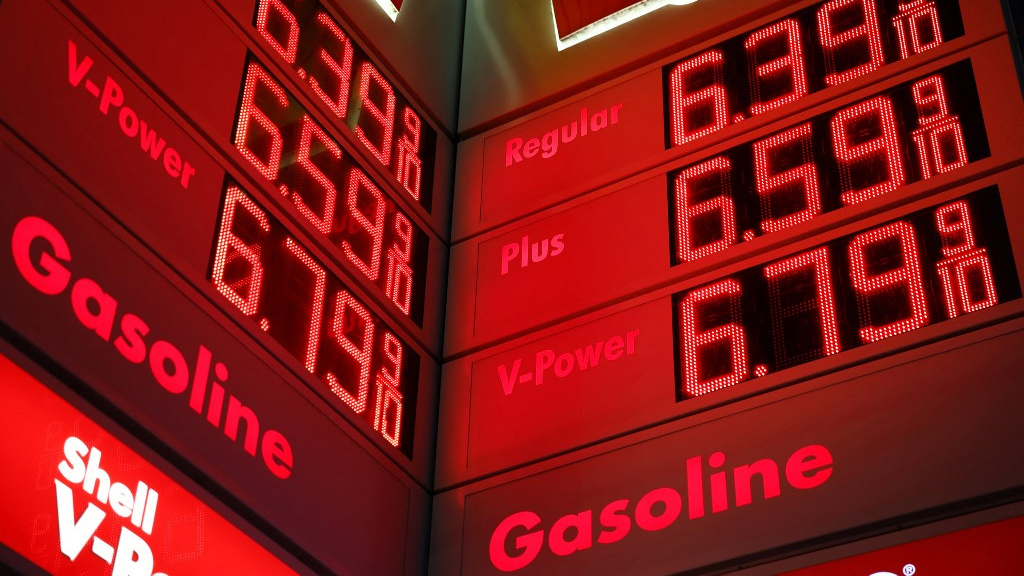
Almost five years after the Russian invasion of Ukraine scrambled Europe’s energy map, another war has delivered a second shock. Since the US-Israeli war on Iran began this past February, the Strait of Hormuz, through which about a fifth of the world’s oil normally flows, has been closed or contested, while Ukraine’s drone campaign against Russian refineries has removed more fuel from an overstretched market. Increased energy prices feed inflation, forcing central banks to tighten monetary policy, while fiscal anxiety pushes up sovereign bond yields, inflating debt service. The final squeeze arrives in supply chains and households, and then in the streets and at the ballot boxes. In other words, it is a perfect storm - the mother of all perfect storms. We are seeing a clear example of historian Adam Tooze’s polycrisis concept: a situation where multiple, distinct crises overlap, amplifying their collective effects. New MEE newsletter: Jerusalem Dispatch Sign up to get the latest insights and analysis on Israel-Palestine, alongside Turkey Unpacked and other MEE newsletters The Iran war is the larger shock. Within days of its start, Brent crude jumped almost 19 percent to nearly $111 a barrel, from about $70 before the war. Washington called it “a very small price to pay” for security. After some ups and downs over the summer, oil was at $117 late last month. The International Energy Agency has called it the worst energy crisis in history. Even EU chief Ursula von der Leyen, the queen of denial, acknowledged “a regional conflict with unintended consequences”. Talks and periods of ceasefire have not normalised energy flows. The EU Commission has warned of a prolonged supply shock, which could involve forced cuts to fuel consumption before winter. Weak point To make a bad situation worse, the Houthis’ control over Yemen’s Red Sea shores has endangered another chokepoint, the Bab el-Mandeb Strait, with serious repercussions for maritime logistics. Compounding this, Ukraine’s attacks on Russian refineries have pushed Moscow into unprecedented export bans at the worst possible time, with the Iran war having already drained inventories. Europe no longer buys Russian diesel directly, but Russia’s former customers now compete for the same alternative cargoes. Hormuz drives most of the disruption, and the Russia-Ukraine war compounds it; together, they strike at the same weak point - a European continent that imports almost all of its fossil fuels. Governments in Paris, Rome and elsewhere have less fiscal space to compensate the public - and the combination of austerity and inflation is historically combustible The inevitable outcome has been inflation in the EU, which reached 3.8 percent in September, up from 3.2 percent in August - significantly higher than the rate of 2.6 percent a year prior. Food prices have also soared, fuelling widespread public anger in European cities. The European Central Bank’s president, Christine Lagarde, warned this summer that “the full inflationary impact of the energy shock has yet to play out”. Raising interest rates against a supply shock does nothing for commodity supplies, but it increases financing costs at exactly the moment when governments are being asked to cushion households. The bond market has noticed, with the yield on 30-year US Treasury bonds exceeding five percent this year, as national debt rose past $40 trillion and annual interest payments over $1 trillion for the first time. In the UK, 30-year yields recently hit six percent, the first time a G7 member had faced such rates since the 2012 eurozone crisis. France is at the epicentre of this crisis. Its bond yields stood at 4.85 percent in mid-October, near their highest levels in more than two decades, with EU officials urging Paris to present a credible budget. French debt service is projected at about €59 billion ($66bn) this year, compared with roughly €30 billion for Germany, and Italy must roll over debt worth 17 percent of GDP in 2026. Ratchet turning This is not yet a replay of the 2011 economic crisis. Earlier in the war, analysts noted that Italian, Spanish and Greek yields stood below their 2022-23 peaks, because those countries had cut primary deficits. It’s important to note that debt offices feel higher yields only as maturing paper is replaced - so the bill grows with every auction, rather than arriving all at once. In economic jargon, it’s a ratchet, and each turn leaves less budgetary room for governments to offer the relief that angry households are demanding - even as these same governments continue to spend billions on arming Ukraine and launching unprecedented weapons procurement programmes. Dire social consequences arrived last month. In France, hundreds of thousands of people joined demonstrations that began as student protests over education, and widened into cost-of-living grievances. In Belgium, police clashed with protesters in Brussels, while tens of thousands of people marched in Lisbon, Portugal, over living costs, low wages and housing. Large and violent demonstrations were also reported in Italy. There does not seem to be a single Europe-wide movement, or at least not yet. Situations and demands differ by country, but ongoing economic shocks have served as an accelerant. France’s presidential election and Italy’s general election are both due next year, while Spain faces a snap election this month. EU governments are weighing support for vulnerable households, but disputes over the €2 trillion EU budget risk blocking decisions. With debt service rising, governments in Paris, Rome and elsewhere have less fiscal space to compensate the public - and the combination of austerity and inflation is historically combustible. US midterms The same energy shocks are now testing Donald Trump in Tuesday’s midterm elections, with the US president’s approval rating at a record low. About seven in 10 Americans say gasoline has become unaffordable, with the national average price above $4 a gallon for a record 158 days this year. Trump’s partial or total defeat - losing only the House, or losing both the House and the Senate - could trigger another constitutional crisis, like the one that occurred on 6 January 2021, with Trump and his supporters refusing to accept a negative result. This all seems like a single feedback loop, rather than separate crises. A war of choice against Iran, backed by a US naval blockade, disrupts the Gulf; the price is paid first by importers in Europe and Asia, and then by American drivers; central banks respond with higher rates; bond markets reprice the debts of the most exposed states; and governments with shrinking fiscal space face electorates that have lost patience. The resilience of the world economy is built on illusion - it's time the West woke up Read More » The irony is that two crises aimed at inflicting a strategic defeat, and ideally regime change, in both Russia and Iran, have blown up in the faces of western liberal democracies, which are facing unbearable and dangerous costs. While Treasury Secretary Scott Bessent has unsuccessfully tried to reduce US bond yields, further fuelling investors’ concerns, Trump has been scrambling to find a way to end the conflict in Ukraine, aiming to better focus on his war against Iran after the midterms. It is not clear yet whether Russia, Iran, and above all China will allow him such room for maneuver. Several crucial issues must now be monitored closely for developments, including the outcome of Israel’s elections, which resulted in a deadlock last week; will the incoming government continue to bamboozle the US into waging an unnecessary war against Iran? Ongoing European economic negotiations will also be vital to watch, alongside the outcome of Tuesday’s US midterm vote and the impacts on markets and investments. In addition, what happens next in relation to the chokepoints at Hormuz and Bab el-Mandeb will be crucial: if commodity flows normalise, prices could drop within months, and the storm may lose its force. If not, winter will be the next stress test - and it is fast approaching. The views expressed in this article belong to the author and do not necessarily reflect the editorial policy of Middle East Eye.
Can the world withstand another winter of war?
Full Article
Original Source
Read the full article at Middleeasteye →KhanList aggregates and links to publicly available news content. We do not host full articles from third-party sources. Always verify important information with original sources.