
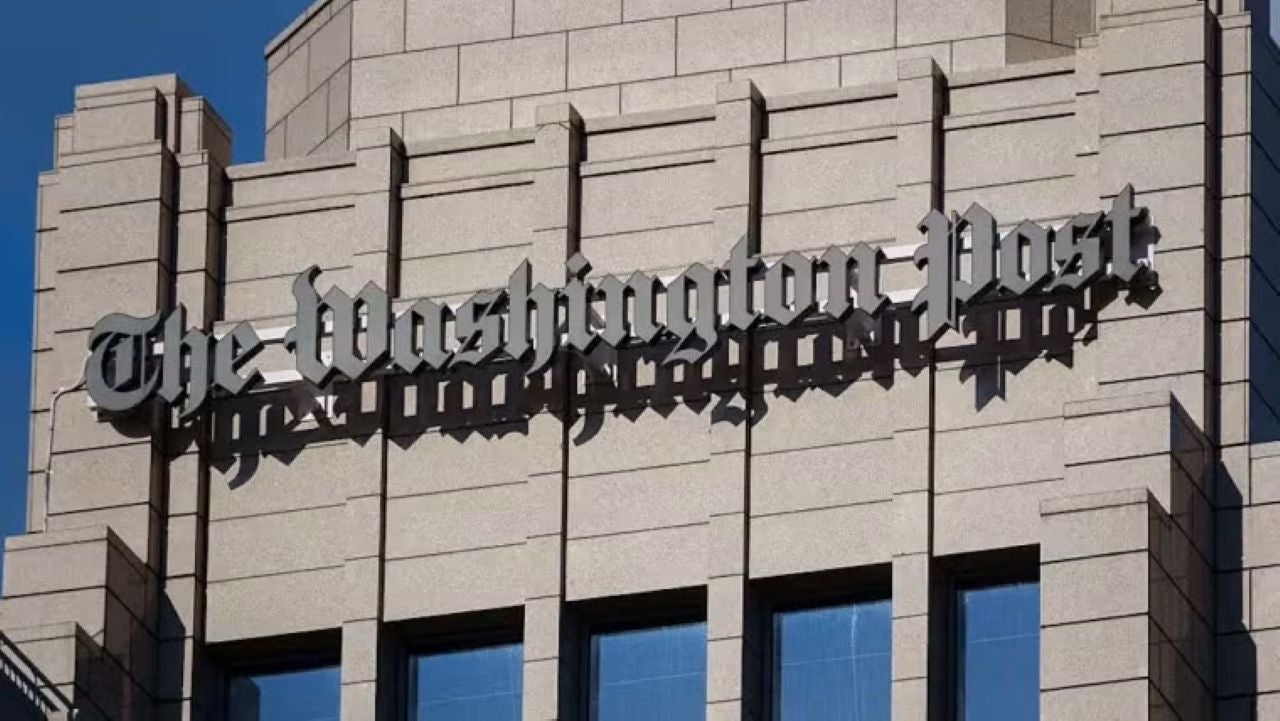
Welcome back to “The Media Front.” After years of mounting losses, newsroom layoffs and management turmoil, The Washington Post may finally be approaching an elusive milestone: breaking even. But there’s a catch: The Post is attempting its financial turnaround with a newsroom dramatically smaller than it was just a few years ago. That raises an uncomfortable question: Can the Post cut its way to profitability without sacrificing the journalism that makes readers willing to pay? Speaking at the Web Summit conference in Lisbon this week, executive editor Matt Murray told Adweek that the newspaper was “within striking distance of break-even,” after accumulating hundreds of millions of dollars in losses. He also predicted that 2027 would be the Post’s strongest financial year in seven years. The newspaper reportedly lost $77 million in 2023, roughly $100 million in 2024 and more than $100 million in 2025. Its struggles were compounded by executive departures, declining subscriptions and reader backlash over Bezos’ decision to block an endorsement of Kamala Harris in the 2024 presidential election. Then came February’s sweeping layoffs, which eliminated hundreds of newsroom positions and dramatically reduced the Post’s reporting capacity. The cuts included its sports department and books section, along with much of its international coverage. Murray has defended the restructuring as necessary to stabilize the business. This week’s comments suggest the Post may be making progress. There are signs of commercial momentum. The Post has entered multiple six- and seven-figure partnership contracts over the past six months. In the third quarter, direct ad sales recorded their strongest year-over-year growth since 2021, while programmatic ad revenue increased 48% year over year as of September, according to figures the newspaper provided. The newsroom has begun selectively hiring again, bringing in journalists from the Financial Times, Bloomberg, NBC News and Politico. Murray has also outlined a renewed emphasis on Washington coverage, alongside opportunities to build podcasts, newsletters and other products around individual journalists. That’s a potentially promising strategy. The Post still has a powerful brand and a natural advantage covering the federal government when Washington remains central to the national conversation. But the financial picture remains incomplete. A Post spokesperson told me that, as a privately held company, the newspaper does not disclose specific revenue figures. And while new partnerships and advertising growth suggest improving demand, they don’t reveal how much revenue the Post is generating or how much its expenses have fallen. The challenge is maintaining the kind of distinctive reporting that attracts subscribers, even with a smaller newsroom and fewer resources. Consider the contrast with The New York Times. In its latest quarterly earnings report, the Times said it added 420,000 digital-only subscribers, bringing its total paid subscriber base to 13.8 million. Revenue rose nearly 10% to $768.5 million, while digital-only subscription revenue climbed 14.6% to $421.3 million. Behind those results is a diversified subscription business built around journalism, The Athletic, games, cooking and product recommendations. The additional offerings give readers reasons to stay even when their engagement with daily news fluctuates. The Post has not established a comparable ecosystem. Murray acknowledged as much in that interview, suggesting the paper needs its own version of that model, with journalism at its center. To be fair, the alternative to restructuring wasn’t necessarily continued growth. The Post’s financial problems required difficult choices, even if the long-term consequences remain uncertain. Nor must the Post replicate the Times to succeed. A sharper Washington focus could offer a more sustainable identity than competing across every category of national and international news. Still, there’s a difference between finding a business model that can survive and building one capable of thriving. Breaking even would prove the Post can live within its means. Growing again would prove readers still see enough value in what it produces. CBS News Is Losing More Than 2 Producers “Face the Nation” is losing both of its top producers as CBS News undergoes broader changes under editor-in-chief Bari Weiss. Senior executive producer Mary Hager is retiring after 35 years at the network, while executive producer Anne Hsu is transferring to CBS’s Hong Kong bureau. Hager has guided the Sunday political affairs program through three moderators and helped oversee the network’s broader political coverage. Her retirement was known internally, and Hsu is remaining with CBS. Neither departure necessarily signals a change in editorial direction. But with both producers leaving their roles, CBS faces a question that goes beyond filling vacancies: How much continuity can “Face the Nation” maintain while the network around it is changing? My full story: CBS News’ ‘Face the Nation’ Loses 2 Top Producers, Mary Hager Retires NBC News Now Is Growing. So Why Cut a Show? NBC News Now, the network’s 24/7 digital streaming news network, has enjoyed years of audience growth, including a major viewership surge following the midterm elections. But that wasn’t enough to save Gadi Schwartz’s primetime show. NBC News canceled “Stay Tuned” this week, replacing its original 8 p.m. program with reruns while eliminating a handful of positions. Schwartz will remain at the network. The decision underscores a challenge for free, ad-supported streaming news services: Growing an audience doesn’t mean every original program justifies its cost. NBC News Now has demonstrated that viewers will watch streaming news. The harder question is how much broadcasters can afford to spend serving them. My full story: NBC News Cancels ‘Stay Tuned’ Streaming Show Amid Staff Cuts Political advertising spending reached $11.4 billion through Oct. 28 ahead of the midterms. But the most revealing change wasn’t how much campaigns spent. It was where the money went. In my report this week, I examined how connected television more than doubled its political advertising revenue from the 2022 midterms, reaching $2.4 billion and overtaking cable’s $1.25 billion. Broadcast television remains the biggest beneficiary of political spending, but cable is losing ground as campaigns shift more dollars toward streaming and digital platforms. Whether those investments produce better election results is harder to determine. Heavy spending alone doesn’t guarantee victory. For political advertisers heading into 2028, the challenge isn’t just reaching voters across more screens. It’s figuring out which ones are worth paying for. My full WrapPRO report: Political Ad Spending Nears $12 Billion as Streaming Chips Away at TV’s Dominance When a Leak Investigation Threatens Journalists’ Sources A federal appeals court ordered the Trump administration to narrow its demand for journalists’ LinkedIn records this week, warning that the sweeping request could expose confidential sources unrelated to a classified leak investigation. The Justice Department sought 18 months of communications metadata involving journalists at an unidentified news organization. The records potentially could have revealed hundreds of reporting relationships. The unanimous panel acknowledged the government’s national security interests but ruled that its request went too far. The decision highlights a vulnerability in modern journalism: Investigators don’t necessarily need to read a reporter’s messages to discover who they’re talking to. Protecting confidential sources increasingly means protecting the digital trail surrounding them. My full story: Appeals Court Rebukes Trump DOJ Over Demand for Journalists’ LinkedIn Records
Can the Washington Post Cut Its Way to Profit?
Full Article
Original Source
Read the full article at Thewrap →KhanList aggregates and links to publicly available news content. We do not host full articles from third-party sources. Always verify important information with original sources.