
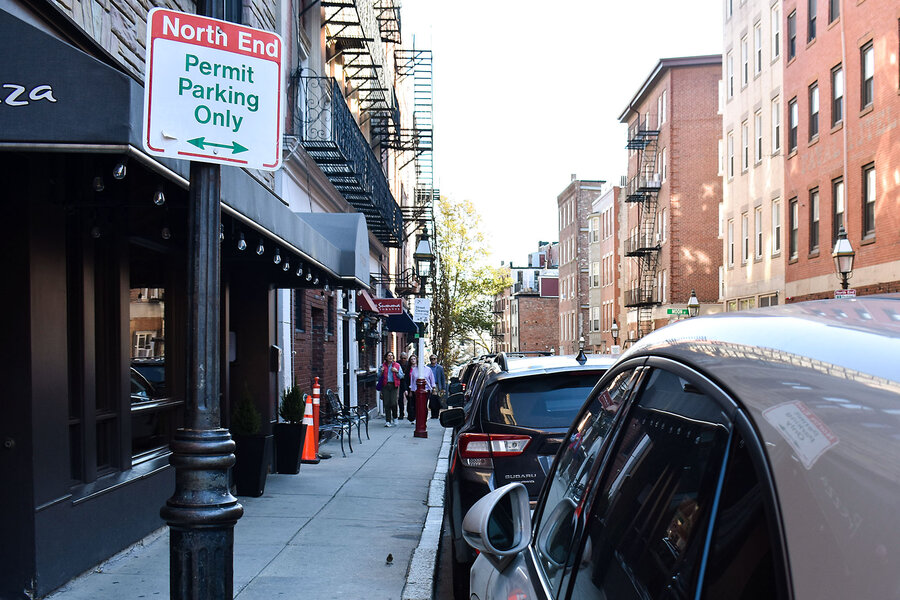
Boston | Nov. 24, 2026, 10:50 a.m. ET | 4 min read Boston city councilors recently took what might seem like an unusual step in a city where people are notorious for guarding their parking spots: They voted 9-4 to scrap a mandate that every new housing development include a certain number of off-street parking spaces.Yet as American cities nationwide grapple with a housing shortage, this type of reform is gaining momentum. Many municipalities have made similar moves, allowing developers to choose how much parking to build. Those include Burlington, Vermont; Austin, Texas; and San Francisco. More than 120 cities have eliminated parking mandates, according to the Parking Reform Network.The movement is part of an effort to cut away red tape that delays projects and raises costs. Some who support it say it also spurs reconsidering the prominent role cars play in urban life. “More and more people are recognizing that parking mandates needlessly add costs and contribute to a car culture,” says Sara Bronin, a law professor at George Washington University and founder of the National Zoning Atlas, which researches local zoning codes. “Contemporary thinking about parking mandates points to much higher negative impacts than positive.”In cities early to ban parking minimums, such as Seattle, researchers note the change helped spur housing development without a dramatic loss of parking spots. Critics worry the policy strains working-class communities that rely on cars and might not lead to greater housing affordability.This type of urban planning is about giving people more options and flexibility, says Andrew Mikula, chief housing economist at Pioneer Institute, a Boston think tank that promotes free markets. In cities that have revoked parking requirements, “they’re still building parking, just at a level that’s probably closer to demand.”A boost for Boston, or strain on car owners?Boston’s change, which was backed by housing advocates and developers, must now be approved by the zoning commission. It would then move to the mayor’s desk for approval. In a statement, a spokesperson for Boston Mayor Michelle Wu’s office said the office would “evaluate the implications of eliminating parking minimums citywide” and praised the city’s “neighborhood by neighborhood approach.” The city already eliminated parking minimums for many affordable housing projects in 2021. The new rules approved by the City Council temporarily exempt some neighborhoods.During debate before the Nov. 18 vote, several city councilors argued that the policy could leave residents who rely on cars in the lurch.“For many residents, driving remains a necessity, not a luxury,” said Councilor at Large Erin Murphy. “We cannot make public policy based solely on our own lifestyles, or an idealized vision of how people should live. Boston will never be a city without cars.”That the majority of the council voted to replace the parking requirements is “a big step” for Boston, which has “perfected the art of overregulating land use and development,” says Professor Bronin. Charles Krupa/AP/FileA construction worker stands on a lift while working on the side of a condominium in Boston's Seaport neighborhood, July 21, 2025. Boston has some of the highest rents in the United States. She authored a city report on Boston’s zoning rules in 2023 and calls them among the most convoluted in the country, with many incremental and neighborhood-specific amendments that make it harder to build housing. Home construction in the city fell by 14,000 units between 2024-2025 and 2025-2026, according to this year’s Greater Boston Housing Report Card.That lack of new housing hasn’t helped affordability. October data from Zillow pegged Boston’s rents as the fifth highest in the country, and roughly half of renters spend more than 30% of their income on housing. Potential homebuyers must now make $181,000 a year to afford a home in one of the city’s cheaper suburbs.Shifting a longtime practiceMinimum parking requirements began to crop up amid booming car sales in the 1920s and spread widely. But in recent decades, urban planners have largely shifted against the policy. Studies show that parking mandates can push construction costs up by tens of thousands of dollars, especially in cities. Boston’s transportation department estimates that building a single parking space can cost $50,000. Those costs get passed to consumers: A 2016 study from UCLA found that the average cost of a parking garage for tenants is equivalent to raising rent by 17%.Eliminating minimums can make it harder to find street parking because there will likely be fewer spaces built, says Ellen Schwartz, manager of UCLA’s Center for Parking Policy. Cities can manage that, she says, by varying parking fees according to demand. Higher rates can encourage people to use public transport or take fewer car trips, thus freeing up spaces around the city.After Seattle lowered its parking minimums in 2012, the city built more than 35,000 new homes that used the reduced requirements, according to a 2023 report by Sightline Institute, a sustainability think tank. Almost 60% of new homes permitted after the change would have been illegal under the old rules. Deepen your worldviewwith Monitor Highlights.Politics with respectGet political stories with respectful analysis.There‘s a world of new ideas in everyBooks newsletter.There‘s more to life, enrich yours withCulture & Learning weekly.Follow humanity‘s discoveries withScience & Nature stories in your inbox.Gain a spiritual perspectivefrom the stories in your inbox.Want to understand the deeper impact of critical events? Learn the Monitor‘s insight.Already a subscriber? Log in to hide ads. Parking did not disappear from Seattle: About 70% of developments that did not have parking requirements still included some parking, according to a 2020 study in the journal Land Use Policy. Austin, which became the largest city in the country to abolish minimums in 2023, has since become more affordable. According to a report by Pew Research Center, rents in the city dropped by 7% between 2023 and 2024, the largest decrease of any large metro area. The report attributes that change to a range of policies – including eliminating parking minimums. Bring news welcomed in any home into your home45% off$110/year → $60/yearJournalism that gets above the fray and brings perspectives you won't get anywhere else.Already a subscriber? Sign in
Can removing parking requirements lower housing costs? Boston is a test case.
Full Article
Original Source
Read the full article at Csmonitor →KhanList aggregates and links to publicly available news content. We do not host full articles from third-party sources. Always verify important information with original sources.