
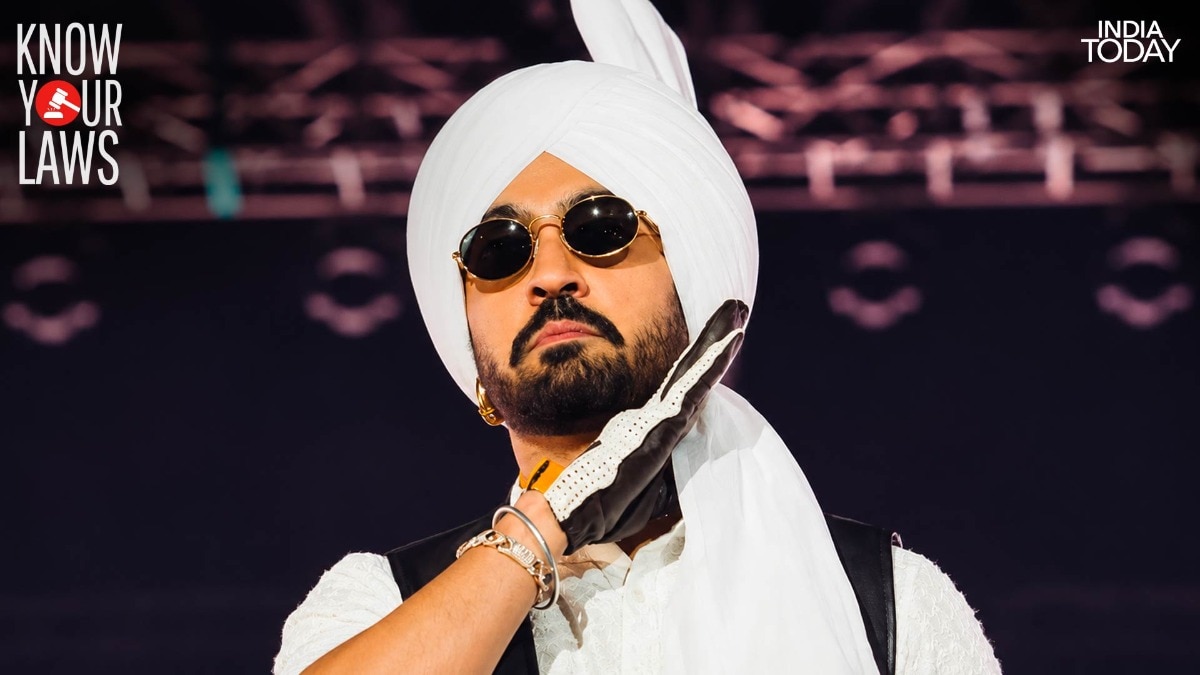
Indore police cleared Diljit Dosanjh’s November 15 concert hours before it was due to begin, on the condition that organisers drop four songs flagged by child protection officials. In Ahmedabad, where Dosanjh is due to perform on November 21, the District Child Protection Officer (DCPO) has asked police to impose similar curbs.The requests followed a complaint from a Chandigarh-based professor who alleged that some of Dosanjh’s songs glorified alcohol, drugs and weapons. The two cases raise a question about who can decide what a singer performs. A child protection officer can raise concerns with police. Enforcing a restriction on the setlist requires a separate legal basis.WHAT HAPPENED IN INDORE AND AHMEDABAD?In Indore, the district child protection officer wrote to the venue management, asking it to drop four tracks over concerns about their effect on children. Police subsequently made it a condition of the concert’s approval that organisers leave Patiala Peg, 5 Taara, Case and Jatt Uthe Fire Karda off the setlist.In Ahmedabad, the child protection officer wrote to the police commissioner seeking preventive action. The officer asked police to keep songs said to glorify intoxicants or weapons off the setlist, prevent children from being invited onstage and bar the use of bullet belts during the performance. CAN A CHILD PROTECTION OFFICER BAN SONGS?Section 106 of the Juvenile Justice Act, 2015, provides for district child protection units. Rule 85 of the 2016 Model Rules sets out their functions, including coordinating services for vulnerable children and helping implement the Act. These provisions give the units a role in addressing child welfare concerns and confer no general power to dictate a concert setlist.Former Supreme Court judge Madan B Lokur told India Today that a district child protection officer had no authority to issue such directions. He said any police restriction would have to be based on an objective assessment of whether the lyrics glorify alcohol or drug use and whether performing the songs could encourage such behaviour. Advocate Rachna Tyagi, counsel at Just Rights for Children, said the Ahmedabad letter was a referral to police. “There is nothing unlawful or inappropriate about a District Child Protection Officer bringing potential concerns affecting children’s safety, welfare and well-being to the attention of the police authorities,” she said.Supreme Court advocate Prabhsahai Kaur said attending a concert with a parent does not automatically place a child in either category covered by the Act: children in need of care and protection and children in conflict with the law. Advocate Jyotika Kalra, a former member of the National Human Rights Commission, pointed out that Sections 77 and 78 deal with giving intoxicants to children or using children to supply them.WHEN CAN POLICE STEP IN?Section 33 of the Gujarat Police Act allows police commissioners and district magistrates to make rules for licensing and regulating public performances. Any restriction on a particular show must follow the applicable legal process. A restriction on artistic expression must also meet the test under Article 19(2) of the Constitution, which permits reasonable restrictions on specified grounds, including public order, decency and morality.Both communications reportedly cited a 2019 Punjab and Haryana High Court judgment directing police to prevent songs glorifying alcohol, drugs and violence from being played, including at live shows. The directions were addressed to authorities in Punjab, Haryana and Chandigarh. Officials in Madhya Pradesh and Gujarat would need an independent legal basis to impose similar restrictions.- Ends
Can police decide what Diljit Dosanjh sings? What the law says
Full Article
Original Source
Read the full article at Indiatoday →KhanList aggregates and links to publicly available news content. We do not host full articles from third-party sources. Always verify important information with original sources.