
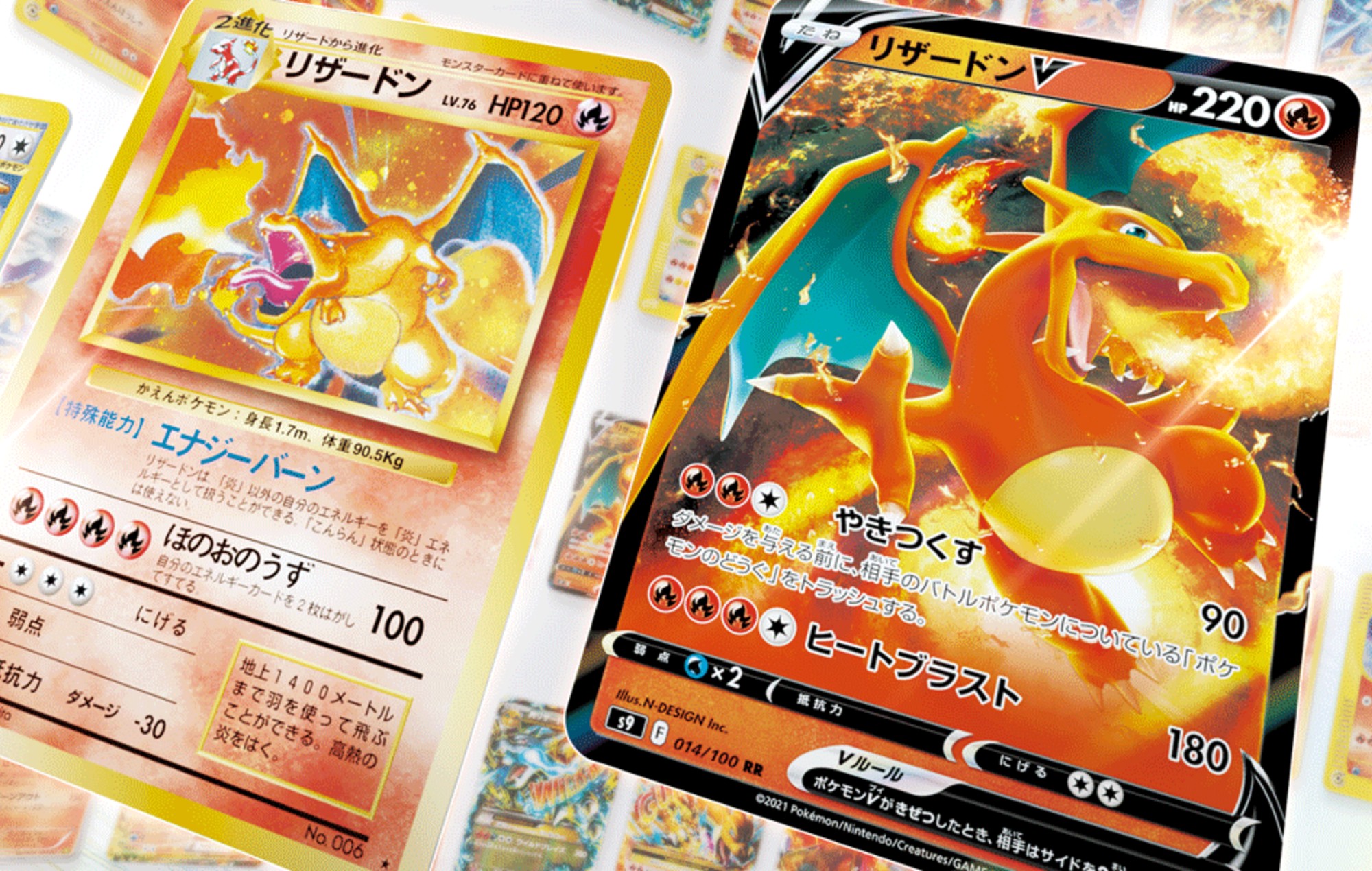
It’s 5am on a chilly Wednesday morning in October and NME is standing outside a toy shop in Kent. There are more than a hundred people in front of us, and nearly twice as many have joined the queue by the time the doors are opened by a bleary-eyed employee four hours later. “What are we doing with our lives?” someone asks. One-by-one, successful punters file out of the shop with a variety of colourful cardboard boxes. Some tear into them like they contain the first hot meal they’ve had in weeks; others carefully examine the packages for damage before taking pictures and listing them on Facebook marketplace for three times the amount they paid for them. And sadly, a majority of the queue will leave empty-handed. This isn’t a one off, either. Similar scenes have been playing out across the UK and North America for the past few months as hobbyists go head-to-head with scalpers looking to get rich quick. Welcome to Pokémon card collecting in 2026. It's like wild chickens during feeding times 😭😭 pic.twitter.com/HQ0fUsNGH8 — Frost (@Frostbitings) September 17, 2026 When the Pokémon Trading Card Game first launched in the UK in 1999, it became a nationwide playground craze fuelled by the record-breaking GameBoy games, the anime’s prestigious Saturday morning TV slot and a whole lot of colourful merchandise. Even back then people spoke about certain cards – such as the shiny base set Charizard – being worth something in the future, but it wasn’t enough to stop a generation from gluing them to school books or pinning them to their bedroom wall. After that initial boom, mainstream interest waned as kids got too old to spend their pocket money on glittery cardboard. Still, collecting and playing with Pokémon cards lived on as a niche hobby. Then, during COVID, millennials started picking up old hobbies as a nostalgic escape from being trapped inside, just as The Pokémon Company celebrated the franchise’s 25th anniversary with a special throwback set. At the same time, Logan Paul made headlines for his record-breaking $5.75million purchase of a rare ‘Illustrator Pikachu’ card. Suddenly everyone was checking their attic for forgotten gems. Just when things were looking like they might cool off again, a new set of cards celebrating the original 151 Pokémon was released in 2023. The following year, free-to-start mobile game Pokémon TCG Pocket reminded everyone just how exhilarating ripping packs could be. The goal of the addictive mobile title, according to The Pokémon Company, was to “focus on the fun of opening packs and collecting cards”, as well as gently introducing players to the official card game. Job done.Recommended UK SCALPERS Broke Down Shutter Doors At Sports Direct 😳 In London, scalpers rushed the entrance of a sports direct breaking open the shutter doors.Allegedly these individuals were seeking Pokemon related products as part of a limited drop at this location. pic.twitter.com/dPl5797kwg — Collectors Club (@CollectorsClubX) April 5, 2026 “The demand [for Pokémon cards] has changed enormously in recent years” Kyle Harper, owner of The Card Corner in Skegness, tells NME. “We’re at an interesting point where the original audience are now adults in their thirties and forties with disposable income, and many have children who are the target age for those same franchises.” He’s 36 and has two children aged 13 and eight. Collecting is something they can do together. “I think that experience is being repeated by families all over the world,” he says. “Trying to get Pokémon cards is basically a full-time job” – Martin Lynch But, despite more than 10 billion cards being printed globally every year, you have to be seriously dedicated to get your hands on a pack. Social media is full of viral videos showing physical bust-ups between early morning queuers that usually end with the police getting involved. Discord groups with paid alert bots are devoted to warning subscribers about the latest drop, while more than 371,000 users follow the PokeInvesting subreddit, where people discuss (and help influence) which cards are likely to make them money the fastest. It’s led to headlines about Pokémon cards being a better investment than the stock market. In September, one venture capitalist claimed that if an apocalypse were to happen, it would be those cards that survivors would use as money – a statement that couldn’t possibly have anything to do with his own huge collection. Pokémon Europe International Championship 2025 CREDIT: The Pokémon Company “The part I find most frustrating is having to tell someone, particularly a child, that we have absolutely no Pokémon cards,” says Harper. “The difficulty is that you can’t actually look at someone and decide whether they’re a genuine fan or a scalper. What we can do is make scalping less attractive while creating opportunities for people who genuinely engage with the hobby.” Stores of every size are having to take measures to make sure new release drops are distributed as fairly as possible. Amazon has implemented an invite-only system. In Japan, some official Pokémon stores are using facial recognition to crack down on people bypassing purchasing limits. Here in the UK, local card stores have turned to loyalty schemes, lotteries, ripped seals and shadow drops to stop products from getting into the wrong hands. “I don’t know how things get any bigger or crazier, but they probably will” – PokiChloe But it’s still not enough. “My son wants Pokémon cards for Christmas but it seems like trying to get any is basically a full-time job,” says 42-year-old Martin Lynch, who’s behind us in the queue. He didn’t bother with the hobby first-time around but his seven-year-old son discovered the franchise through TikTok and YouTube creators like Beard Dad Cardz and Coops Collection, who share wholesome videos about the joy of collecting your favourite Pokémon. Now, his son wants to start his own collection, and has his heart set on the 30th anniversary set that launched in September. View this post on Instagram “My wife and I both work so we can’t really queue for hours for the chance of getting a few packs, and we can’t constantly monitor what’s available online either,” he says. “We also can’t afford to pay the ridiculous amount that scalpers are charging. It’s a horrible situation to be in, knowing that your kid is probably going to be disappointed come Christmas morning.” For every content creator giving out cards to excitable kids at conventions, there are five more boasting about how much profit can be made from certain expansions. You’ve also got platforms like TikTok, Whatnot and eBay live that allow people to purchase packs and watch them get opened instantly – though often for more than you’d usually expect to pay. “There is a lot of FOMO involved,” says PokiChloe, who started buying and selling Pokémon cards six years ago before pivoting to streaming. In time, she opened up her own bricks and mortar store, Collector’s Cardhouse, in Chorleywood near London. “Surely people are eventually going to realise they’re paying out for what is, ultimately, shiny cardboard” – Kyle Harper, The Card Corner “When I explain to people that a lot of my job is opening packs of Pokémon cards online, most really don’t get it,” she says. “But there are people who maybe don’t have a local card shop near them so [watching streamers] allows them to still feel involved in the hobby. That’s really helped everything to grow, especially in the UK.” She also has regular viewers who hang out in the chat. “People have made friends through my streams,” she adds, “so there’s that community feeling to it all.” And it’s that sense of belonging that keeps people interested in Pokémon cards despite all the difficulties that collectors now face. “The community we’ve built is probably the thing we’re most proud of,” says Harper. Familiar faces will come and hang out at The Card Corner or arrange meet-ups with fellow collectors. The shop runs regular events for Magic The Gathering, Yu-Gi-Oh! and Riftbound. Three times a week, there’s a dedicated Pokémon Club. “At some point you realise you’ve stopped simply running a shop and started running a community space.” But the million-dollar question remains – can you actually get rich from Pokémon cards in 2026? Yes, says PokiChloe, but it’s going to take a lot of money and a lot of luck. “Where the market is now, you have to put in a significantly larger amount of money than you would have had to maybe a couple of years ago. And it’s definitely a risk. I’ve seen things quadruple in value in a few weeks, then crash down lower than they were before.” The whole thing is incredibly unpredictable and easy to manipulate. “I don’t know how things get any bigger or crazier, but they probably will,” she adds. “Could you have made an enormous amount of money by buying certain Pokémon products five or 10 years ago and keeping them sealed until today? Absolutely,” says Harper. “Does that mean buying today’s products guarantees you’ll be rich five years from now? Absolutely not.” Another question is who’s actually paying such inflated prices for Pokémon cards in the first place? “It does seem to be [a lot of] investors selling products to other investors, so where does the collector fit into that chain? Surely people are eventually going to realise they’re paying [out] for what is, ultimately, shiny cardboard,” Harper says. But with the queues outside shops starting earlier and earlier with every new release, it doesn’t look like that bubble is going to burst anytime soon. “Personally, I’d tell people to buy Pokémon cards because they enjoy Pokémon cards,” he adds. “If they happen to become considerably more valuable one day, that’s a very nice bonus.”
Can Pokémon cards really make you rich?
Full Article
Original Source
Read the full article at Nme →KhanList aggregates and links to publicly available news content. We do not host full articles from third-party sources. Always verify important information with original sources.