
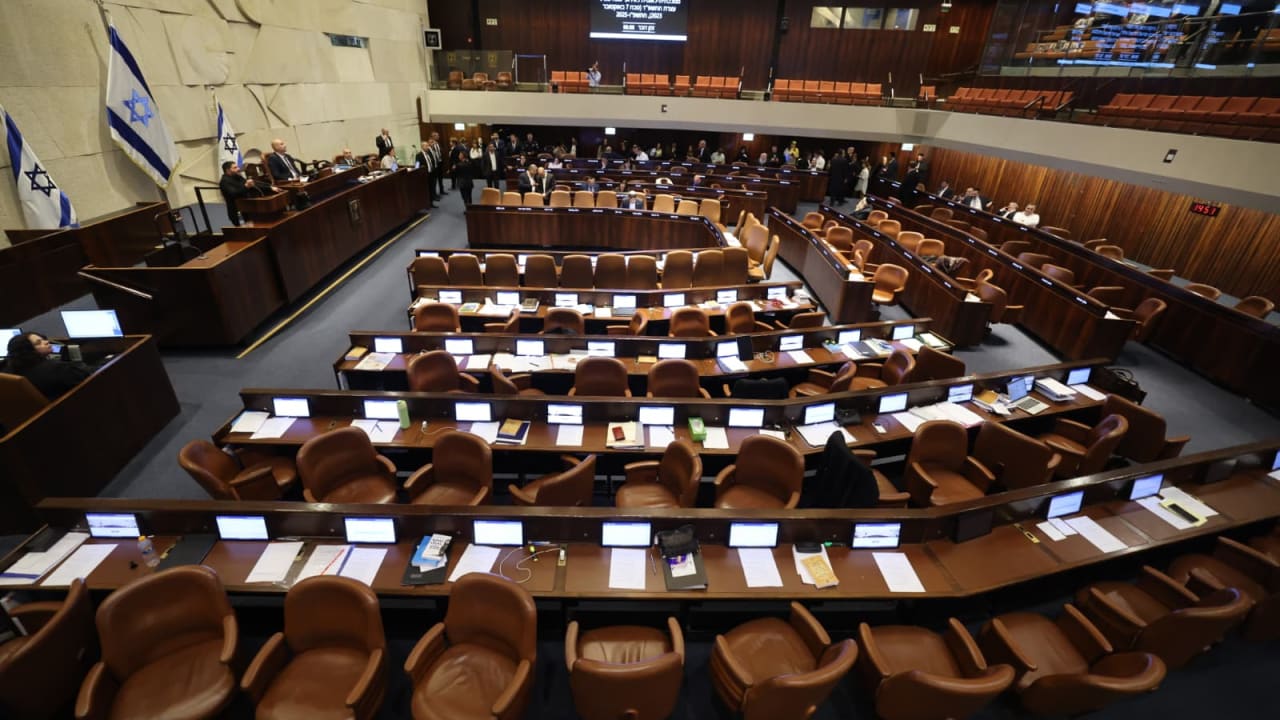
NOVEMBER 8, 2026 10:33Just as Jews in general do not like to be defined by negative stereotypes, non-Jews who have nothing against Jews per se, but who are anti-Israel, do not like to be labeled as antisemites.Similarly, Jews who are not Zionists do not like to be accused of being self-hating.Both the coalition and opposition parties in the Knesset are united in their desire for a Jewish and democratic state, and a government coalition that includes only members of Zionist oriented parties.This excludes the ultra-Orthodox (haredi) parties and the Arab parties.The haredi parties are not only non-Zionist, but also object to Israel being called a Jewish state instead of a state of and for the Jews.Yousef Jabareen, chairman of the Joint List, attends the party’s campaign launch event ahead of the upcoming Israeli general elections, in Tel Aviv, October 5, 2026 (credit: AVSHALOM SASSONI/FLASH90)In their perception, a Jewish state is more or less a theocracy. It is not a Jewish state when Shabbat is violated by cars; where there are non-kosher restaurants that operate seven days a week; where not everyone fasts on Yom Kippur; where family purity laws are ignored by large segments of the population; and where homosexuality is accepted as yet another norm. The issue of an openly gay speaker of the Knesset rankles the haredi parties, and that is one of the reasons that they want to replace Amir Ohana.The list is of haredi objections to Israel calling itself a Jewish state is much longer, but the above mentioned are some of the most obvious reasons.As for the Arabs – one can hardly expect them to be Zionists, or to be supportive of Jewish law.At best, they can believe in a democratic state.Admittedly, there are Christian Zionists, but most are strong believers in biblical prophecy, which puts them on the same side as Zionists.Haredim also believe in biblical prophecy, which perhaps places them in the role of authentic Zionists as distinct from people who believe that Israel is the Jewish homeland, but observe very few of the Jewish religious laws.While the Zionist Movement was founded in 1897, well before the Holocaust, it was only after the Holocaust that Jews began to come to Israel in droves. Efforts by Jabotinsky and others to persuade Jews to relocate to pre-state Israel yielded few positive responses.But during and immediately after the Holocaust there were anti-Jewish riots in several Muslim majority countries as well as in Europe and Africa, and operations such as Aliya Bet, Ezra and Nechemiah, Magic Carpet, Operation Moses, and other mass immigration projects were launched.Not everyone who came to Israel in the early years of the state was a Zionist – certainly not the haredi rabbis and lay leaders of haredi communities.Today, the various haredi communities collectively number some 1.5 million souls, and the numbers will continue to increase, because of the high birthrate in haredi families.Many Arab families also have a high birthrate.Despite the fact that many Israeli Arabs have integrated successfully into mainstream Israel, they are not always treated equally – especially after October 7.If some of the things that are said about them, coupled with certain restrictions that are proposed or imposed against them, were to be said and enacted against Jews, there would be a huge outcry of antisemitism.Eventually, whether future governments like it or not, Israel will have to accept a state of all its citizens or a Palestinian state.The recent Arab turnout for the elections was proof that the Arab population is on the way to receiving the same consideration as its Jewish neighbors.There will be more educational facilities, more community services; more access to government offices; better job opportunities – and much more.They may also influence issues of legality such as the so-called illegal Bedouin villages in the Negev and the West Bank. Bedouins serve the army, and Bedouins rescued people during the Hamas attack on October 7. They deserve to have their villages recognized and legalized.Arab Israeli's integration into IsraelIsrael justifiably rejects all charges of apartheid. Arabs mingle with Jews on public transport. They work as doctors and nurses in all of Israel’s hospitals; they attend Israeli universities; and most important, they are represented in the Knesset – and not only in Arab parties. But they are still unofficially barred from sitting in the government, although there have been a few exceptions in relation to Arabs who were members of non-Arab parties. The first Muslim Arab to serve in the cabinet was Labor Party MK Raleb Majadle, who in 2007 was appointed minister of science, culture and sport.Yousef Jabareen, who heads the Hadash faction in the Joint List, wants to see greater Arab integration into mainstream Israel. Hadash has frequently had Jewish politicians among its Knesset representatives. Currently, there’s Ofer Cassif, but in the past there have been Dov Khenin, Tamar Gozansky, and Meir Vilner. Vilner was the last and youngest person to sign Israel’s Declaration of Independence.Perhaps it would be beneficial for representatives of both the coalition and the opposition who are presently vying for control of the government to study the list of signatories and what they represented. The signatures on the declaration provide a fine example of unity without uniformity.Follow us on Google
Can Israel build a Jewish state that includes its Arab citizens? - opinion
Full Article
Original Source
Read the full article at Jpost →KhanList aggregates and links to publicly available news content. We do not host full articles from third-party sources. Always verify important information with original sources.