
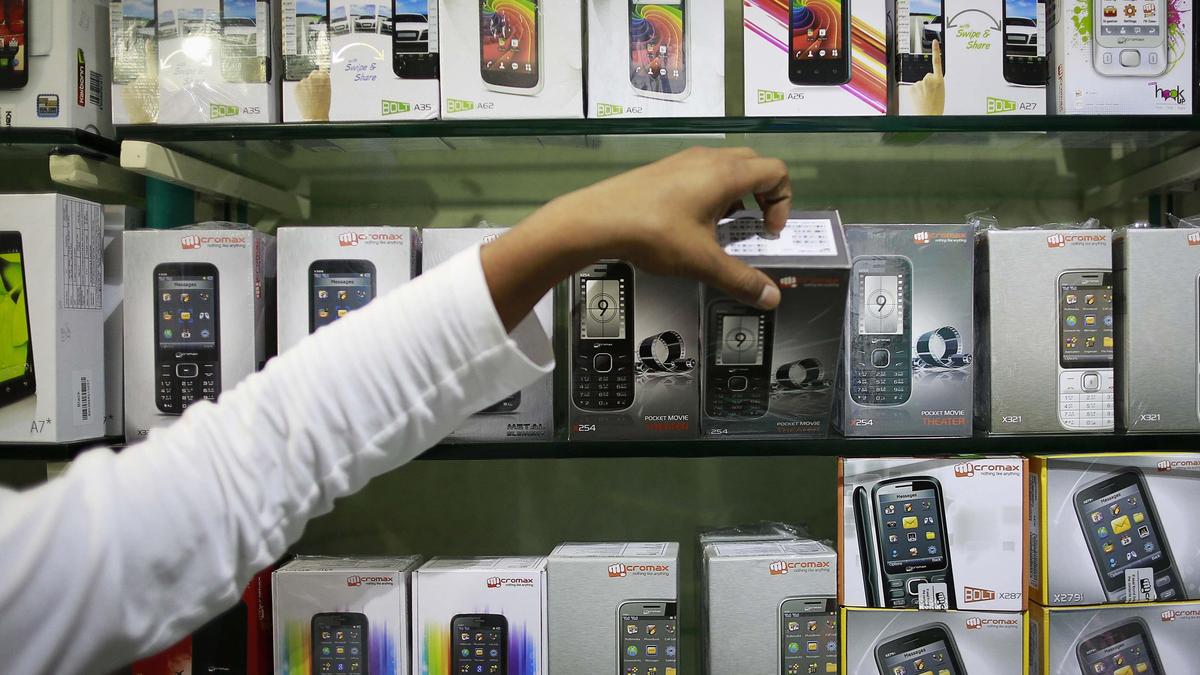
India’s IT Minister, Ashwini Vaishnaw, in a recent interaction with NDTV, outlined an ambitious target that by October 23, 2028, India will have its own mobile phone brand, designed and made locally. While the minister’s intent reflects a strong government policy to foster indigenous manufacturing and self-reliance, translating that vision into commercial success presents steep operational and market hurdles.The competitive landscape is daunting as Chinese Original Equipment Manufacturers (OEMs) control nearly 70% of India’s smartphone market, as per Counterpoint. Apple, on the other side of the globe, dominates premium market phones. The iPhone maker’s dominance has forced Chinese players to re-evaluate their strategies across price bands.Ai+, a relatively new domestic smartphone maker, shipped over 10 lakh units in the September ending quarter. And newer entrants like Mivi and Boltt are entering the market at time when the collective market share of India-made smartphones is a modest 7%, per Counterpoint analysis.But can these brands compete against Apple, Nothing, Samsung, Oppo and Vivo?Supply chain dependenciesEvaluating the 2028 timeline requires a close examination of how Indian smartphone brands have historically performed. For years, domestic players have played catch up with global handset brands instead of driving true innovation — a strategy that has left local firms vulnerable to rapid market shifts.Domestic manufacturers must need a fundamental shift in their strategy, Faisal Kawoosa, founder of Techarc, said.“We will have to change our approach to achieving this,” he noted, highlighting two major flaws in the traditional catch-up model.“First, we have to be subservient to the global supply chain, and our mission’s success depends on how well it serves their business goals,” he explained. “The second challenge is that, since we decide to do our version of something that already exists, by the time we get there, market conditions may have changed, and whatever we achieve might lose relevance. For example, if we focus on, say, the sub-$200 market, customer preferences might shift strongly toward upper tiers, as is happening now.”Achieving true brand independence demands comprehensive R&D across hardware, software, materials, and apps. Mr. Kawoosa said this foundation cannot be built hastily. “We have to do intensive, broad R&D that also covers materials, electronics, software, hardware, apps, etc. We can’t achieve this in 2 years; it will take at least 5-10 years, provided we do it sincerely,” he stated.He added that India’s product design capabilities are not yet ready to propose disruptive solutions that attract global supply chains, questioning long-term sustainability by 2028.Scaling frameworkBeyond R&D timelines, market dynamics present an equally steep challenge as the Indian smartphone market is a zero-sum game where one brand’s gain is another’s loss, according to Tarun Pathak, Research Director at Counterpoint. To achieve meaningful scale, brands must progress through clear operational stages.“Go-to-market, channel and pricing can help a brand reach 0-5% share, even with an ODM-dependent supply chain,” Mr. Pathak explained. “Getting to 5-10% requires real hardware differentiation, design and R&D, local sourcing, and solid operations: brand building, after-sales and channel execution. Anything above 10% requires massive scale, software differentiation, strong brand pull and tight control over hardware.”Currently, domestic makers like Lava and Ai+ have sustained their presence by filling the vacuum left by foreign rivals that withdrew budget models. However, Mr. Pathak feels that long-term growth cannot rely on competitor retreat.“Moving forward, growth cannot rely solely on competitors pulling back; Indian brands must invest in R&D, product quality, and scalable customer service operations,” Mr. Pathak said.Software differentiationApart from hardware development, software differentiation is another major battleground.Indian brands must offer distinct software capabilities alongside deeper value-chain localisation and superior user experiences to retain customers beyond their initial purchase, Mr. Pathak said.Signs of deeper domestic capability are emerging. Noida-based electronics manufacturer Optiemus recently acquired a 51% stake in CMF, a sub-brand of Nothing. Optiemus aims to manage whole-stack development locally; spanning R&D, manufacturing, and intellectual property creation, marking a shift toward genuine local value creation.What lies ahead?The government’s goal of establishing a homegrown smartphone brand by October 2028 sets a clear benchmark for national ambition. However, achieving market relevance against global leaders requires moving past price competition and contract assembly.Long-term success hinges on sustained R&D investments, tight hardware integration, and software differentiation capable of delivering lasting user value.On top of this, brands must create brand identity for any new brand to succeed in India. Consumers tend to perceive brand identity through the lenses of their electronics spending budget. In those segments, they exhibit loyalty by sticking to it whenever they go for their next purchase.Newer brands must have a definitive feature, either in hardware or in software, that can give them an edge in a price-conscious market. Only that differentiation can make a customer look beyond their usual brands.Minister Vaishnaw has promised that a product like this will be available in two years. Any domestic brand capable of fulfilling this promise is welcome in a country still without a locally-made flagship smartphone.
Can Indian homegrown smartphone brands compete with global giants?
Full Article
Original Source
Read the full article at Thehindu →KhanList aggregates and links to publicly available news content. We do not host full articles from third-party sources. Always verify important information with original sources.