
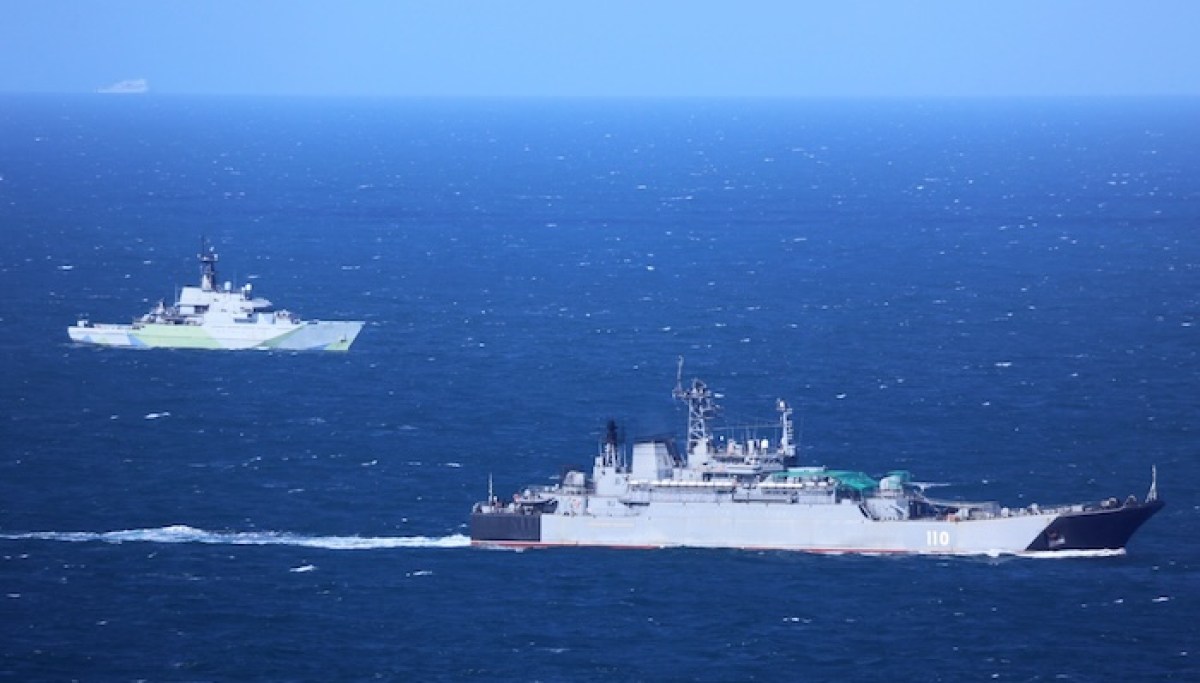
The United Kingdom’s Royal Navy is globally regarded for the skill of its personnel, particularly its submariners. A capable navy has long been considered crucial to the security of this island country.But not so today — at least not by U.K. politicians. Indeed, according to Defense Eye, the French Navy is meeting this week with its Spanish, Dutch, and Italian counterparts on a relevant matter: how to fill the NATO security gaps born of the Royal Navy’s decrepit situation. The problem is that these European navies also have limited ability to operate in the Arctic and Atlantic oceans due to their own governments’ failure to invest in defense. And while submarine forces from Germany, the Netherlands, and Norway are small but highly capable, they lack the endurance of their American, French, and British nuclear-powered counterparts.Regardless, French concern over the Royal Navy’s status is certainly justified.For a start, all of the U.K.’s attack submarines have been nonoperational for most of 2026 — one was deployed early this year. At the same time, the few deployable surface warships are heavily overstretched. This leaves the Atlantic Ocean vulnerable to Russian submarines that are seeking to threaten NATO interests. They include the Yasen-class attack and missile submarines, which are extremely quiet. As the Washington Examiner reported at the time, there is circumstantial evidence to suggest that one of these submarines was secretly operating off the site of the 2021 G-7 summit in the U.K. And in April, the Royal Navy was just barely able to counter Russian submarines that were targeting U.K. undersea cables.Many senior U.S. Navy officers are probably thinking, “Thank goodness for the French, then.” After all, in a reversal of history, today’s French Navy is more agile than the Royal Navy. Following the start of the Iran war, France was able to surge numerous warships. The U.K. deployed only one destroyer, and only after a long delay in getting it out of port. That destroyer then broke down after arriving in the Mediterranean Sea and spent nearly two weeks undergoing repairs at a port in Crete. The U.K. attempts to deflect attention from this malaise by pointing to the deployments of its two aircraft carriers and ballistic missile submarines. But the aircraft carriers and their air wings have effectively zero anti-ship warfare capability. And the ballistic missile submarines are systems of nuclear deterrence, not conventional defense.Russia is taking advantage of this dysfunction. Russian submarine forces are operating at Cold War levels and behaving as aggressively as they did then. And while the American and French navies can fill some of the gaps left by the Royal Navy’s submarine force, doing so places outsize burdens on their own readiness. This is particularly concerning from a U.S. perspective.WHY TRUMP IS NOT GOING TO USE A NUCLEAR WEAPON AGAINST IRANSpeaking earlier this year, the commander of U.S. Pacific forces, Adm. Sam Paparo, warned Congress that “we certainly don’t have enough attack submarines, and our trajectory is on the wrong side.” Paparo’s comments reflect the fact that attack submarines would be crucial in defeating any future Chinese attack on Taiwan. And that contingency is the paramount conventional U.S. national security concern. The naval inadequacy of the U.K., America’s closest ally, is thus undermining the special relationship.Put simply, Prime Minister Andy Burnham’s government needs to get a grip. It needs to throw money at the Royal Navy, now. It needs to stop pretending that hard naval power can be built around cheap unmanned systems. And most of all, it needs to find a way to get, and keep, its attack submarines at sea.
Can Europe stop Russian submarines from exploiting broken UK navy?
Full Article
Original Source
Read the full article at Washingtonexaminer →KhanList aggregates and links to publicly available news content. We do not host full articles from third-party sources. Always verify important information with original sources.