
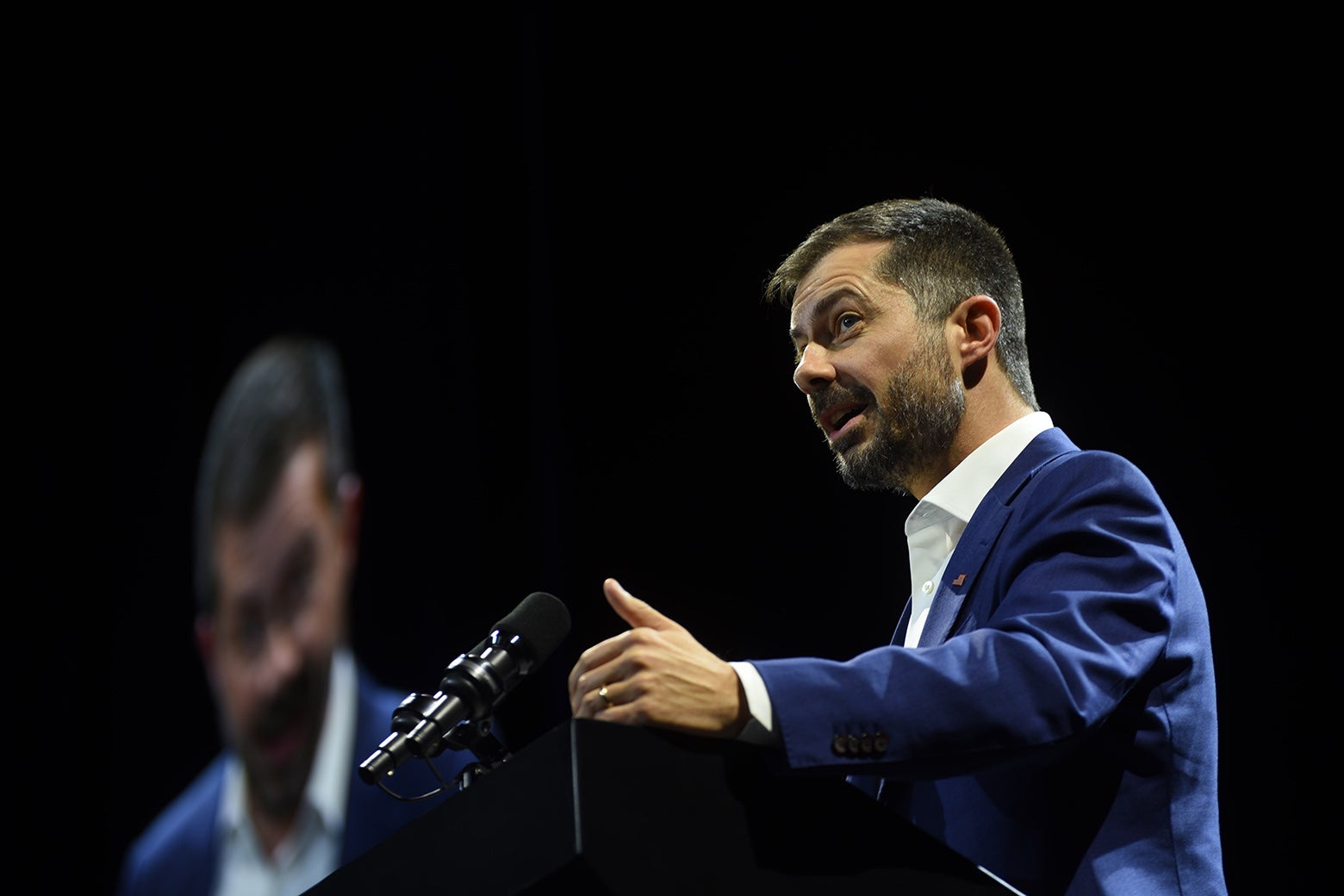
Politics Democrats in Array In Denver this weekend, the party gathered to celebrate—and it was too early to start fighting about 2028. Mark Makela/Getty Images Sign up for the Slatest to get the most insightful analysis, criticism, and advice out there, delivered to your inbox daily. DENVER—For two days last week, Democrats got to celebrate their midterm victories at a conference that did not carry the overwhelming dread that the left has felt in the decade since Donald Trump’s first presidential election in 2016. The conference, called “What’s Next,” actually entailed plenty of conversations in which participants, from senior members of Congress to zoomer digital operatives, asked each other, “What’s next?” And finally, instead of treating the answer like a nihilistic punch line, with a shrug and wide eyes, there was a sense of relief and bemusement. No one knew exactly what the future looked like (or, with the nationwide flight cancellations, how they were getting home), but they didn’t mind. The conference included speeches, panels, and countless open bars. It came just over a week after a seismic midterm election that featured the best electoral performance by either political party since 1974. After 10 years of Trump, with a pandemic in the middle, it was perhaps the first time Democrats could truly exhale. There was certainly reason to party. The event was held by a group called Majority Democrats, which has backed a tranche of candidates who almost uniformly won in the 2026 midterms, including Iowa Gov.-elect Rob Sand and Texas Rep.-elect Bobby Pulido. It represents perhaps the ideological middle of the Democratic Party. There were some figures who positioned themselves on the left of the party, like California Rep. Ro Khanna, and others who were explicitly moderate, like New York Rep. Tom Suozzi. But it mostly hit the normie lib lane, promoting potential presidential candidates like Pete Buttigieg and Raphael Warnock, Democratic stars with different backgrounds, different policies, but the same broad appeal to MS NOW’s primetime audience. Few cracks in the Democrats’ postvictory veneer were visible. Outside the event, a handful of demonstrators held signs protesting Chuck Schumer’s continued tenure as Democratic leader in the Senate—an odd choice, considering that while Schumer’s challenger, Chris Van Hollen, was in Denver, Schumer was not. But inside, the feud between the various factions of the party was largely ignored. A panel with two of the party’s most profiled operatives (a distinction slightly different from most high-profile), Lis Smith and Morris Katz, mostly spotlighted common ground between Smith, who is associated with the Democratic center left, and Katz, who is associated with the hard left of the party. Even the potential specter of a 2028 presidential campaign that could feature a field of dozens offered little angst. It’s simply too early for things to get spicy, especially at what was essentially a trade convention. Instead, for countless operatives who had shown up at the event to mingle, network, and attend some trainings, it was a chance to court those who could make hiring decisions—or perhaps even the principals themselves—at the Ritz-Carlton bar once the day’s programming had ended. (On one night, Ruben Gallego held court while Buttigieg and Andy Kim conversed off to the side.) In a Democratic Party that has grown increasingly virtual since the pandemic, countless professionals got to meet colleagues whom they had previously met only on Zoom or, worse, court personalities whom they had known only on Twitter. The head-to-head tapping of iPhones to share contact information was almost as common as a handshake, as political professionals mingled in a vast courtyard outside the music hall that held the main stage of the event. The speakers were almost an afterthought. There were plenty of attendees who sat in the dark, dutifully listening as speaker after speaker made clear that Democrats were “renting” the voters who delivered them these midterms and that this did not signal a permanent realignment. One could see earnest 23-year-olds sitting quietly in the dark next to figures like Delaware Sen. Chris Coons in presentations on polling data. Those in the concert venue where the speakers took the stage, often in TED Talk–like format, processed the information soberly and attentively. Outside the room, the networking proceeded attentively, if not entirely soberly. The good vibes among Democrats almost certainly won’t last. After all, the party’s presidential primaries in the past two decades have inevitably ended in hurt feelings and recriminations, and there are already fault lines forming as figures on the left push online-fueled efforts to dethrone both Schumer and Hakeem Jeffries as the Democratic congressional leaders next year. (In an age when more centrist Democrats face almost de rigueur protests from the hard left, it’s worth noting that the only person on the schedule protested at all during the two-day event was Jeffries himself.) But at least for now, the vibes were “immaculate,” as several attendees put it. And even if Democrats revert to some of their past fratricidal behavior, it wouldn’t be the worst thing to be “What’s Next.” After all, even that is better than more Donald Trump. Democrats 2026 Midterms
Can Democrats Finally Get Along? I Went to Their “What’s Next” Conference to Find Out.
Full Article
Original Source
Read the full article at Slate →KhanList aggregates and links to publicly available news content. We do not host full articles from third-party sources. Always verify important information with original sources.