
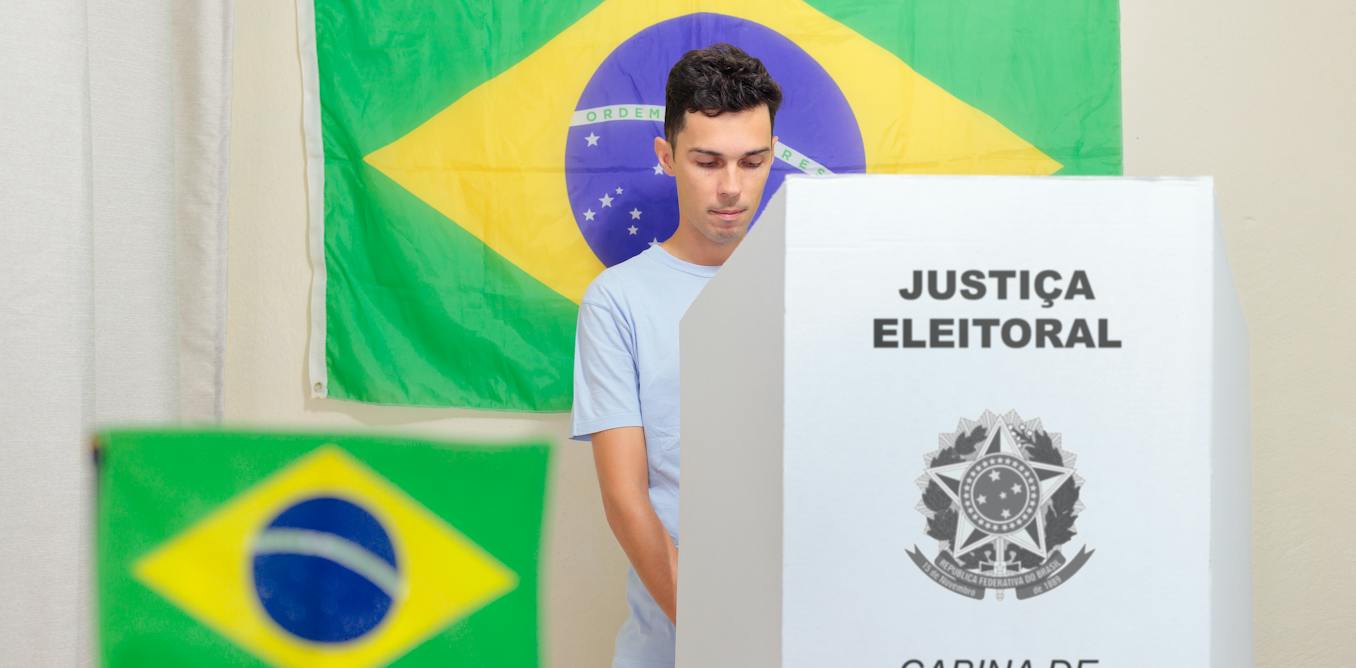
KEY TAKEAWAYS Brazil’s experience offers lessons for other democracies, including Europe, that are turning to education to strengthen democratic resilience. Knowing how institutions work is not enough: democracy is learned through experience as much as via content. Civic education mandates often fail between the law and the classroom. Teachers, time and democratic school life decide whether they take hold. In Brazil’s presidential run-off on October 25, President Lula turned the result around against the odds by winning a fourth term with 51.77% of the valid votes. It was the first time since Brazil’s return to democracy that the runner-up in the first round went on to win. First-round abstention reached 21.08 %, the highest rate in a presidential election since 1998. It fell to 19.22% in the run-off, but more than 30 million eligible voters still stayed away. This is no one-off: abstention has crept up since 2006, when it stood at 16.75%. Experts blame disenchantment after decades of scandals and two presidential impeachments, voters registered in towns they have left, and fines up to R$3.51, less than one euro, for those who neither vote nor justify their absence. In a country where voting is compulsory for most adults, seeing it as a right, rather than merely a duty, will require a deeper cultural shift. That shift begins long before election day, through civic education : learning not only how democracy works, but how to question, act and influence public life by tackling concrete problems in their communities. Yet civic education received little attention in the campaign. In his platform, Lula proposed a national digital literacy policy to combat disinformation. The policy would teach people of all ages, especially older people, to navigate the internet critically, but the programme says little about schools. Flávio Bolsonaro, for his part, pledged schools that teach students “how to think, not what to think”, free from partisan indoctrination, and more civic-military schools. Beyond electoral promises, what is Brazil’s long-term vision for preparing citizens to take part in democracy? A promise on paper Brazil’s 1988 Federal Constitution already states that education must prepare people for the exercise of citizenship. The 1996 National Education Guidelines and Bases Law (LDB) made this one of the core aims of basic education, and the National Common Core Curriculum (BNCC) includes citizenship among the skills every student should develop. Yet the gaps are large. The 2022 International Civic and Citizenship Education Study (ICCS) found significant gaps in Brazilian students’ civic knowledge. According to the OECD’s 2024 Truth Quest Survey, Brazilians had the lowest ability among 21 countries to distinguish between true and false or misleading online content, with an accuracy rate of 54%, compared to an average of 60%. In September 2025, the executive branch responded: a ministerial ordinance created the Brazilian Ministry of Education’s Program for Citizenship and Sustainability Education. Joining is voluntary, yet by July 2026 all but one of Brazil’s 26 states and 57% of its municipalities had signed up. Its competency matrix sets out 46 skills, from pre-school to the end of secondary school, in three strands : fundamental rights and environmental citizenship the democratic ecosystem and its defence citizenship in practice. Pupils should learn, for example, to recognise democratic breakdowns and authoritarian proposals in Brazil’s history, to understand what the Supreme Court and the leaders of both houses of Congress do, to tell free speech from hate speech, and to take part in their school’s democratic bodies, such as student councils. Networks that join must appoint a coordinator and draw up a local plan, and teachers can take online courses on the ministry’s platform. The programme’s own guide acknowledges “significant gaps” in citizenship education in Brazil, and promises a national plan to monitor implementation and learning outcomes. In July 2026, more than a decade after the original bill was introduced, a new law amended the LDB to make civic education a compulsory curricular component. It is not the first time. In 1969, the military junta made moral and civic education compulsory at every level, alongside a secondary-school subject called Brazilian Social and Political Organisation (OSPB). Among its stated aims was “the cult of the homeland, its symbols, traditions and institutions”. After the return to democracy, a 1993 law abolished both and folded their content into the humanities. Civic education is therefore, not new to Brazil. The challenge is to understand what each curriculum really sets out to teach. The new law has an unusual cross-party history. It was signed under Lula’s government, but originated in a bill by federal deputy Renata Abreu, leader of Podemos, a party that formally backed Flávio Bolsonaro in the run-off. In a deeply polarised country, could civic education become a rare point of common ground? Its reach will also depend on how the law and the programme fit together, since one is compulsory and the other is voluntary. Ideally, each feeds the other: the law gives the 43% of municipalities still outside the programme in July a reason to join, and the programme gives schools the means to comply. Together, they could take civic education to every school; apart, many schools will face a new duty without the means to meet it. From law to the classroom The law makes civic education compulsory, but not necessarily as a standalone subject. It could be woven into existing classes, such as history, geography and Portuguese, or taught through interdisciplinary projects. Given the autonomy of Brazil’s education systems, some states could also make it a separate subject. Much remains to be defined. The law does not specify teaching hours, grade levels, teacher qualifications or materials. Its incorporation into the National Common Core Curriculum still requires approval by the National Education Council and ratification by the education minister. Only then will states, municipalities and schools adapt their curricula. In October, the electoral court and the education ministry agreed to work together on regulation, teaching materials and school election simulations. Learning by doing has a track record: since 2004, the Chamber of Deputies’ Youth Parliament has brought 78 secondary school students to Brasília for each edition, to debate and vote on bills as if they were deputies. But such programmes reach few pupils, and institutional commitment is only a first step. Nor is the new law consensual. Associations of philosophy and social science teachers asked for a veto, fearing it would weaken philosophy and sociology, and the Escola sem Partido movement warned of ideological indoctrination. Though raised from different angles, both concerns point to the same condition for success: teachers trained not only in content, but in a professional ethic above party lines, so that students learn to form their own views rather than adopt someone else’s. Brazilians even have an expression for laws that never take hold: “Leis que não pegam.” This gap is precisely why Politize !, the non-partisan civic education institute I co-founded in 2015, has run its Active Citizenship School programme for over eight years. In Brazilian public schools alone, more than 19,000 teachers have used its training and materials to reach around 288,000 students. In 2026, this work earned Politize! the European Union’s Human Rights Award in Brazil. Politize! and its 400+ volunteers organise civic education workshops across Brazil to promote civic empowerment and strengthen democratic participation among the younger generation. For the new law to take hold, civic education must be cross-curricular but with clear owners, interdisciplinary but not diluted, and non-partisan but not depoliticised. It will need teacher training, suitable materials, curricular time, coordination and monitoring. Could this law become the opportunity to bring civic education to scale across Brazil? When democracies turn to the classroom Brazil would not be the first country to turn to the classroom when its political order is under strain. In such moments, civic education is less an education policy than an attempt to rebuild a shared democratic project. In 1952, a West Germany rebuilding after Nazism and war created a federal agency to consolidate and spread democratic and European ideas among Germans, today’s Federal Agency for Civic Education. In 1976, a meeting of educators from across the political spectrum gave rise to the Beutelsbach Consensus : teachers must not indoctrinate, must present contested issues as contested, and must enable students to take part in democracy. Fifty years on, it remains the standard in German classrooms, and a useful reference for Brazil’s own fears of indoctrination. Latin America offers closer parallels. In Chile, after a wave of corruption scandals, a 2016 law required every state-recognised school to adopt a citizenship education plan and paved the way for a compulsory subject, Citizenship Education, in the final two years of secondary school, which was introduced in 2020. In Colombia, a 2014 law passed during peace talks with the FARC guerrillas made a course on the culture of peace compulsory in every school and a 2015 decree required it to be assessed in the national school-leaving exam. Other countries have focused on participation. In Argentina, a 2013 law requires education authorities to recognise and support student councils in secondary schools. In Mexico, the electoral authority, INE, gives children and teenagers the opportunity to vote on issues that affect them: more than 10 million people aged 3 to 17 took part in 2024. Across Latin America, civic education often stops at declarations. A 2020 UNESCO review of primary-school curricula in 19 countries in the region (Brazil’s included) found that citizenship features in all of them, but that such concepts appear more often in statements of principle than in the content teachers use to plan lessons. Europe shows that a place in the curriculum is only half the battle. Italy, for instance, made civic education compulsory in 2019 as a cross-curricular subject of at least 33 hours a year, shared among each class’ teachers and taught since 2020. Across Europe, the weak link has been teacher preparation. When the EU’s Eurydice network reviewed 42 education systems in 2017, 17 had no central rules or recommendations on preparing future teachers for citizenship education, and only 13 of the 36 systems that taught it across subjects defined what all future secondary teachers should master. A new Eurydice report, due in December, will show what has changed and give Brazil and its neighbours a benchmark. In the end, teachers decide whether civic education takes hold, and they can only do so if education systems prepare and support them. A lesson from the run-off Brazil’s run-off showed what is at stake. Citing transport failures and floods, Supreme Court justice Cristiano Zanin extended voting by two hours nationwide, after both campaigns had requested extensions in some areas. Flávio Bolsonaro called the decision unacceptable refused to concede and said he would seek to annul the election. Whether the decision was right is for institutions to judge. Within days, after Supreme Court justice Alexandre de Moraes ordered him to surrender his passports in a money-laundering investigation, Flávio Bolsonaro left Brazil for the United States. His allies called it political exile from judicial persecution. Critics, Lula among them, replied that “those with nothing to hide have nothing to fear”, and some suggested he was getting ahead of January, when his Senate term ends, and with it the special legal standing it grants. Each side tells a ready-made story. When politics works more like a clash of tribes, or a form of entertainment, than a shared civic space, no school subject can protect citizens on its own. What civic education can offer is a shared grammar for such decisive moments on the political agenda: separating facts from narratives, accepting results, and contesting electoral proceedings and practices through evidence, transparency and the courts. Lula’s new term will be the first to implement the law that seeks to promote civic education. Making it work will require treating civic education as state policy, not government policy. Brazil already obliges its citizens to vote; the harder task is preparing them to vote well and to take part in democracy between elections. If the law succeeds, the country will have shown the many democracies now turning to the classroom that democracy can be taught and, above all, practised. A weekly e-mail in English featuring expertise from scholars and researchers. It provides an introduction to the diversity of research coming out of the continent and considers some of the key issues facing European countries. Get the newsletter!
Can democracy be taught? Brazil is about to find out
Full Article
Original Source
Read the full article at Theconversation →KhanList aggregates and links to publicly available news content. We do not host full articles from third-party sources. Always verify important information with original sources.