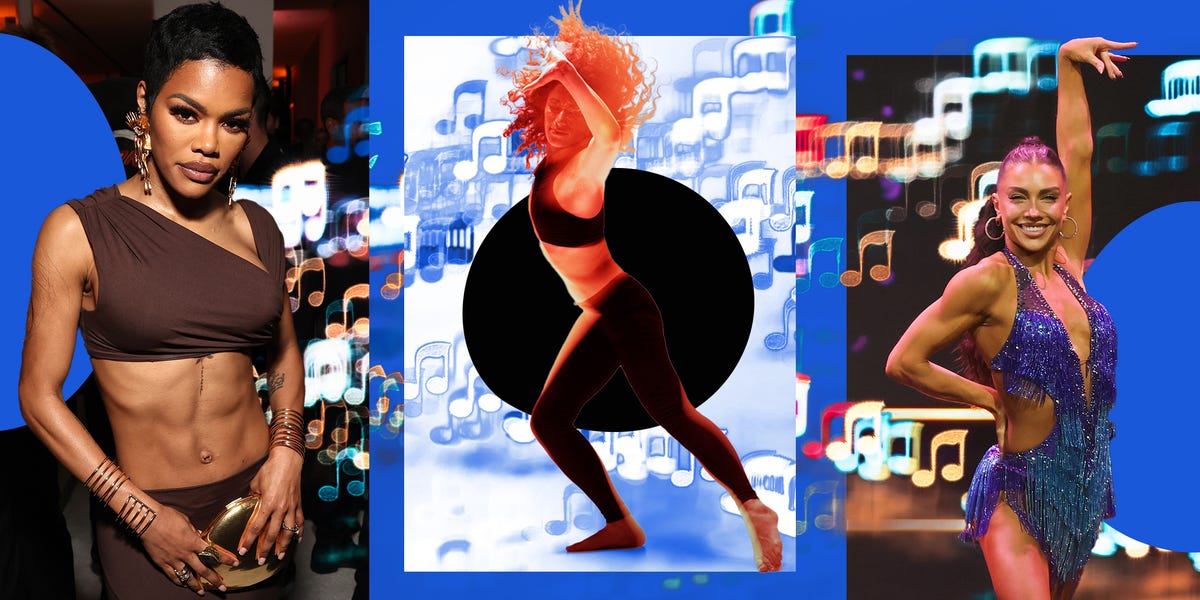
5 min readOver the past year or so, I’ve noticed a pattern when it comes to celebrity workouts. Despite having noticeable muscle, stars like Teyana Taylor and Zara Larsson say they don’t do traditional strength training—instead, they dance. As I’ve sat on my couch and watched insane physiques glide across my TV on Dancing with the Stars, I couldn’t help but wonder: Can dancing really build muscle?Dancing has a ton of benefits: It strengthens the cardiovascular, metabolic, musculoskeletal, and cognitive systems. “You're actually developing new connective networks in your brain to your body, because you're learning new movement skills,” says exercise physiologist Alex Rothstein, CSCS, ACSM-EP, an instructor at the New York Institute of Technology, who did competitive ballroom dancing for 10 years.Meet the experts: Alex Rothstein, CSCS, ACSM-EP, is an exercise physiologist and instructor for the exercise science program at the New York Institute of Technology. Jessi Perna-Elias is a barre, Pilates, and dance instructor, and member of the Women’s Health Strength In Diversity class of 2025 based in Philadelphia.It also improves your coordination, balance, memory, and stability, says Jessi Perna-Elias, a barre, Pilates, and dance instructor and member of the Women’s Health Strength In Diversity class of 2025. Plus, it’s fun!Of course, pro dancers have seriously muscular abs, arms, and legs—but can everyday dancers really layer on muscle if their only workout is busting a move? Ahead, find out how dancing affects your body, and how to incorporate dancing into your routine if muscle is your goal.Does dancing build muscle?Technically, it can. But “you're not necessarily building muscle the traditional way we imagine it,” in terms of hypertrophy or growing muscle size, Rothstein says. Hypertrophy comes more from overloading the muscles with weights or repeated intensity. “Most individuals, when they're dancing, don't get to that level that would result in significant muscle growth,” he adds.Take Dancing with the Stars, for example. The pros are moving at a way higher intensity than the average person taking a dance class for fun. “There is a high level of stress on the muscle” through lots of different moves and at different paces, depending on the dance genre.They’re constantly engaging their muscles isometrically, meaning they’re holding a position, Rothstein says. (Think of how long they have to keep their arms still while holding their partner during a waltz, for instance.) “If you hold a muscle's contraction and there is no movement, the muscle is still working” against tension, he adds. “That could be beneficial for developing a little bit of muscle.” Plus, it burns a lot of calories, which can lower your body fat percentage, making muscle tone more visible.Why Dancing Affects Everybody DifferentlyThe average person likely isn’t dancing as much as the DWTS pros, and shouldn’t expect the same physical results. However, for those who don’t do any physical exercise, dancing can create a baseline of muscle. “If you're a beginner, every stimulus builds a lot of muscle quickly,” and that includes dancing, says Rothstein.But if you keep at it, eventually you’ll get to a point where “you might have to add on something else like regular strength and resistance training” to increase your muscle size, says Perna-Elias. In order to build muscle, you have to progressively overload your muscles by leveling up different workout variables like reps, sets, or weight—whereas dance only uses your bodyweight. That’s why, if you’re an experienced exerciser, dancing builds muscle slowly compared to resistance training, Rothstein adds.Build muscle and lose fat with our exclusive body recomp planWhether you’ll see muscle growth with dancing also depends on your body type and genetics. Someone in a bigger body might lose weight after adding dance to their fitness routine because of the cardiovascular benefits, says Rothstein. Meanwhile, someone who’s smaller might see defined muscle instead.All in all, “I would not tell someone who wants to get bigger, more defined muscles that dance is the best answer for it,” Rothstein says. “You're not going to get nearly the growth in terms of hypertrophy as you would from loading it with weights.”When it comes to these celebrities, “it’s very unlikely” that they’re not doing other types of workouts, says Rothstein. “They have to be doing something in addition to dancing to get a lot of muscle development.” He predicts it’s likely a combination of multiple types of exercise and good nutrition.How to Build Muscle With DancingRothstein recommends following the CDC’s physical activity guidelines, which include resistance training two or more days of the week and getting at least 150 minutes of moderate-intensity aerobic activity (like brisk walking) or 75 minutes of vigorous-intensity activity (like jogging or running) per week.That might look like: full-body strength training routines two or three days per week, or focusing on different areas of the body for each workout (upper body, lower body, core, etc.). And for cardio, you could incorporate two to three dance sessions during your week. “That could be a very wonderful formula” for long-term health, says Rothstein. A fun way to incorporate both forms of movement would be to do half an hour of weight training, then hit a Zumba class. Just make sure you don’t train your lower body too hard on the same day that you dance.Shop Our Favorite Workout ClothesNew Balance Essential Run BraNow 30% OffCredit: Courtesylululemon Ebb to Street Tank TopCredit: CourtesyAlo Airlift High-Waist Suit Up LeggingCredit: CourtesyIn terms of the best dance genres for exercise, try the jive, Rothstein says. It’s full of fast-paced, active movements that build core and hip flexor strength (like high knees). The samba is also good because it has a lot of hip-based moves that use the core, like lunges. Those genres are “fatiguing if you're doing enough reps, and that fatigue could stimulate muscle growth,” he says. Plus, they’re good for your cardiovascular health.Additionally, with “breakdancing or hip hop style, that might require more jumping and power,” Perna-Elias says. “If you're doing a style like a cardio dance or a Zumba, it's going to be more aerobic.”All in all, you can’t go wrong with some formula of resistance training and dance in your fitness routine to build muscle and endurance—and have a good time while you’re at it. Here’s to building a fun, thriving relationship with exercise. Addison Aloian is the associate health & fitness editor at Women’s Health, where she writes and edits across the health, weight loss, and fitness verticals. She’s also a certified personal trainer through the National Academy of Sports Medicine (NASM). In her free time, you can find her lifting weights at the gym, running on the West Side Highway in New York City—she recently completed her first marathon, the 2025 New York City Marathon—and watching (and critiquing!) the latest movies that have garnered Oscars buzz. In addition to Women's Health, she’s made an appearance on the Oprah Podcast and her work has also appeared in Allure, StyleCaster, L'Officiel USA, V Magazine, VMAN, and more.
Can Dancing Build Muscle? Experts Unpack the Workout That Many Celebs Credit for Their Physiques
Full Article
Original Source
Read the full article at Womenshealthmag →KhanList aggregates and links to publicly available news content. We do not host full articles from third-party sources. Always verify important information with original sources.