
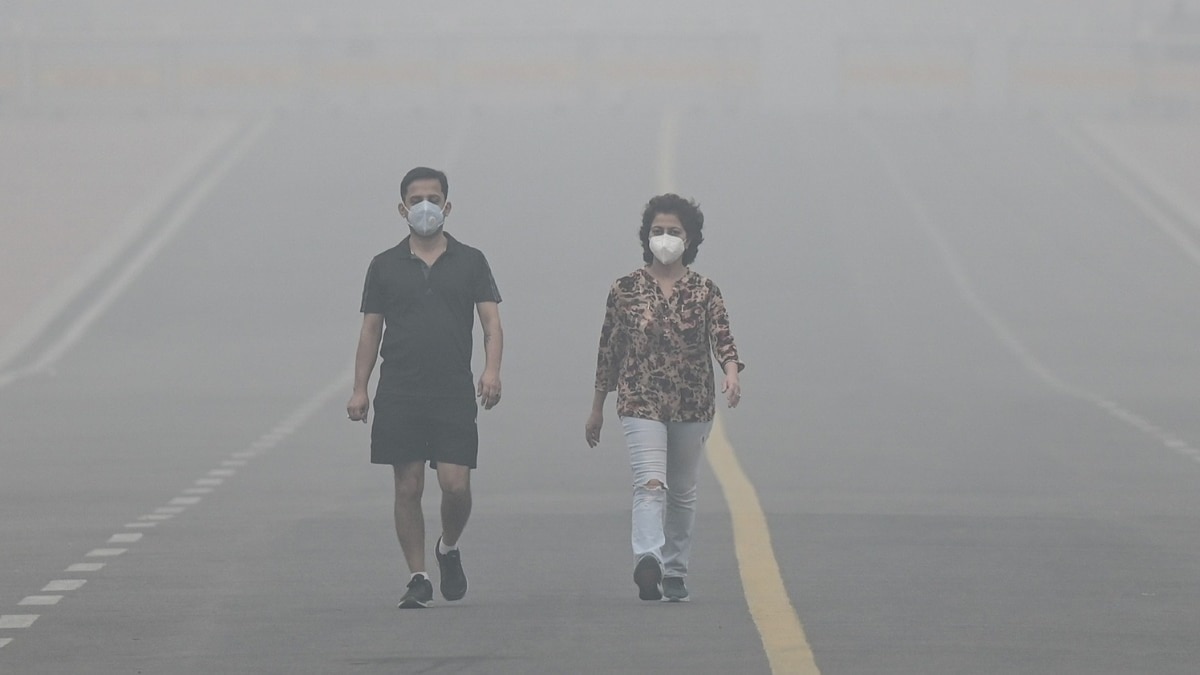
With air pollution continuing to grip the national capital, the Delhi government is considering another round of cloud-seeding trials after Diwali and Chhath Puja in an attempt to bring temporary relief from the worsening air quality.Sources told India Today that more trials are likely after the festive season if pollution levels deteriorate further, although the government is unlikely to make an official announcement before Diwali.The move comes as Delhi continues to record high pollution levels, with the city's average Air Quality Index (AQI) standing at 367 on November 5, placing it in the 'very poor' category. Jahangirpuri recorded an AQI of 459, while IIT Delhi and Punjabi Bagh reported readings of 445.Particulate matter, particularly PM2.5, remains a major contributor to the city's pollution burden, with poor visibility and respiratory discomfort adding to residents' concerns. The proposed trials would mark another attempt by the BJP-led Delhi government to use artificial rain as an emergency measure to tackle pollution.With Delhi's air quality deteriorating sharply ahead of Diwali, the state government had already conducted two rounds of cloud-seeding trials near the Indira Gandhi International Airport over the past 15 days to explore artificial rain as a possible measure to combat rising pollution, government sources said. According to the sources, the trials were conducted at an altitude of around 30,000 metres, significantly higher than the approximately 10,000-metre altitude at which similar cloud-seeding operations were carried out in Delhi last year.However, cloud seeding is dependent on suitable weather and cloud conditions and is not considered a substitute for controlling the sources of pollution.ARTIFICIAL RAIN: HOW CLOUD SEEDING WORKSCloud seeding involves dispersing substances such as silver iodide and sodium chloride into suitable clouds to encourage the formation of water droplets or ice crystals, potentially triggering rainfall.Rainfall can temporarily reduce airborne pollutants by washing particulate matter out of the atmosphere and settling dust. However, the effectiveness of the technique depends on the presence of suitable clouds and favourable atmospheric conditions.Delhi's experiment with artificial rain is not new. The government partnered with IIT Kanpur, formalising the collaboration through a memorandum of understanding (MoU) on September 25, 2025.Two rounds of trials were conducted in October 2025, during which eight chemical flares containing silver iodide and sodium chloride were released in each operation. However, the experiments failed to produce rainfall.The Delhi government subsequently released a report claiming that particulate matter levels had declined at the targeted locations following the trials.Environmental experts have cautioned against treating cloud seeding as a long-term solution to Delhi's pollution crisis. The city's primary challenge remains controlling emissions from vehicles, construction activities, industries, waste burning and seasonal agricultural fires.DELHI'S RECURRING WINTER POLLUTION CRISISDelhi's air pollution problem intensifies every winter as falling temperatures, slower wind speeds and atmospheric inversion trap pollutants close to the ground. Emissions from vehicles and industries, construction dust, waste burning and stubble burning in neighbouring states contribute to the deterioration in air quality.Successive governments have introduced emergency measures to tackle the problem, including restrictions on construction activities, anti-smog guns, water sprinkling and curbs on polluting vehicles.The odd-even vehicle scheme, introduced by the Aam Aadmi Party (AAP) government in 2016 and implemented again in subsequent years, was among the major interventions aimed at reducing vehicular emissions.The Graded Response Action Plan (GRAP) has also become a key part of Delhi's winter pollution-control strategy, with restrictions being introduced in stages as air quality deteriorates.Despite these interventions, the capital continues to face severe pollution episodes every winter, raising questions about the effectiveness of short-term restrictions in addressing the underlying causes.BJP, AAP TRADE BLAME OVER DELHI'S AIR POLLUTIONThe pollution debate has also acquired a political dimension following the BJP's return to power in Delhi after the February 2025 Assembly elections, ending AAP's tenure in the national capital.During its time in government, AAP repeatedly pointed to stubble burning in neighbouring states, particularly Haryana and Uttar Pradesh, as a major contributor to Delhi's pollution.The BJP, then in opposition, accused the Kejriwal-led government of failing to address local sources of pollution and relying on temporary interventions.With the BJP now governing Delhi and AAP in opposition, the political positions have reversed.The BJP has blamed the previous government for failing to tackle pollution over the years, while AAP has questioned the Rekha Gupta government's handling of the crisis and its ability to fulfil its pre-election promises.The parties have also exchanged accusations over pollution data, enforcement of restrictions and responsibility for stubble burning.For Delhi residents, however, the immediate concern remains the deteriorating air quality.While another round of cloud-seeding trials could offer temporary relief if weather conditions are favourable, the larger challenge for the government will be to reduce pollution at its source and develop measures that deliver cleaner air beyond the winter months.- EndsWith PTI inputs
Can artificial rain clear Delhi's toxic air? More cloud-seeding trials after Diwali
Full Article
Original Source
Read the full article at Indiatoday →KhanList aggregates and links to publicly available news content. We do not host full articles from third-party sources. Always verify important information with original sources.