
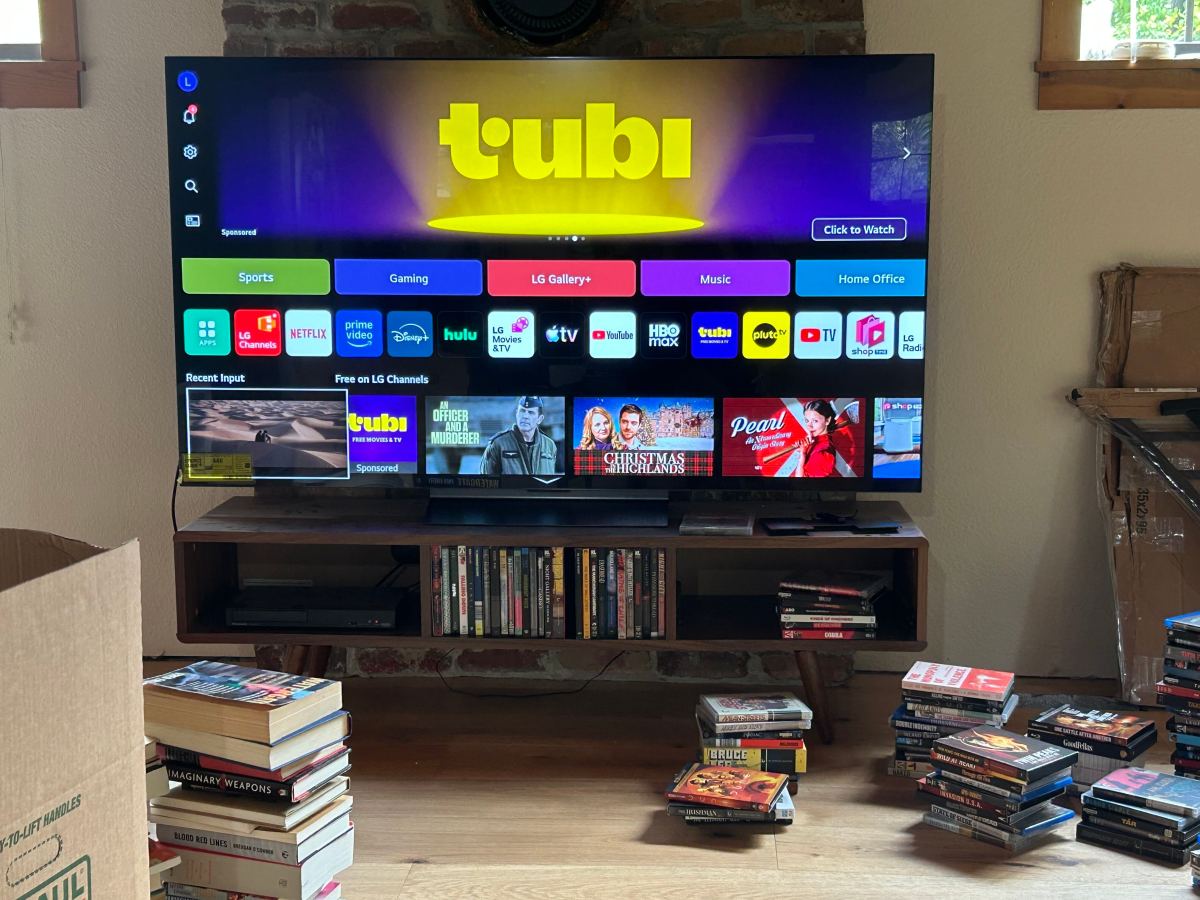
For the past couple of years, I’ve wanted to upgrade my home entertainment situation from the humble trappings of my long sufficient 55-inch TCL smart TV to the model much coveted by cinephiles the world over: the OLED. The organic light-emitting diode is a specific monitor technology that has really changed the TV industry. Unlike an LED TV, which creates images by shining a backlight through a panel of pixels, OLEDs leverage millions of self-lighting pixels, which provides significantly better pixel control, and can generate a much more nuanced image with deeply vibrant colors and a more intense light and shadows. In short: They look way better. They are also significantly more expensive, which is one reason that I’ve held off on investing in one for years. However, this year I couldn’t wait any longer. I finally sprang for an upgrade and, since I was already upgrading on image quality, I decided to upgrade the size, too: I bought a 65-inch LG evo C4, which is the company’s mid-range unit released in 2024. At first, the experience was amazing. The television rendered colors and shadows wonderfully and, seeing as one of the goals with this purchase was to indulge my physical media habit, I began running through my collection of 4K Blu-ray discs with the madcap energy of a true fanatic. However, things took a bit of an unexpected turn when, midway through “McCabe and Mrs. Miller,” I was suddenly overcome by a wave of nausea. I’m not particularly sensitive to motion sickness, but this sensation — which made it feel vaguely like I was going to hurl — persisted for several hours after it initially began. It was then replaced by a small tension headache. In short: Not great. I discovered that this is actually a somewhat common experience for new OLED adopters. Indeed, Reddit is rife with posts from new television owners who claim they feel like their big new toy is breaking their brain. “I got the tv yesterday and still feel sick today,” one Redditor, who said they had recently purchased an LG C2, wrote. “Feel light headed and nauseous a day later. Thinking about taking it back. Is this normal? I’m scared to turn the thing on lol.” Others blamed the sheer size of the screen. One guy, who bought an 85-inch TLC, claimed it had led his wife to the conclusion that “it’s too big and say that she feels sick watching. Is that a thing that a screen can be too big?” There doesn’t seem to be a consensus on why this happens. Many Redditors blame certain motion-smoothing settings. However, my TV did not come with those settings enabled. Others blamed viewers for sitting too close to the screen — yet I was sitting a solid nine feet away, which is well within the recommended range for a 65-inch screen. Finally, others have argued that the screen brightness could be agitating users’ eyes. I dialed down the brightness on mine to around 50 percent, although I had doubts as to whether this actually had anything to do with the feelings I was having. In considering my nausea, one theory that sprang to mind was that it might just be my eyes’ inexperience with viewing such a big screen. The TV was so large that it often felt like my eye had to trace different parts of the screen to take in the whole picture and, if the scene involved significant motion (most movie scenes do, after all), it conjured the sensation of trying to stare too intently at something out the window of a moving car. After a few days, however, my eyes finally adjusted. The nausea was gone. All that remained was an immense and beautiful home viewing experience that made every previous viewing experience pale by comparison. Initial physiological reactions aside, the size of the 65-inch screen (and whether your living space actually has room for it) is still something that needs to be considered carefully by potential buyers. I recently moved into a place with a slightly bigger living room, which has given me the flexibility to install a bigger device. At my old apartment, however, this size of TV would have definitely felt like it was devouring the space. Another slight frustration is that the C4 does not come with any detailed installation instructions. The screen (which is so wide it’s difficult to move without another person there to help you) comes detached from its base, and the user is just sort of expected to figure out how to effectively move and put together the two pieces. A quick YouTube video is all that is necessary to understand this process, but you have to be careful when moving and assembling the pieces so as not to scratch or damage the screen. Once the whole thing is set up and assembled, the OLED is a truly beautiful thing to behold. The customization that’s possible, including advanced brightness and color control — and things like “Filmmaker Mode” (which claims to adjust each movie’s color and frame rate settings to those intended by the director) — make the user experience really powerful. To sum up: The evo C4 is a really spectacular piece of equipment that has a lot to offer the avid home entertainment viewer — although there may be a bit of a learning curve before it makes your cinema dreams come true. When you purchase through links in our articles, we may earn a small commission. This doesn’t affect our editorial independence.
Can a TV be too large? An investigation
Full Article
Original Source
Read the full article at Techcrunch →KhanList aggregates and links to publicly available news content. We do not host full articles from third-party sources. Always verify important information with original sources.