
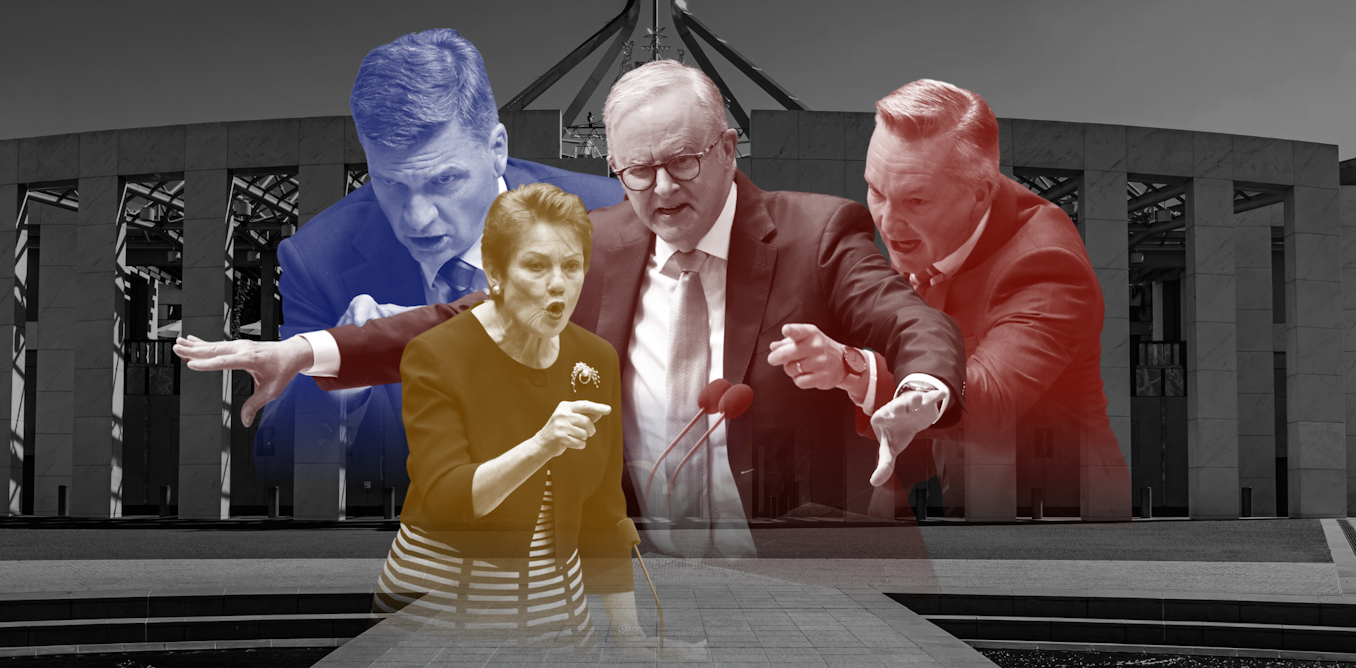
The ferocity of political debate and the language used by politicians in Australia has been in the spotlight ever since the shocking attack on Helen Haines last week. The independent member for Indi lost both legs after allegedly being rammed by a vehicle near her electorate office in the north-east Victorian town of Wangaratta. She is now in a stable condition. The aftermath of the horrific incident led Prime Minister Anthony Albanese to state more needed to be done to “lower the temperature of political debate”. Read more: Anti-government violence is growing. The response needs to be more than just increased policing Since then, there have been calls for politicians to sign a “civility pledge” to try to tone down the often aggressive national political discourse. Haines was the first MP to sign the pledge this year. On Monday, many of her peers did the same. Independent member for Warringah Zali Steggall places a cutout cockatoo on the desk of Independent member for Indi Helen Haines in the House of Representatives at Parliament House. Lukas Coch/AAP Abuse, harassment and threats The alleged attack on Haines was a stark demonstration of the threat many elected representatives experience in office. Since last week, politicians across the country have shared stories of abuse, harassment and concerns for their safety. Australian politics, like other Westminster systems, is known for being adversarial and robust. At Question Time – when members of parliament ask questions of ministers, who must immediately answer – politicians frequently jeer at one another and trade insults. Read more: Question Time has been televised for 35 years. We tracked how it has changed, and what it means for Australian democracy Politics can look gladiatorial, and harmful political attacks, such as the “Ditch the Witch” campaign against Victoria Premier Jacinta Allan, can be detrimental to political debate. Australian Federal Police Commissioner Krissy Barrett has noted a direct correlation between escalating political discourse and an increase in threats and harassment against politicians. She recently told the ABC: It does have a direct correlation to what we see in terms of threats and abuse, and sometimes it’s very immediate. Words matter, and we do see the flow-on impact from that. Since the attack, several MPs have announced they have signed a “civility pledge” that calls for the temperature of political debate to be lowered, including Greens leader David Shoebridge, deputy Steph Hodgins-May and federal independent Kate Chaney. What is the ‘civility pledge’? The pledge is a cross-party initiative led by Compassion in Politics Australia – a think tank that aims to replace divisive politics and adversarial political debate with a culture built on honesty, cooperation and empathy. Although primarily aimed at politicians at federal, state and territory levels, anyone wanting to see change to how politics is done is invited to sign. Signatories agree to “act with honesty, respect, and compassion”. These three pillars encapsulate broader commitments to transform politics: honesty: a commitment to transparency and fact-based decision-making, that avoids misleading information or tactics that involve personal attacks respect: treat colleagues, adversaries and constituents with dignity and decency, and protect the right of others to hold and express diverse opinions and listen and engage constructively in debate compassion: put people and communities first in how policy is designed and implemented. What is its history? The “civility pledge” was first introduced in the United Kingdom by Compassion in Politics and the Jo Cox Foundation following the tragic murder of Jo Cox MP at the height of tensions around the Brexit vote in 2016. In the immediate aftermath, politicians united in an outpouring of grief and a commitment to change. Hundreds of politicians from all main parties have since signed the pledge, and local governments have joined together to advocate for more civility in public life. Change, however, has been slow and tensions in the UK remain high. In 2021, Conservative MP Sir David Amess was murdered in his constituency, and earlier this year former politician Ann Widdecombe was killed in her home. The alleged offenders’ political misgivings appear to have played a role in both killings. It’s a starting point for something bigger There is always a risk these types of initiatives capture the mood of a moment but do not last. But there is a growing appetite among politicians and the public for transforming politics. In tributes to Haines in parliament on Monday, politicians from all sides called for change and encouraged others to sign the pledge, and Governor-General Sam Mostyn has appealed to all Australians to exercise decency. Robust debate and constructive disagreement are integral to a healthy democracy, but that should not come at the expense of basic decency and respect. Making politics more civil can create change. People are more likely to work together on common issues when they feel they are treated fairly and can disagree constructively. This is important not only for the safety of politicians but also for repairing the relationship between politicians and the public: recent polls suggest trust in government and politicians is low. Improving the quality of political discourse and creating a more respectful culture will model how we should disagree constructively, and could contribute to restoring faith in politics. Australia has an opportunity to do things differently. The “civility pledge” is a vital starting point for a bigger conversation about how Australia can create a better, healthier and more inclusive form of politics.
Can a ‘civility pledge’ really help lower the temperature of Australia’s political debate?
Full Article
Original Source
Read the full article at Theconversation →KhanList aggregates and links to publicly available news content. We do not host full articles from third-party sources. Always verify important information with original sources.