
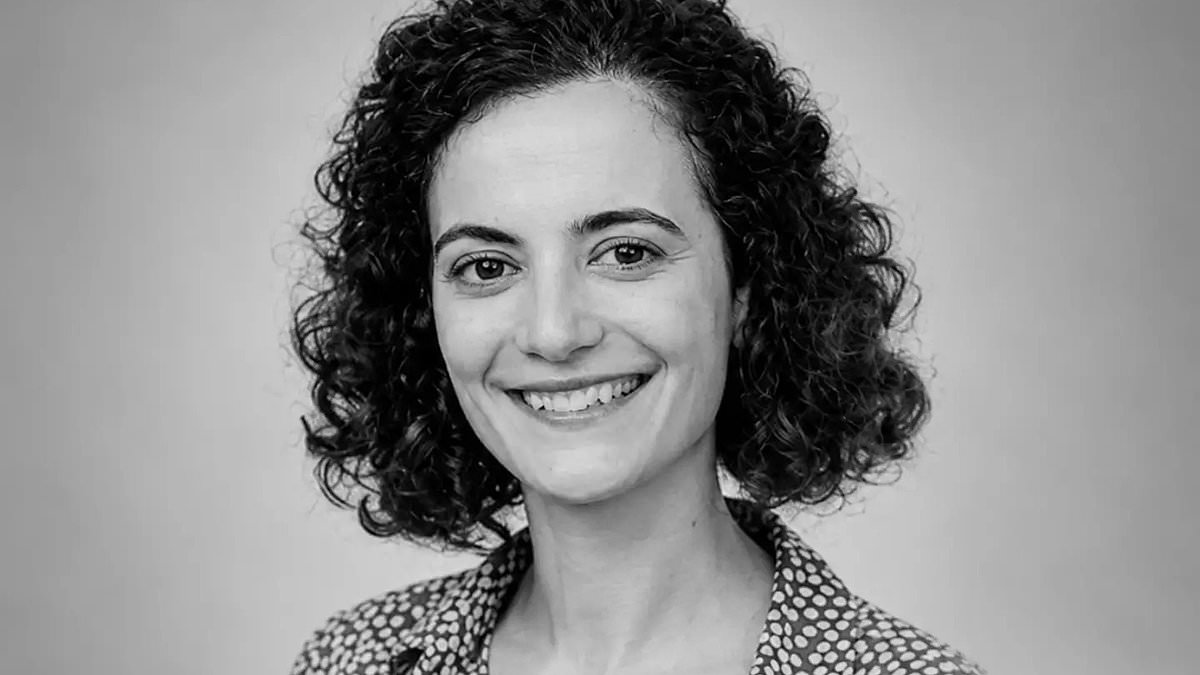
A scientist from the University of Cambridge has been confirmed to be among the victims of the horrific train crash in Spain earlier this week. Dr Marta Shahbazi, 41, was one of the 69 people killed when a train travelling from Madrid to Seville collided with a stationary one on the same route near the city of Toledo on Wednesday.An initial investigation into the 'apocalyptic' disaster that injured a further 100 people has suggested that as many as four system failures led to the collision that appeared 'as if a bomb had been planted'.Dr Shahbazi, a mother to a three-year-old and seven-year-old, was first considered to be missing after she was travelling to south-west Spain to collect a prize for her pioneering work in IVF and early embryo development when the trains crashed.A Spanish research institute has since confirmed the 'inspiring, talented and passionate' researcher's death in a post online and offered their condolences to Shahbazi's aunt, who is also a scientist. Described as a 'brilliant young researcher', Shahbazi was an Affiliate Associate Professor at the Cambridge Stem Cell Institute and lived in Cambridge with her children and husband, Mirco Petruzzelli.Shahbazi's brother, Carlos, told The Times 'she lived for science and her kids. That was her whole life' while devastated colleagues have said her death was a 'profound shock and a huge loss'.The Centre for Research in Molecular Medicine and Chronic Diseases wrote: 'The CiMUS community would like to express its support and deepest sympathies to our dear PI María José Alonso, following the death of her niece, Marta Shahbazi, in the railway accident that occurred on 28 October. Dr Marta Shahbazi, a scientist at the University of Cambridge, has been confirmed as one of the victims of the horrific train crash in Spain earlier this week 69 people died and more than 100 suffered injuries on Wednesday when two trains collided in Spain Rail operator Adif said the incident occurred between the towns of Mora and Orgaz 'Marta was a brilliant young researcher, Group Leader at the MRC Laboratory of Molecular Biology and Affiliate Associate Professor at the Cambridge Stem Cell Institute, University of Cambridge. 'At this difficult time, we extend our heartfelt condolences to María José and her family, as well as to Marta Shahbazi’s colleagues and collaborators. Our thoughts are with them all, and we wish them strength and comfort as they come to terms with this profound loss.'The MRC Laboratory of Molecular Biology, where Dr Shahbazi led a group of researchers, had said the scientist was missing following the train crash.They have since announced: 'The LMB is deeply saddened by the tragic death of our colleague Marta Shahbazi, Group Leader in the Cell Biology Division.'Marta was on a train that collided with another near Urda, Spain, on Wednesday 28th October, as she was travelling to receive the scientific excellence prize from the Spanish Society of Developmental Biology. 'Marta was an inspiring, talented and passionate scientist. Her death is a profound shock and a huge loss. Our thoughts are with her family, friends and colleagues at this extremely difficult time. The LMB is offering support to members of its community as they navigate this tragic loss.'The Daily Mail has contacted the Foreign Office. The train crash is considered one of the worst transport disasters in Spain and the country underwent three days of national mourning following the tragedy.All trains on a stretch of 63km (39 miles) had been drawn to a halt due to the computer malfunction, but central command told a Renfe train to restart its journey without any speed restrictions. A little more than 20 minutes later at 8.53am, it smashed into the back of the stationary Iryo train 100 miles south of Madrid, leaving carriages totally destroyed and derailed. It was reported that the locomotive was capable of travelling at speeds of 185mph. The first incident report released after the crash has suggested that there were a number of technical problems with the railway infrastructure that day.There had been a failure in the security system which stops trains from colliding, leaving staff to enforce safety controls manually, like temporary speed limits.Faults in communication systems and electrical disturbances on the track bed are also said to be to blame, although authorities are still unsure over what caused the outages. Spain's Transport Minister Oscar Puente said that a controller told a stalled train to restart and continue travelling up to 160km/h (99mph), despite the stationary train being up ahead.He said the control centre 'had more than enough time to verify the error, and they did not fix it'.He added: 'The decision to resume traffic, while that system had not been restored, belongs to the control centre.'The collision has caused a political crisis for Spain's Prime Minister Pedro Sanchez, who is heading towards an election in a month, with many critics blasting his administration for under-investing in its railway infrastructure.They have highlighted that the crash came less than a year after 46 people died in January when a train jumped the track and hit an incoming one in southern Spain.Up to 27 nationalities are believed to have been among those injured or killed in Wednesday's crash. One survivor, Sebastian Herrero, 46, who was travelling on the Iryo train, said he was 'thrown against the seats' when the trains collided, and described how he was 'in the air for about four or five seconds', which felt like 'a lifetime'.He described the crash as 'a twisted mass of metal' while another survivor, Jesus, said he 'saw a boy with an amputated arm walking away from the wreckage'.Architect Joaquín Torres described the death of a horrifically injured fellow passenger.He said: 'I went up to a woman who said she was cold... she died in my arms. It was horrible, [she was] without legs, without arms.'One carriage caught fire and smoke was still pouring from the mangled wreckage as emergency responders reached the scene. Fatima Banez, Spain's former employment minister, has also been confirmed among the dead, as well as 24-year-old athlete Julieta Gallego.
Cambridge scientist, 41, among victims of Spanish train crash
Full Article
Original Source
Read the full article at Dailymail →KhanList aggregates and links to publicly available news content. We do not host full articles from third-party sources. Always verify important information with original sources.