
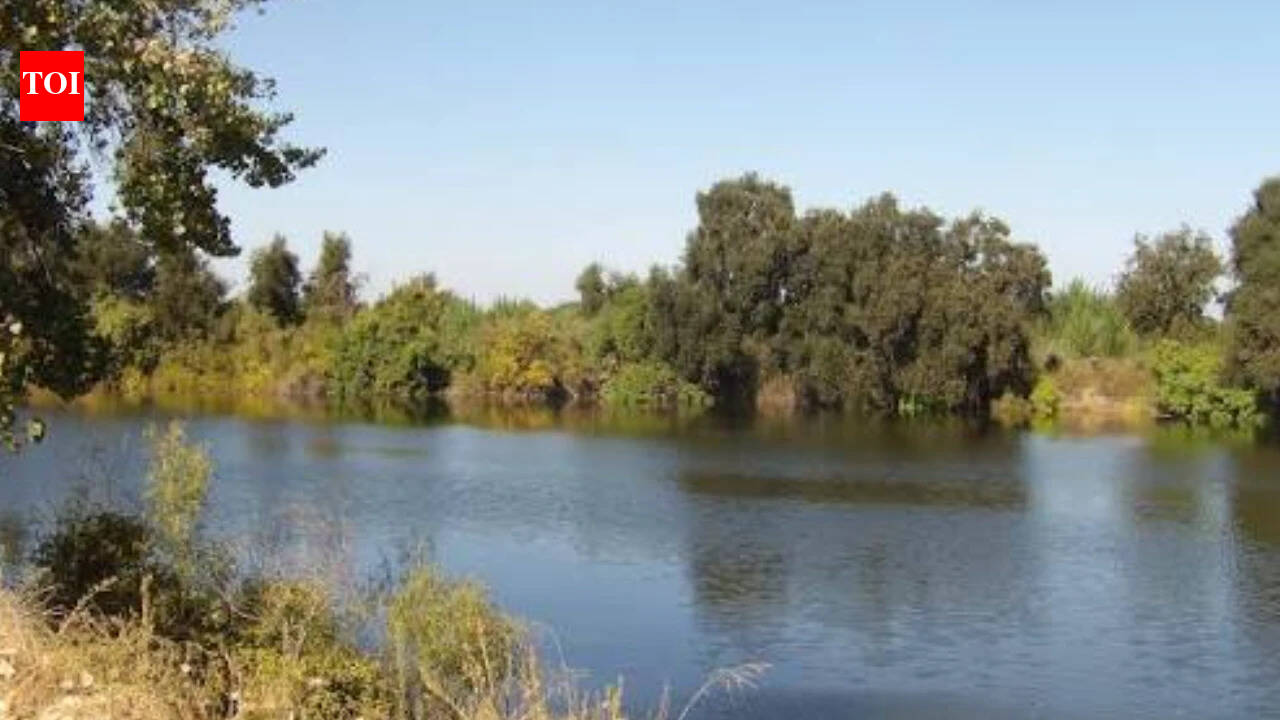
Dos Rios State Park (Image Credit: Wikimedia Commons)One of the strongest El Niño is predicted to peak in late 2026, entering into 2027. This long-term climate phenomenon affects weather patterns around the world, with some areas becoming hotter and drier than usual, while others become colder and wetter. The Californian coast is an of the regions where the impact of El Niño is very prominent, with wetter winters, stronger storms and inland flooding being characteristic effects. Thus, public and private authorities have been working towards preventing damages caused by inland flooding. The Dos Rios State Park is one exemplary project in the state, becoming California’s Largest Floodplain Restoration Project.A century-old ideaAs per CalMatters, a nonprofit newsroom devoted to covering issues that affect California, the idea to rely on levees alone was abandoned after the floods of 1907 and 1909. It was decided to build river bypasses, which are basically wide floodplains where the river can spill out instead of breaking through. This idea was manifested in the Sutter and Yolo bypasses, moreover, six large concrete structures now line the Sacramento River between Mount Shasta and the Delta, steering extra water into bypasses and basins. These wide floodplains allow some of the water to rejoin the river and some to refill the groundwater.The Army Corps of Engineers now describes it as “central to a significant agricultural economy, a critical water supply delivery system, and an ecosystem of national significance.”Taking the implementation further, the California Department of Water Resources has finished work on the $30.7 million Tisdale Weir Rehabilitation and Fish Passage Project in the Sacramento Valley. The weir, originally built in 1932, has been given extended life through this project. According to the California Department of Water Resources, when rain pushes the Sacramento River up, Tisdale is one of the first barriers against it. It diverts the high flows out of the river and takes pressure off the downstream levees, so nearby communities are less likely to get flooded.The San Joaquin Valley has been unable to implement a project like this. The proposed Paradise Cut Bypass Expansion is supposed to give Stockton similar protection, but it has been stuck in planning for a generation. Rentner told CalMatters that even if it gets built, the water volume in the South Delta is far bigger than that one project can handle. She said the valley needs a couple more large bypasses if Stockton is to be as protected as Sacramento.The experiment at Dos RiosThe site known as Dos Rios State Park today, was bought by the nonprofit River Partners in 2012. River Partners is the organisation working towards restoration of these floodplains. Today, the 2,100 acre restoration is the state’s largest public-private floodplain project. According to the nonprofit’s website, the project has led to the conservation of more than 7,000 acre-feet of fresh water. The site is also counted by the state of California toward its nature-based climate targets.Located at the confluence of the Tuolumne and San Joaquin Rivers in Stanislaus County, the weir was put to the test during the 2023 winter storms.Julie Rentner, president of River Partners, told CalMatters she can't isolate exactly how much work the floodplain did, because the river system is too big and complex. However, she explained that the “sponge” performed as per its design, “reducing flooding as far as 4 miles downstream with no infrastructure damage or significant erosion.”She offered a comparison from 2017. In that high-water event, the river at this spot spread about a quarter mile wide and ran almost 2 feet deeper, which put far more pressure on downstream levees. "The extent of floodplain inundation was huge" in 2023, Rentner said, according to CalMatters.The case for 50 moreRentner estimates California needs about 50 more projects like Dos Rios and roughly 100,000 more acres of restored floodplain, according to the CalMatters report. She says the state should spend more on adding flood capacity and less on maintaining what already exists.CalMatters reports that California has put $40 million into San Joaquin Valley floodplain restoration since 2023. It has also set aside another $21.5 million for projects along rivers in Kern, Kings and Tulare counties. Much of the $10 billion climate bond voters approved in 2024 is still unspent. That includes Proposition 4, which set aside $3.8 billion for drought, flood and water supply.However, more than funding, each project requires analysis, field work, and cooperation from property owners and civic leaders about where to start.
California restores 2,100 acres of farmland to floodplain as El Niño threat looms
Full Article
Original Source
Read the full article at Timesofindia →KhanList aggregates and links to publicly available news content. We do not host full articles from third-party sources. Always verify important information with original sources.