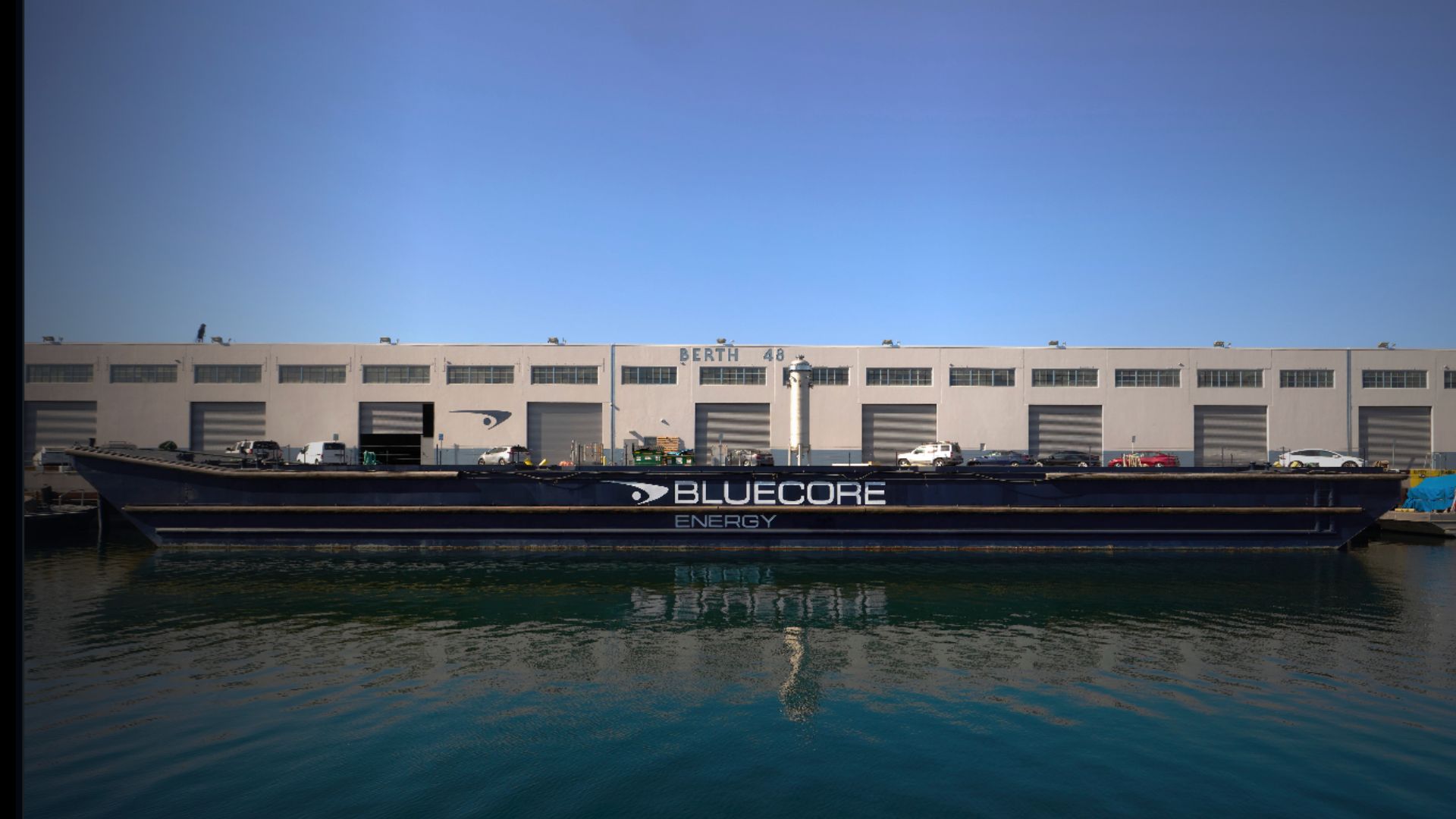
The Port of Long Beach is moving forward with plans to explore small modular reactors (SMRs) that could eventually provide electricity for port operations and ships, potentially bringing a new nuclear power project to California for the first time in five decades. The effort involves Bluecore Energy, a startup developing small nuclear reactors designed to operate on floating barges. The company has leased space at Berth 48 at the Port of Long Beach, where it plans to develop and test its technology. Separately, the port has signed a cooperation agreement with the U.S. Maritime Administration (MARAD) to help establish standards for maritime nuclear power. Bluecore founder and CEO Kofi Asante told CBS News that the company has taken nuclear reactor technology used in power generation and developed a smaller system designed to operate from a barge. The company says one reactor could generate enough electricity to power about 15,000 homes. The proposed system could eventually supply electricity to port terminals, cargo-handling equipment, charging infrastructure and ships. Bluecore has also discussed potential applications for supplying power to other coastal infrastructure. A nuclear reactor on a barge Small modular reactors are compact nuclear power systems designed to produce less electricity than conventional large reactors while offering a more modular approach to construction and deployment. Bluecore’s proposed reactor is water-cooled. Like conventional nuclear power systems, the reactor would use heat generated through nuclear fission to produce electricity. The unusual part is where Bluecore wants to put it on a floating barge. That introduces a set of maritime considerations alongside the usual nuclear safety requirements. According to reports, an NRC report identified questions around how maritime nuclear deployments would address hazards including sinking, capsizing and other environmental extremes. The NRC is working on how its existing regulatory framework could apply to maritime nuclear systems, while the Port of Long Beach and MARAD are working with federal agencies including the NRC, U.S. Coast Guard and Department of Energy on operational protocols, safety standards and inspection procedures. MARAD began seeking industry input on U.S.-built, scalable and commercially viable SMRs for the marine transportation system earlier this year. Why Long Beach is interested The Port of Long Beach is pursuing zero-emission operations while handling enormous volumes of cargo, creating a growing demand for reliable electricity. Port officials say nuclear power could become one source of the clean, around-the-clock electricity needed as port infrastructure becomes increasingly electrified. The proposed technology also fits into a broader push to investigate how nuclear power could be used in maritime applications. Nuclear reactors have powered naval vessels for decades, while floating nuclear power plants have also been developed internationally. Bluecore’s proposed system, however, would be aimed at commercial applications, rather than military propulsion. The company has said its reactor could eventually provide electricity to ports, ships, data centers and other facilities located near water. For ships, the same basic power-generation system could supply electricity to propulsion systems or onboard equipment. California’s nuclear hurdle The project is also unfolding against California’s long-standing restrictions on new nuclear power. The state has maintained a moratorium on new nuclear fission reactor construction since 1976, with the policy tied to requirements concerning the long-term disposal of high-level radioactive waste. According to reports, it remains unclear how the restriction could affect Bluecore’s proposed floating reactor. At the federal level, Bluecore has not yet submitted an application to the Nuclear Regulatory Commission for deployment. The company was scheduled to meet with the NRC on August 17 to introduce its reactor design and regulatory plans, according to the Press-Telegram. For now, the Long Beach effort remains at the development and regulatory-planning stage. The port and federal agencies are working to establish the standards and procedures needed for maritime nuclear applications, while Bluecore continues developing its proposed reactor. If the project advances, Long Beach could become an early U.S. test case for using small modular reactors to provide electricity to ports and maritime infrastructure. Get the latest in engineering, tech, space & science - delivered daily to your inbox.Kaif Shaikh is a journalist and writer passionate about turning complex information into clear, impactful stories. His writing covers technology, sustainability, geopolitics, and occasionally fiction. A graduate in Journalism and Mass Communication, his work has appeared in the Times of India and beyond. After a near-fatal experience, Kaif began seeing both stories and silences differently. Outside work, he juggles far too many projects and passions, but always makes time to read, reflect, and hold onto the thread of wonder.
California eyes nuclear revival as Long Beach explores reactor for 15,000 homes
Full Article
Original Source
Read the full article at Interestingengineering →KhanList aggregates and links to publicly available news content. We do not host full articles from third-party sources. Always verify important information with original sources.