
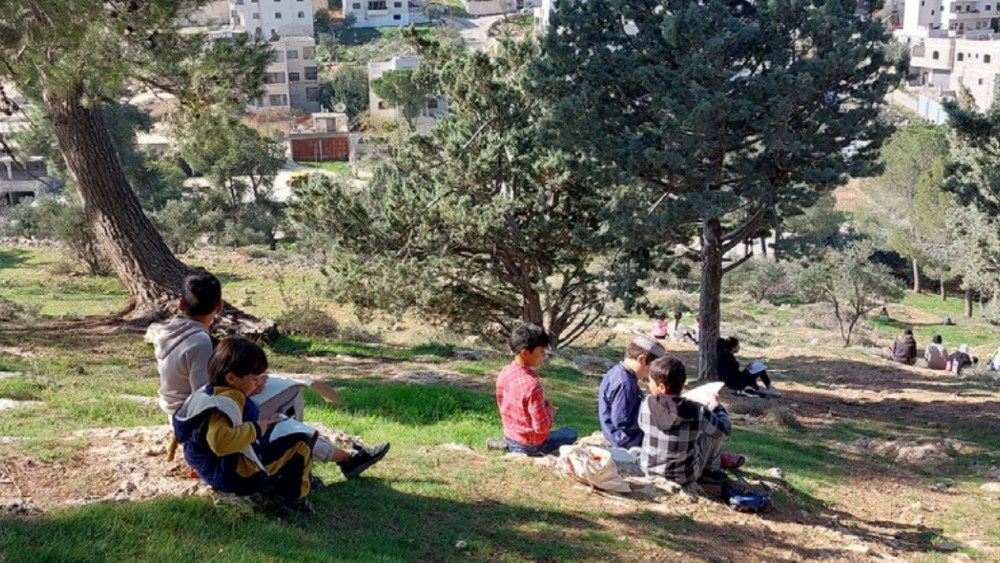
The 12th Cairo Film Connection, the pitching platform of the Cairo Film Festival, handed out 53 awards worth a combined $410,000 to Arab film projects at the end of its industry sidebar, Cairo Industry Days. The awards included 17 cash grants, 31 in-kind awards and five invitations to international film markets and labs, marking a significant increase in support from previous editions. This year’s CFC brought together 17 projects from 12 countries, spanning fiction and documentary films in development and post-production. The platform hosted 104 one-on-one meetings between filmmakers and regional and international industry representatives. Palestinian filmmaker Shayma’ Awawdeh’s “The Story of the Mountain” and Syrian director Anas Zwahri’s “Their Ghosts Never Left My Home” received CFC’s two $10,000 jury awards for development and post-production, respectively. The Qatar Film Committee awarded four $25,000 grants to “Twelve Fig Leaves,” “Reda,” “Madness and Honey Days” and “Naydalaan.” Other projects secured a combination of cash grants, technical services and invitations to international markets, including Cannes’ Fantastic 7, Durban FilmMart and Medimed. Cairo Film Connection winners Courtesy of Cairo Film Festival Here is a closer look at some of the projects presented at this year’s Cairo Film Connection. Projects in Development “The Story of the Mountain”(Shayma’ Awawdeh, Palestine, France. Produced by Shayma’ Awawdeh) What would Palestinian children do if they could make the checkpoint separating their neighborhood from the rest of Hebron disappear? That question lies at the heart of “The Story of the Mountain,” a hybrid documentary in which children use filmmaking and fantasy to conceive of a reality different from their own. During a creative workshop, they imagine a magical mountain that transforms into a giant grandmother capable of destroying the checkpoint at the entrance to their neighborhood. Their fantasy becomes a way of envisioning a future free from the constraints of life under occupation. Awawdeh, whose short documentary “Intersecting Memory” opened IDFA in 2025 and won Clermont-Ferrand’s Grand Prix National in 2026, is seeking co-production partners and writing residencies. “Twelve Fig Leaves”(Joëlle Abou Chabké, Lebanon. Produced by Lara Abou Saïfan) In Lebanon’s Bekaa Valley, filmmaker Joëlle Abou Chabké is exploring an ancestral method of weather prediction. Her documentary “Twelve Fig Leaves” follows her as she tests the Bawāhīr, a traditional Lebanese practice, while building a sustainable farm with her husband in his native village. The project explores the relationship between land, heritage and belonging amid political and environmental uncertainty. “This film lives at the intersection of climate collapse, war, ancestral knowledge and the deeply human need to belong somewhere,” Abou Chabké says. Produced by Lara Abou Saïfan’s Placeless Films (“Dead Dog”), the documentary received a $25,000 Qatar Film Committee grant, following AFAC development funding and a DocsBarcelona Pro Shared Shores Award at Beirut-based Aflamuna Connection. “Naydalaan”(Mariam Al-Dhubhani, Yemen, Jordan. Produced by Bassam Alasad) Drawing on her childhood experiences of sleep paralysis, Yemeni filmmaker Mariam Al-Dhubhani blends fantasy and psychological horror in “Naydalaan,” a feature set in 1990s Sana’a. The story follows 10-year-old Nadia into a nightmarish world where she encounters girls from different periods of Yemen’s history, confronting questions of identity, exclusion and belonging. “At a time when so much of Yemen is seen through destruction, I want to make room for its imagination, complexity and the many ways of belonging within it,” Al-Dhubhani says. The project received a $25,000 Qatar Film Committee grant and $10,000 in casting and sound-mixing services. Previously developed through the Doha Film Institute’s Feature Script Lab, it is seeking further financing and international co-producers. “The Schoolyard”(Mohamed Siam, Egypt, Belgium. Produced by Mohamed Siam and Brandy Miller) Five teenage boys navigate friendship, violence and shifting loyalties over the course of a turbulent school year in “The Schoolyard,” a fiction feature set in a crumbling public school on Cairo’s outskirts. “I learned early that the real lessons were often not in the classroom, but in power, fear, hierarchy and survival,” says director Mohamed Siam, who attended private, public and military schools in Egypt. Drawing on those experiences, he aims to capture “the humor, tenderness and imagination” that persist even in oppressive environments, exploring what happens when children are forced to grow up too soon. The project received a $10,000 cash award from ART, $30,000 in technical and development services and an invitation to Durban FilmMart. Shooting is planned for summer 2027. Siam’s previous films include “Amal,” which opened IDFA in 2017 and won the Golden Tanit at Carthage, and “My Father’s Scent,” which received multiple awards at Venice’s Final Cut program in 2024. “The Man Who Is Gone”(Naji Ismail, Egypt. Produced by Muhammad Taymour) Haunted by recurring nightmares and a deep sense of loss, a man in his 40s travels to Upper Egypt to fulfill his ailing mother’s wishes in “The Man Who Is Gone.” What begins as a family obligation takes a supernatural turn as he encounters a world of folklore and buried memories. Drawing on Upper Egypt’s traditions of myth and oral storytelling, writer and director Naji Ismail explores how grief shapes our relationship with the past, blurring the boundaries between the living and the dead. “At a time when we are often overwhelmed by the urgency of the present, returning to these inherited stories can remind us of the depth of our human experience and our place within a much longer history,” he tells Variety. The project received $9,000 in cash awards, additional development and post-production services and an invitation to Cannes’ Fantastic 7. Previously supported by the Doha Film Institute, it is targeting a late 2027 shoot. “Dwellers of the Cabins”(Hend Bakr, Egypt, Saudi Arabia, Qatar. Produced by Hend Bakr and Tamer Nady) Egyptian filmmaker Hend Bakr examines her Nubian heritage in “Dwellers of the Cabins,” a documentary about a community in Alexandria whose ancestors were displaced from southern Egypt in the early 20th century. Now threatened with demolition to make way for an investment project, the settlement where Bakr grew up has become the focus of her efforts to preserve her community’s history. “I am telling my own story and the struggle of my own family between preserving their culture and being included,” Bakr says. The documentary received $15,000 in sound and DCP mastering services and an invitation to Rough Cut Lab Africa. With approximately 30% of its financing secured, the project is targeting completion in 2028. “Terminus”(Oumaima Trabelsi, Tunisia. Produced by Oumaima Trabelsi and Erige Sehiri) Ten years after being deported from Italy, Sadok spends his days driving his taxi along the same 10-kilometer route through the Tunisian hometown he once hoped to escape. His repetitive journeys form the basis of “Terminus,” a documentary exploring the tension between returning home and the lingering desire to build a life elsewhere. “At a time when migration is often told through the act of leaving, I want to turn my gaze towards what comes after, and what remains of that longing once the journey is over,” director Oumaima Trabelsi says. The project received a $1,000 development award and $15,000 in sound and subtitling services. Previously supported by Tunisia’s Ministry of Culture, it is targeting completion in January 2028. “Dear Tarkovsky”(Firas Khoury, Sweden, Jordan, France. Produced by Linda Mutawi) Palestinian filmmaker Firas Khoury, whose debut feature “Alam” won three awards at CIFF in 2022, is developing “Dear Tarkovsky,” a tragicomedy about a filmmaker who stages a fake rescue to convince a wealthy man’s daughter to finance his debut about the acclaimed Soviet director, only to fall in love with her. “The film is a celebration of cinema,” Khoury says. “We, as Palestinians, have the right to put our name forward as explorers in art as well, not only as humanitarian cases.” Produced by Linda Mutawi’s Stockholm-based Fikra, the $3.5 million project previously received support from the Tunisian-Italian Fund, Malmö Industry Days and Durban FilmMart. It is seeking additional financing and co-production partners. “Their Ghosts Never Left My Home” Courtesy of Cairo Film Festival Projects in Post-Production “Their Ghosts Never Left My Home” (Anas Zwahri, France, Syria, Qatar, Lebanon. Produced by Ahmad Alhaj) For five Syrian mothers whose sons were forcibly disappeared under the Assad regime, the lack of closure has become part of everyday life. “Their Ghosts Never Left My Home” explores how the women preserve their sons’ memories while continuing to seek explanations about their fates. “Two years after the fall of the regime in Syria, the issue of the forcibly disappeared remains unaddressed,” Zwahri says. “Many families await answers from the new government, but their pleas go unanswered.” The documentary received CFC’s $10,000 post-production jury award and festival distribution services from Cult. Supported by AFAC, Aflamuna and the Doha Film Institute, it is targeting a 2027 premiere. “A Butterfly Hug”(Sally Abobasha, Egypt, Saudi Arabia, Qatar, Sweden. Produced by Aya Tallah Yusuf and Sally Abobasha) Filmed over six years in Cairo’s working-class neighborhoods, “A Butterfly Hug” follows Sajda, Shorouk, Shahd and Abdelrahman, young people living with epidermolysis bullosa, a rare genetic condition that makes their skin extremely fragile, as they navigate adolescence, friendship and family expectations. “What attracted me to them wasn’t their disease. It was their confidence, their laughter and their dreams,” director Sally Abobasha says. “They reminded me of myself as a teenager, although they were much braver than I was,” she adds. The documentary, filmed in a cinéma vérité style, secured $12,000 in cash grants from AH Media, Traveler and Stars Media, alongside $30,000 in post-production services and an invitation to Medimed, with completion targeted for early 2028. “Growing Up Twice”(Khaled Alkhaldi, Syria, Jordan. Produced by Lujain Hamdan. Co-produced by Deema Dabis) Set between Jordan’s Za’atari refugee camp and Amman, “Growing Up Twice” follows Baraa, a young Syrian mother who survived child marriage and is struggling to reclaim her independence while raising her son. As she attempts to build a new life, family pressures and “cycles of violence” force her to confront the difficult choices between personal freedom and motherhood. “This film became my act of rebellion, a way to turn my anger at the injustice and cruelty in this world into action,” producer Lujain Hamdan says. “As documentary filmmakers, we must learn how to approach these difficult stories and carry them to the world,” director Khaled Alkhaldi adds. The documentary received $6,000 in post-production services from Cult. With approximately 40% of its budget secured, the filmmakers are seeking additional financing and international co-producers ahead of a planned 2028 release.
Cairo Film Festival Pitching Platform Awards $410,000 to Arab Film Projects
Full Article
Original Source
Read the full article at Variety →KhanList aggregates and links to publicly available news content. We do not host full articles from third-party sources. Always verify important information with original sources.