
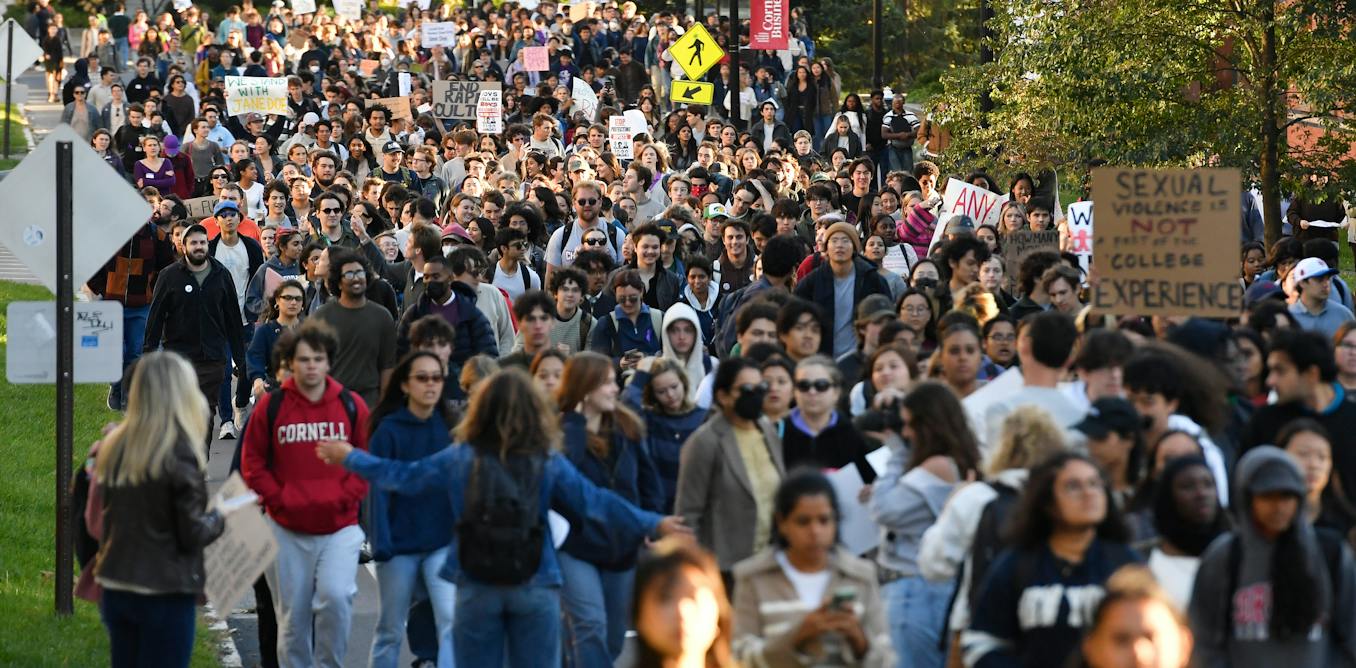
The recent filing of a civil lawsuit brought against Cornell University and seven Chi Phi fraternity members has brought international attention to the issue of sexual violence on post-secondary campuses. The lawsuit alleges that seven men drugged and assaulted a woman, who was a Cornell student at the time, in October 2024, and that the university protected them. In Canada, much like the United States, sexual violence on post-secondary campuses is all too common and rarely occurs in private. In the Cornell case, a group of fraternity members were part of a SnapChat group that received real-time information related to the alleged assault. According to the lawsuit, a message in a group chat was was sent suggesting a woman was available for sex. News reporting has detailed some of the messages shared. When men become aware of or witness unwanted sexualized behaviours, how common is it to intervene? Statistics Canada reports that 92 per cent of men attending Canadian post-secondary institutions did not engage in any actions to stop unwanted sexual behaviours they had witnessed. The bystander effect The issue of people failing to take action when an emergency occurs and other people are present is a well-documented phenomena called the bystander effect. Somewhat counter-intuitively, the more people that witness the event, the more likely the bystander effect will occur (meaning no one will intervene). An attendee wears a name tag reading ‘Jane Doe’ during a protest against Cornell University’s handling of the 2024 fraternity-house gang rape allegations on campus in October 2026 in Ithaca, N.Y. (AP Photo/Adrian Kraus) Given this common effect, a lot of research since the 1960s has focused on how to promote bystander intervention when people witness an act of violence. This work has led to five common steps that individuals must move through to intervene: Notice the event; Interpret the event as an emergency where help is needed; Assume responsibility for helping; Know what to do to help; Decide to help. There are numerous factors that can influence each of these steps, including the gender of the bystander. In the case of sexual violence, male bystanders generally report less intentions to help and feel less responsibility to help as compared to women. This may occur because in a patriarchal system like Canada where men and boys are taught that to be a “real man,” they must avoid behaviours that are seen as feminine, such as showing care for others or interrupting other men’s pursuit of heterosexual sex. Read more: What the Cornell 7 sexual assault allegations reveal about how parents talk to their kids about rape These norms and pressures can make helping someone who is experiencing sexual violence (especially when it is perpetrated by a male peer or friend) challenging, as there is a fear of the social repercussions that may come with intervening. For example, men have reported maintaining friendships with their male friends and hesitancy to violate the norms within their peer group as reasons for not intervening. Supporting men and boys to intervene Group-based programs where men can think through these expectations and how they might serve as barriers to intervention have shown some promise in increasing men’s confidence to intervene. Conversely, group-based programs that are not long enough to work through these barriers are ineffective. There are also many different ways for boys and men to intervene to effectively. Not every situation calls for the same approach. The strategies young men choose can be ones that feel most natural to them. It’s also important to encourage young men to respond positively when they notice their peers intervening, no matter how big or small. These reactions can help someone feel more comfortable intervening again in the future. Although men in general are less likely to intervene, when they do take action to stop sexual violence, they are more likely to take a confrontational and aggressive approach as compared to women. This may be because this approach adheres to masculinity expectations of being tough and violent, but it can often escalate the violence and put everyone at additional risk. People attending a hearing read over a resolution on sexual assault at Cornell University in Ithaca, N.Y., in October 2026. (AP Photo/Matt Rourke) Small actions can elicit big change Given the widespread coverage of the Cornell case and other recent cases, this is a prime opportunity to engage in conversations with the young men in your life on the critical role they can play in preventing unwanted sexual behaviours and creating safer communities for everyone. Read more: Hockey Canada sex assault verdict: Sports culture should have also been on trial Here are some key messages you can share: Sexual violence is an emergency that comes with serious harms for the whole community. False reports of sexual violence are exceedingly rare. You can act to stop violence before, during and/or after. Intervening before can look like telling your friend that a woman is too drunk to consent, and making sure the woman gets home safely. Intervening during can look like telling someone to stop, or calling for help. Intervening after can look like believing the survivor and supporting them to get help in the way that feels best to them. You have a responsibility to help, but you don’t have to do it alone. Intervening with other friends can make intervening feel less risky. Research suggests young men are also generally less accepting of violence than their peers think. Anyone can intervene. Taking action does not require specialized training. There are a lot of different forms of sexual violence. Being an active bystander means challenging all sexual violence, like telling a friend a sexual joke isn’t funny. Although these actions may feel small, they help shift the broader culture that is conducive to sexual assault. It’s important to help prepare young men for the challenges they may encounter as a bystander to unwanted sexual behaviours, so that they are ready and able to intervene in the moment. Given the unacceptably high rates of sexual violence on Canadian post-secondary campuses, it’s critical that we take this opportunity to do better for our communities.
Bystanders and sexual violence: Young men need real-time strategies for intervention
Full Article
Original Source
Read the full article at Theconversation →KhanList aggregates and links to publicly available news content. We do not host full articles from third-party sources. Always verify important information with original sources.