
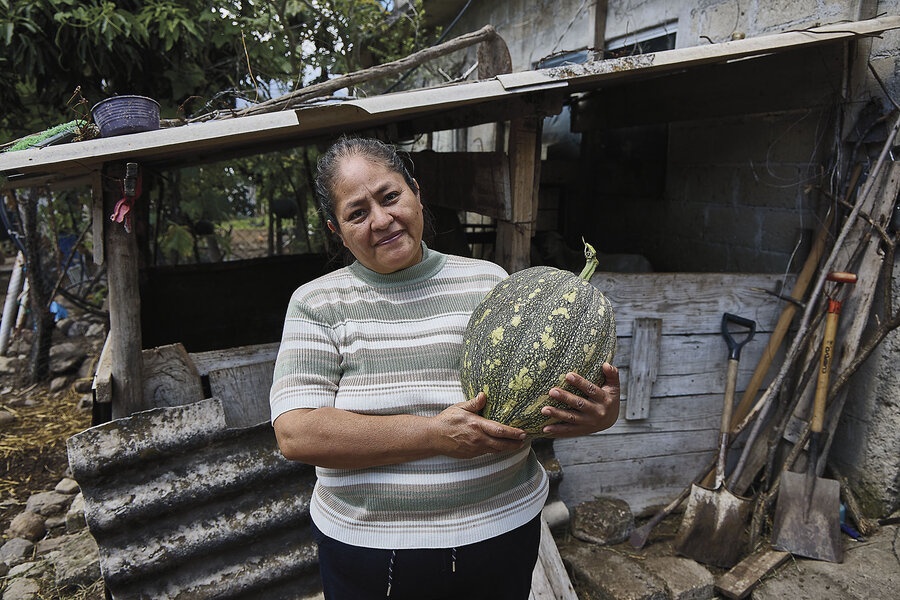
Puente Caporal, Mexico | Nov. 20, 2026, 1:17 p.m. ET | 6 min read Alejandra Quino González carries a small purple bowl filled with freshly crushed corn kernels into her rocky front yard, scattering handfuls onto a swath of rusted metal. She doesn’t have to say a word; the turkeys, with their fire-engine-red wattles, beeline for their lunch.Although turkeys are central to holiday meals in the United States and across Europe, they were first domesticated in Mexico, long before Spanish colonizers arrived. Known locally as guajolotes, they’re featured in pre-Hispanic codices as divine creatures and markers of celebration and wealth. And yet today in Mexico, with the exception of the Yucatán Peninsula, turkey consumption is low, as the price can be nearly five times more than that of chicken.For Ms. Quino González, who has memories of feeding her mother’s turkeys with corn out of the palm of her hand as a child, raising these birds feels important at a moment when neighbors are moving more toward store-bought poultry for their birthday dinners and family events. “It’s not valued anymore,” she says of what locals refer to as criollo chickens and turkeys, whose meat tends to be tougher and less robust than that of industrial birds. “But the difference in flavor is remarkable.” Ginnette Riquelme Quezada/Special to The Christian Science MonitorA turkey, or guajolote, walks in the Quino González family’s backyard in Puente Caporal, Mexico. The flavor makes Ms. Quino González, the third of six children, think of school breaks as a kid, when she and her siblings would go out into the fields with their dad to help with the milpa cultivation – corn, beans, and squash growing together. “I remember coming home to a delicious, rich turkey soup,” she says, laughing at the memory alongside her parents and older sister, who are sitting together at home on a recent afternoon. Their conversation is punctuated by a cacophony of cries from goats, donkeys, dogs – and the chickens that roam freely inside and out of the house.Her home, which is a few steps away from the house she grew up in, is surrounded by livestock, including baby calves and day-old chicks. But Ms. Quino González only reconnected with the tradition of raising turkeys about a decade ago. Her goddaughter was getting married in nearby San Marcos, which is one of the few communities in the area that celebrates weddings with a traditional turkey dance.In San Marcos, that involves the families of the bride and groom dancing with ornately decorated baskets filled with a turkey and the multitude of fresh ingredients required to make a traditional mole sauce. The turkeys represent abundance and gratitude for the couple’s future together. Ms. Quino González and her husband added some turkeys to their menagerie so that they could provide two as their wedding gift to the goddaughter. The turkeys they didn’t give away remained with them, laying eggs. Today, the couple has six of the birds, and Ms. Quino González’s mother, Soledad González Morales, started raising turkeys again as well. She currently has three that traverse her lush front garden. Ginnette Riquelme Quezada/Special to The Christian Science MonitorSisters Carmen (at back left) and Alejandra Quino González with their mother, Soledad González Morales, stand outside their home. “They’re such delicate birds,” Ms. Quino González says. “They’re big, but they’re weak.” It’s one reason fewer people want to invest in raising them today. For example, if the birds are stung by a scorpion, common in this part of Mexico, they will die, she notes. The turkeys also eat close to half a kilogram, or a little over a pound, of corn each day. That adds up.But raising guajolotes “is a connection with the past,” says Ms. González Morales, as yellow-and-black butterflies flutter above her. She’s referring to the birds’ pre-Hispanic roots, but there are other memories that endear her to the finicky creatures. She remembers her son, who died in an accident 17 years ago when he was in his early 20s, walking outside as a toddler and beckoning her. “Ma! Ma!” he’d call, she remembers, and then he’d perfectly imitate the guttural gobble of the turkeys milling around the house. Now, when the family prepares to celebrate his life each year on Oct. 28, ahead of Day of the Dead, they will often prepare red mole with turkey or chicken, one of his favorite dishes. Ginnette Riquelme Quezada/Special to The Christian Science MonitorTurkeys eat next to chickens in the backyard. One November, about five years ago, Ms. Quino González got a glimpse of the U.S. tradition of Thanksgiving. A Texan family visiting the nearby “pueblo mágico” of Malinalco hired her sister to prepare Thanksgiving dinner. Carmen Quino González cooked up an entirely Mexican meal for the celebration with recipes that echoed popular U.S. Thanksgiving ingredients, including turkey in mole and a creamy pumpkin soup.“It was really special to see our traditions valued,” she says. “And it felt like a family effort, buying the turkey from my sister, me cooking the meal, and then watching another family express such gratitude for our culture and our efforts.”Although Ms. Quino González today feels like an outlier raising turkeys in her community, a 2023 report by Mexico’s Ministry of Agriculture and Rural Development found that 55% of turkey production in the country happens in backyard farms such as this one.As Mexico – and the world – changes, valuing traditional practices feels less and less common, says Ms. Quino González’s sister, the chef. She says she understands there’s more appeal in holding a job with a steady income than growing crops or raising turkeys for one’s own consumption. “But, the feeling of knowing your food and knowing your history, it’s really something special.” Ginnette Riquelme Quezada/Special to The Christian Science MonitorChile pasilla and chile jaral, or ancho chiles, are arranged in a clay pot in which red mole, or mole rojo, is prepared. Red mole, or mole rojo This is Alejandra Quino González’s recipe, which she describes as “not spicy, and just sweet enough.” It makes 4 to 5 cups of mole paste, or about 10 servings when diluted with broth. The recipe takes almost 4 1/2 hours to complete.Ingredients:2 ounces chile pasilla (about 5 to 7 dried chiles)1.5 ounces chile jaral, or ancho chiles (about 3 medium-sized dried chiles)2 ounces chile mulato (about 3 to 4 dried chiles) 1 teaspoon chile seeds 1/3 cup pumpkin seeds, peeled1/3 cup raisins1/3 cup sesame seeds1/3 cup peanuts, unsalted1/4 cup almonds, unsalted 3 tablespoons walnuts, unsalted2 tablespoons hazelnuts 1 tablespoon pine nuts (optional)1 ripe plantain2 to 3 whole cloves 5 to 6 black peppercorns 3 cloves garlic1/2 teaspoon thyme1/2 teaspoon marjoram 1/4 teaspoon aniseed (not star of anise) 1 to 2 fresh tortillas, toasted1 ounce crackers (about 6 to 8 saltines) 2 to 3 ounces chocolate, dark and preferably unsweetened (Ms. Quino González uses commercial bars, as cacao seeds aren’t easy to find in her community) Turkey broth (for soaking)Pork lard (for frying)Salt and pepper, to tasteDirections:Lightly cook all of the chiles on a griddle, then soak them in very hot turkey broth or water for 10 to 15 minutes. Set the chiles aside. Fry the rest of the ingredients (except the tortillas, crackers, and chocolate) in a large pan with pork lard until fragrant.Using a food processor or grinding by hand, combine the ingredients from the frying pan with the chocolate, tortillas, and crackers until they become a paste. Set this aside in a bowl. Separately, combine the chiles in a blender (or the cleaned-out food processor) until they, too, become a paste. Deepen your worldviewwith Monitor Highlights.Politics with respectGet political stories with respectful analysis.There‘s a world of new ideas in everyBooks newsletter.There‘s more to life, enrich yours withCulture & Learning weekly.Follow humanity‘s discoveries withScience & Nature stories in your inbox.Gain a spiritual perspectivefrom the stories in your inbox.Want to understand the deeper impact of critical events? Learn the Monitor‘s insight.Already a subscriber? Log in to hide ads. Put the chile paste in a large pot (Ms. Quino González uses an oversize, hand-painted clay casserole) with a little more lard. Add in the other ingredients from the bowl. Simmer all together for about 20 minutes, seasoning with salt and pepper. Add turkey broth to what is now the mole paste until it reaches the desired thickness.Simmer for approximately 1 hour more, until the natural fats from the nuts and other ingredients rise to the top. Serve the mole drizzled on top of or on the side of roasted turkey meat. ALREADY A SUBSCRIBER? LoginReal news can be honest, hopeful, credible, constructive.The Christian Science Monitor was founded in 1908 to lift the standard of journalism and uplift humanity. We aim to “speak the truth in love.” Our goal is not to tell you what to think, but to give you the essential knowledge and understanding to come to your own intelligent conclusions. Join us in this mission by subscribing.
By raising gobblers, this Mexican family maintains a ‘connection with the past’
Full Article
Original Source
Read the full article at Csmonitor →KhanList aggregates and links to publicly available news content. We do not host full articles from third-party sources. Always verify important information with original sources.