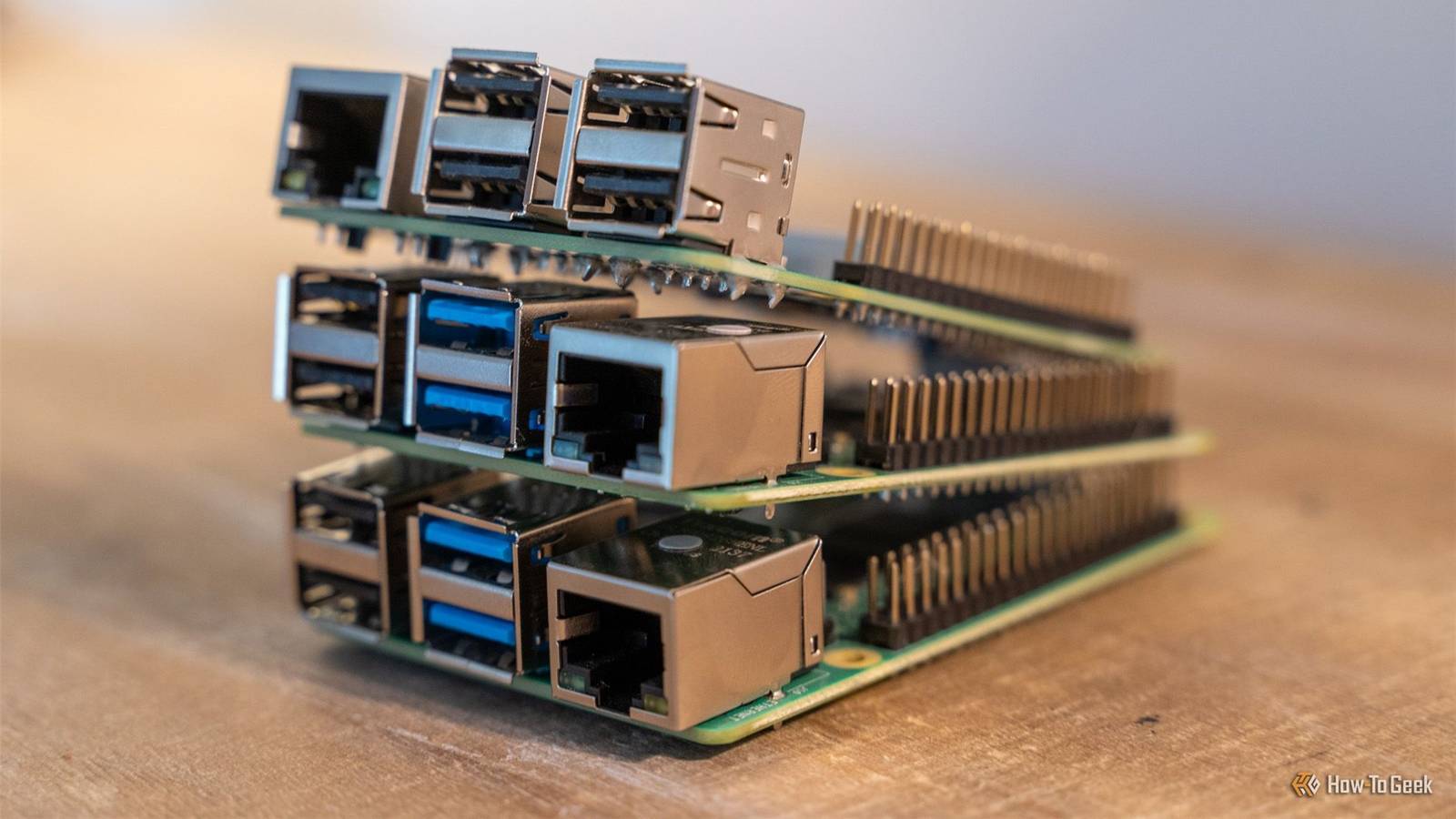
Published Aug 6, 2026, 12:15 PM EDT Tim has been covering technology for almost 20 years, in that time spanning a broad range of topics from security to product reviews. He is especially focused on the Apple ecosystem, productivity, and consumer advice. Over the years Tim has written thousands of articles, reviews, and round-ups in addition to producing video content and original photography. A graduate of journalism, he found his footing as a freelancer with a laptop and loves how he is able to work from practically anywhere. Now a Senior Editor for iPhone, Mac, and Smart Home at How-To Geek, Tim still loves to write. He can also be found crafting round-ups and productivity posts for the Zapier blog. Earlier in his career Tim spent nearly a decade as a writer and eventually Apple section editor for MakeUseOf. Tim currently lives in Brisbane, Australia. Outside of work he loves to hike and work out, play video games, and spend quality time with his wonderful partner and two cats Inka and Roger. We love the Raspberry Pi here at How-To Geek. For many of our writers, past and present, the Raspberry Pi was a revolution in small-format, affordable Linux computing. That’s why it pains me to recommend against buying one at the moment. The 16GB Raspberry Pi 5 now retails for $305 It launched for $120 Things are a bit of a mess in the hardware world right now, and it mainly comes down to memory prices. As you surely know, computers depend on dynamic random access memory (DRAM) to perform their most basic tasks by storing information that can be rapidly recalled. It encompasses a wide range of memory types that fall under acronyms like DDR4 and DDR5, LPDDR, GDDR, and HBM. While DDR (short for double data rate) is the sort of memory that makes its way into consumer products like the Raspberry Pi, HBM (short for high bandwidth memory) is what is currently in demand to power the hot “new” thing: AI data centers. It’s not that consumer memory is being snapped up and used to train AI models, but rather it has been deprioritized on a manufacturing level. For the handful of companies that control the supply of RAM, data centers are the more lucrative business proposition right now. Investment in AI has skyrocketed, and this has seen a drastic cut in production for the kind of memory chips that make it into your laptops, gaming PCs, consoles, and single-board computers like the Raspberry Pi. The lack of supply caused by the data center boom and the laws of supply and demand means that the price of an 8GB stick of DDR4 RAM has tripled in little over a year. The 16GB Raspberry Pi 5 launched at $120, and has seen a 154% price hike since its introduction in January 2025. The 8GB version, which launched at $80, now retails for $180. The sad news is that until demand shifts and new fabrication plants come online, prices are likely to remain high. Some Raspberry Pi models are still relatively cheap Pi 4, anyone? Credit: Patrick Campanale / How-To Geek While 8GB and 16GB of RAM provide more overhead for whatever it is you’re using your Raspberry Pi for, you might not actually need all that RAM. In fact, there’s a lot you can do with a Raspberry Pi that only has 1GB of RAM. Raspberry Pi knows this, hence the introduction of a 1GB Raspberry Pi 5 variant for $45. You can also look to older Pi models for even better value, with the Pi 4 starting at $35, and the introduction of a 3GB model in April 2026 for just shy of $84. This is before we get to the second-hand market, which is always where you can find the best deals. Even an older model can be put to good use in hardware-appropriate projects like NAS drives, retro gaming, DNS sinkholes. The real question you need to ask is whether or not your money is best spent on a Raspberry Pi. While the small form factor and power efficiency are undoubtedly attractive, the Pi has many limitations that other machines can overcome, like better input and output choices, built-in solid-state storage rather than a microSD card, faster Ethernet, USB-C connectivity, and no micro HDMI. Unless the form factor is essential or you desperately need access to the GPIO pins, your money will probably go further elsewhere. If that sounds like you, there’s even a good argument to be made for spending even more on something like the Orange Pi, a supercharged single-board computer that offers better performance and features like dual 2.5Gb Ethernet ports. Raspberry Pi 5 Brand Raspberry Pi Storage 8GB It's only recommended for tech-savvy users, but the Raspberry Pi 5 is a tinkerer's dream. Cheap, highly customizable, and with great onboard specs, it's a solid base for your next mini PC. The mini PC elephant in the room Cheaper, faster, and more versatile Credit: Patrick Campanale / How-To Geek The explosion in the popularity of mini PCs and the Raspberry Pi’s slow decline are not a coincidence. Mini PCs are easier to recommend for most use cases, and that would probably be true even without the massive price increases we’ve seen over the past 12 months or so. A mini PC trades the svelte form factor and power-sipping qualities of an SBC like the Pi in favor of desktop-class performance, built-in solid-state storage, and value for money. There are other benefits too, including better video performance in media streamers like Jellyfin and Plex on account of hardware transcoding, coolers that work out of the box, and the ability to expand your mini PC with upgrades to RAM and storage. You can absolutely upgrade a Pi, but your options are far more limited. The fact that your $305 16GB Raspberry Pi 5 doesn’t come with a cooler or a solid-state drive is a shocker, compared to used mini PCs that come with both. For homelabbers looking to add more Docker containers, a mini PC is the right call. Don’t forget about microcontrollers, too The rise of cheap microcontrollers further narrows the field. Where you might have once used a Pi for a project, ever-powerful ESP32 models like the new ESP32-S31 offer compelling options for simple, single-task devices.
Buying a Raspberry Pi in 2026? You'd better have a very good reason
Full Article
Original Source
Read the full article at Howtogeek →KhanList aggregates and links to publicly available news content. We do not host full articles from third-party sources. Always verify important information with original sources.