
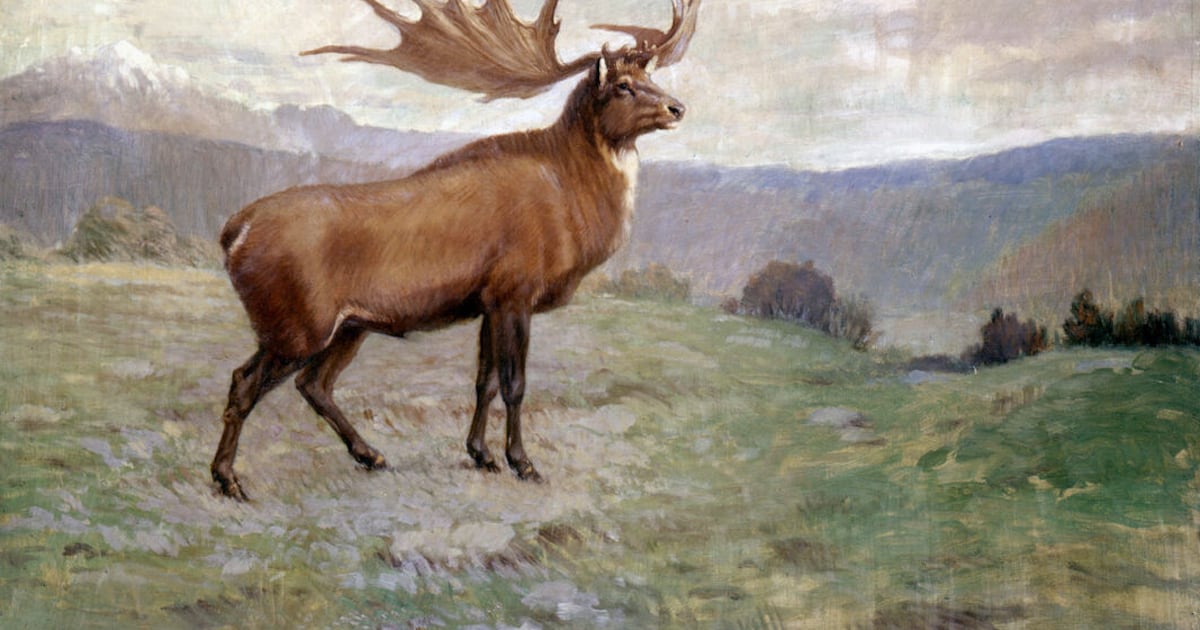
Humans may have been in Ireland 1,000 years earlier than was first thought, researchers say.Until now the earliest confirmed presence of humans was a single butchered brown bear bone from a cave in Co Clare dating to roughly 12,600-12,800 years ago. That bear bone was excavated in 1903 and radiocarbon dated in 2016. Retrospective radiocarbon dating of a discovery from the 19th century now suggests that timeline could be pushed back by another millennium. A study published in the Proceedings of the Royal Irish Academy combines new excavations at Ballynamintra Cave, near Dungarvan in Co Waterford, with a modern scientific reassessment of animal bones originally dug from the cave in 1878–1882 and curated at the National Museum of Ireland.READ MOREA giant deer lower handler bone, which looks like it was butchered by humans, has been carbon dated to 13,321-13,573 years ago. Another giant deer bone, though not dated, showed evidence of meat being stripped from the bone by a stone tool used by humans, alongside wolf gnaw marks suggesting carnivores later scavenged the carcass. The researchers stressed the marks found cannot be proven to be human-made without additional artefacts. “Confirming human activity at Ballynamintra Cave 13,500 years ago would significantly push back the arrival of people in Ireland and reshape how we understand early human dispersal across northwest Europe at the end of the last Ice Age,” said Richard Jennings, from the school of biological and environmental sciences at Liverpool John Moores University, who led the study.Beginning in the mid-19th century, archaeologists and antiquarians targeted Ireland’s limestone caves for ancient remains. These caves were thought to have been cleared out but the discovery at Ballynamintra Cave confounds that view, the researchers believe. However, the timing aligns directly with contemporary hunter-gatherer activity across Britain and northwest Europe during a warm Ice Age interval known as the Middle Allerød in which human beings began to spread northwards across Europe. Because main meat-bearing bones – such as upper legs, ribs and pelvises – are largely missing from the cave’s giant deer assemblage, the authors suggest early hunters may have butchered carcasses elsewhere and left behind lower limb bones that wolves or bears later scavenged and dragged into the cave.“Re-examining the 1870s National Museum of Ireland collection alongside newly uncovered Ice Age sediments has transformed what we know about this cave,” said researcher Ruth Carden. “The missing meat-bearing bones, combined with possible chopping and marrow-splitting marks on giant deer legs, point to a kill site scavenged by wolves, and suggest further Ice Age deposits still lie waiting inside the cave.” Further excavations at Ballynamintra Cave – where Ice Age deposits appear to continue into unexplored passages – are scheduled and could yield the stone tools or bone points needed to confirm Ireland’s earliest human settlement.National Monuments Services archaeologist Cóilín Ó Drisceoil said further artefacts will need to be found to confirm that a human presence in Ireland was earlier than presumed, making “Ballynamintra Cave a prime site for future research into Ireland’s earliest human story”. The study is funded by the Royal Irish Academy’s standing committee for archaeology and the Heritage Council’s Dungarvan Valley Caves Project.
Butchered bones suggest Ireland was inhabited 1,000 years earlier than first believed
Full Article
Original Source
Read the full article at Irishtimes →KhanList aggregates and links to publicly available news content. We do not host full articles from third-party sources. Always verify important information with original sources.