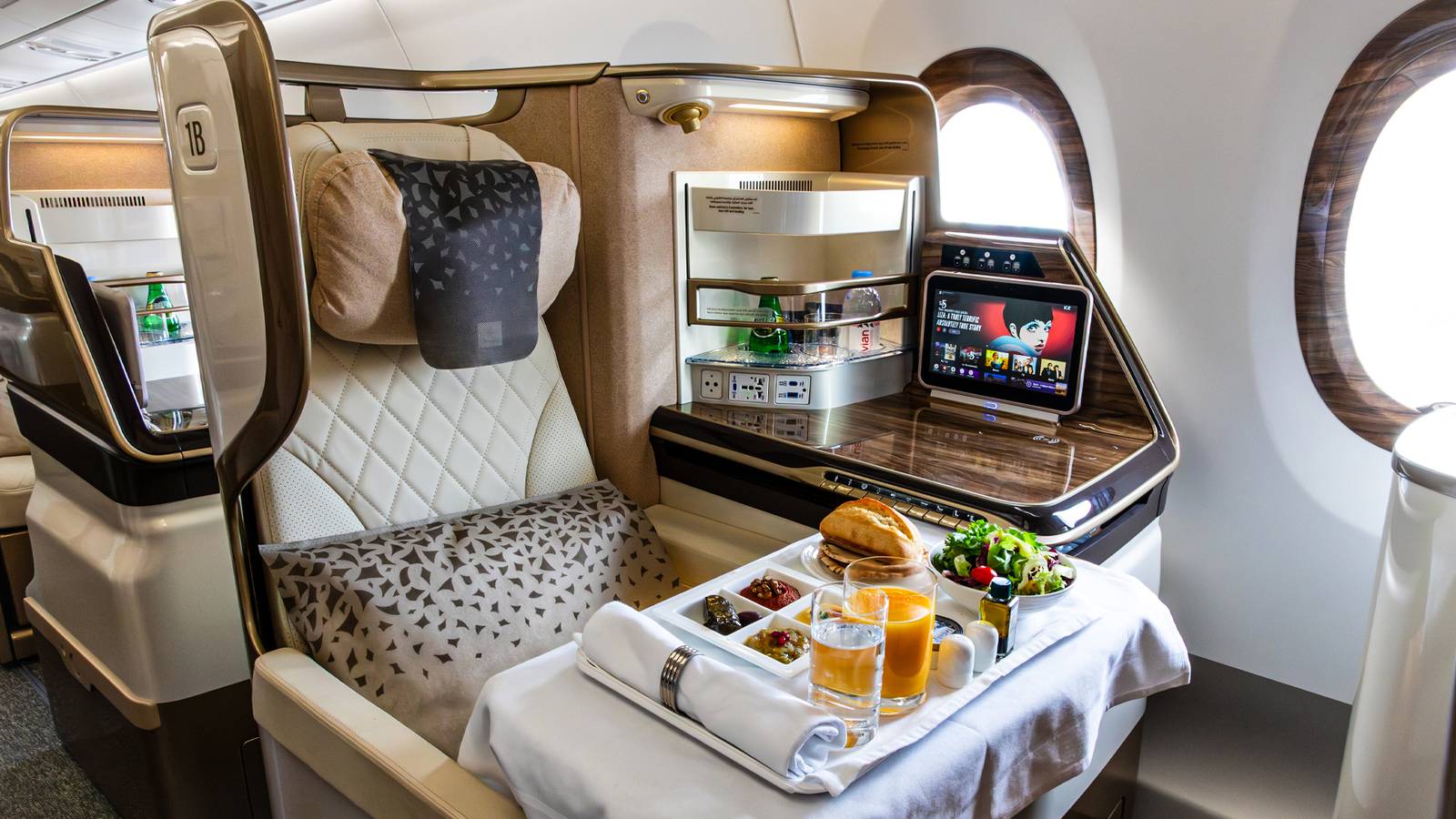
The Airbus A350 has become one of the world's premier long-haul airliners, serving flagship routes for airlines across Europe, Asia, the Middle East, and North America. Alongside its quieter cabin, lower cabin altitude, higher humidity levels, and wider fuselage, the aircraft has also become a showcase for some of the aviation industry's most advanced premium cabins. However, while business class has evolved dramatically over the past decade, first class has become increasingly rare on the A350, with only a handful of operators continuing to offer the cabin. That raises an important question for travelers willing to spend thousands of dollars on premium travel: is first class actually worth paying for? On many routes, first-class fares cost two to four times more than business class, yet today's latest business suites already offer lie-flat beds, direct aisle access, privacy doors, restaurant-quality dining and exclusive airport lounges. In this article, we will compare the two cabins on the Airbus A350, examining where first class still delivers a meaningful advantage and where business class now offers the better overall value. Why The Airbus A350 Has Become The Benchmark For Premium Travel Credit: Airbus The A350 was designed with long-haul passenger comfort as a core objective, making it an attractive platform for airlines looking to showcase their latest premium products. Compared with previous-generation widebody aircraft, the A350 features a lower cabin altitude of 6,000 feet (1,829 m), compared with the typical 8,000 feet (2,438 m) found on older aircraft. Combined with higher cabin humidity, reduced cabin noise and larger panoramic windows, these design features help reduce fatigue on long flights, some of which may be upwards of 20+ hours with the launch of Qantas Project Sunrise. A major contributor to the A350's premium appeal is its spacious cabin. The aircraft has an external fuselage diameter of 19 feet seven inches (5.97 m) and an internal cabin width of 18 feet five inches (5.61 m). This makes it around five inches (30 cm) wider internally than the Boeing 787 Dreamliner, which has an internal cabin width of 18 feet (5.49 m). While that difference may appear modest, it gives airlines greater flexibility when designing premium cabins. Many carriers have taken advantage of this extra space to install expansive business-class suites with sliding privacy doors, while first-class operators have created some of the largest and most private suites currently flying. As a result, the A350 has become the flagship aircraft for many airlines' latest premium products. Lufthansa's Allegris suites, Japan Airlines' new A350-1000 first and business class cabins, Cathay Pacific's Aria Suite and Air France's latest long-haul business class all debuted on the aircraft, reflecting its suitability for high-end travel. Unlike previous generations, where first class offered a dramatic step up from business, many of today's A350 business cabins already provide most of the bells and whistles. Which Airlines Actually Offer First Class On The Airbus A350? Credit: Shutterstock The number of airlines offering first class on the A350 is surprisingly small. While more than 650 A350 family aircraft are in service with dozens of operators worldwide, the overwhelming majority are configured with business, premium economy, and economy cabins only. This reflects a broader industry trend over the past two decades, as airlines have shifted investment towards increasingly sophisticated business-class products that appeal to a much larger share of premium travelers. As a result, first class has become more of a niche product. Today, only Lufthansa and Japan Airlines (JAL) operate A350s with an international first-class cabin. Airline A350 Variant First Class? Highest Premium Cabin (if no First) Lufthansa A350-900 Yes Allegris First Japan Airlines A350-1000 Yes International First Etihad Airways A350-1000 No First Suite Singapore Airlines A350-900/ULR No Business Class Cathay Pacific A350-900/-1000 No Aria Suite Air France A350-900 No Business Suite Delta Air Lines A350-900 No Delta One Suite Virgin Atlantic A350-1000 No Upper Class Suite Finnair A350-900 No AirLounge Business Iberia A350-900 No Business Class Lufthansa introduced its new Allegris First Class Suite on selected A350-900 aircraft in 2024. Meanwhile, Japan Airlines launched an entirely new first-class product aboard its A350-1000 fleet, serving long-haul destinations including London Heathrow (LHR) and Paris Charles de Gaulle (CDG). By contrast, major A350 operators such as Singapore Airlines, Cathay Pacific, Air France, Delta Air Lines, Virgin Atlantic, Finnair and Iberia have instead positioned business class as their highest cabin. The economics largely explain this shift. A first-class suite can occupy the floor space of two or even three business-class seats. Airlines therefore generate higher potential revenue by installing additional business-class seats instead of a small first-class cabin, particularly on aircraft such as the A350 that are designed to maximize efficiency. Comparing The Cabins: How Much Better Is First Class? The most obvious difference between business and first class on the A350 is the amount of personal space. While virtually every A350 business-class seat now converts into a fully flat bed with direct aisle access, first-class suites are significantly larger and are designed to feel more like small, private hotel rooms than aircraft seats. Lufthansa's Allegris First Class Suite Plus, for example, features floor-to-ceiling walls, lockable sliding doors and a center suite designed for two passengers traveling together. Meanwhile, Japan Airlines' new A350-1000 first class offers one of the widest seats in commercial aviation. Business class has narrowed the gap considerably over the past decade, as airlines have invested heavily in their products, such as Cathay Pacific's Aria Suite, Delta One Suite, and Virgin Atlantic's Upper Class Suite. These all offer sliding privacy doors, wireless charging, Bluetooth audio connectivity, and fully flat beds measuring around 78–80 inches (198-203 cm) in length. Seat widths typically range between 20 and 23 inches (51–58 cm), while first-class seats generally exceed 30 inches (76 cm) and are often paired with larger ottomans, separate wardrobes, additional storage compartments, and dedicated companion dining space. The distinction therefore extends beyond the seat itself. First-class cabins typically accommodate between one and six passengers, creating a far quieter and more exclusive atmosphere than business class, where cabin sizes commonly range from 30 to more than 50 seats depending on the airline's configuration. The smaller cabin also enables a more personalized level of service, with cabin crew able to spend significantly more time with each passenger. Beyond The Seat: Where First Class Delivers A Different Experience Credit: Shutterstock While the seat is the most visible difference between business and first class, the premium gap in general is often defined by everything that happens before takeoff and after landing. First-class passengers typically receive a more exclusive airport experience, beginning with dedicated check-in areas, priority security where available, private lounges and more personalized assistance throughout their journey. Airlines operating first class often use these services to create a seamless premium experience, recognizing that the product begins long before passengers step onto the aircraft. The lounge experience is one of the clearest distinctions. While business-class passengers generally have access to high-quality airline lounges, first-class travelers are often offered dedicated facilities with a much higher level of service. Examples include à la carte dining, private suites, spa treatments, private rooms, and direct transfers to the aircraft at some airports. Frankfurt Airport (FRA) is home to Lufthansa First Class Terminal, where eligible passengers receive a dedicated check-in experience, restaurant-style dining, and a private security process before being driven directly to their aircraft. Once on board, first class continues to differentiate itself through service, dining, and amenities. First class passengers may receive premium champagne, caviar services, extensive wine selections, luxury bedding, designer amenity kits, and more personalized meal preparation. However, the gap is smaller than it once was. Many business-class cabins now offer high-quality bedding, chef-designed menus, premium wines and dine-on-demand service. As a result, the additional value of first class increasingly comes from exclusivity and attention to detail rather than a different level of comfort. The Price Gap: How Much More Does First Class Actually Cost? Credit: Safran Seats The biggest question for travelers considering first class is whether the additional privacy and service justify the higher fare. Japan Airlines provides one of the clearest comparisons because its A350-1000 features both a six-seat first class cabin and a 54-seat business class cabin on the same aircraft. As of July 1, JAL's published round-trip business-class fares from Tokyo Haneda to New York start at approximately $5,800, including applicable fuel surcharges but excluding certain taxes and fees. While JAL's business-class pricing is publicly displayed, first-class fares fluctuate more significantly because only six suites are available on each A350-1000 and inventory is limited. However, the difference can be substantial. Traveler reports and market observations regularly place JAL's A350-1000 first class at well above $10,000 round trip, with some high-demand bookings exceeding $15,000, meaning passengers may pay several thousand dollars more for the upgrade. The key question is whether that additional expenditure delivers a proportional improvement. In pure comfort terms, the difference is minimal because JAL's A350 business class already has the bells and whistles. However, first class adds significantly more personal space, a larger suite, enhanced dining and a more exclusive environment. For passengers paying cash, the business-class cabin often represents the stronger value proposition, while first class becomes more attractive for those using frequent-flyer miles, celebrating a special occasion or prioritizing the highest level of privacy available on a commercial aircraft. Is First Class On The A350 Actually Worth The Price Premium? Credit: Denver International Airport The value of first class on the A350 ultimately depends on the type of traveler and how the ticket is purchased. For corporate travelers flying on company budgets, the additional cost can be difficult to justify, particularly when business class already provides a comfortable working and sleeping environment. For leisure passengers paying personally, the decision is less about necessity and more about whether the additional exclusivity, service and space justify spending thousands of extra dollars on a single journey. For those using airline miles or points, however, first class can represent a very different proposition. Award availability is limited, but when seats are obtainable, the difference between a business-class and first-class redemption is often much smaller than the equivalent cash price gap. This is why frequent flyers consider first class one of the best uses of loyalty points, particularly on airlines such as Japan Airlines, Lufthansa, and Etihad Airways, where the cabin remains a genuinely differentiated product rather than simply a larger seat. The A350 has therefore created an unusual situation in premium aviation. It has not eliminated the appeal of first class, but it has changed what passengers are paying for. The upgrade is no longer about moving from a basic premium cabin to a completely different level of comfort: instead, it is about accessing a more exclusive and personalized experience. For most travelers, business class remains the smarter financial choice, but for those seeking the highest level of luxury available in commercial aviation, the remaining A350 first-class products continue to offer something unique.
Business Class Vs. First Class On The Airbus A350: Is The Price Gap Actually Worth It?
Full Article
Original Source
Read the full article at Simpleflying →KhanList aggregates and links to publicly available news content. We do not host full articles from third-party sources. Always verify important information with original sources.