
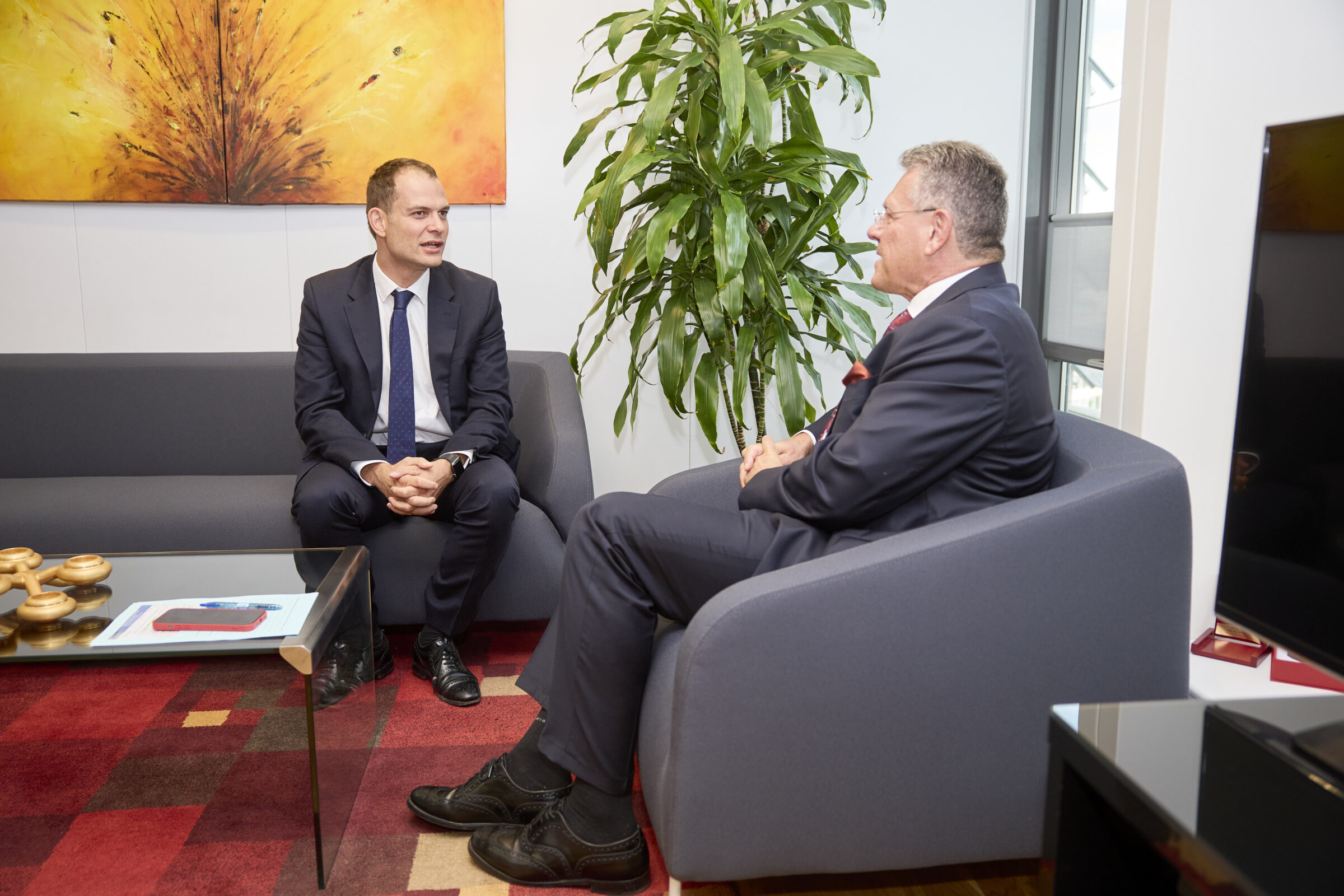
There was some disappointment among EU officials in June when Keir Starmer’s deep unpopularity at home led to his resignation as UK prime minister – and the postponement of an EU-UK ‘reset’ summit in London planned that had been planned for July. On Monday (7 September), the new Europe minister Hamish Falconer held his first meeting with EU trade commissioner Maroš Šefčovič, whose portfolio also includes UK relations. Though both sides were tight-lipped after the sit down, officials in London and Brussels plan to hold an EU-UK summit in November. With the exception of a trip to Kyiv to meet Ukrainian president Volodomyr Zelensky, new prime minister Andy Burnham has spent most of his first weeks in power touring Britain, launching a series of modest but popular campaigns – including ending homelessness – and promising hope. To those who have followed Burnham’s ascent to power, this agenda is no surprise. Unlike his predecessor Keir Starmer, who last week announced he would quit British politics entirely to focus on “global diplomacy, defence, and international affairs”, the new PM has always been more interested in domestic politics. But Burnham insists that he wants to continue the ‘reset’ agenda. “It’s clear the low growth we’ve had – the decade of low growth – has been partly a result of Brexit,” Burnham told the UK parliament on 2 September“And the sooner the party opposite accepts that, the more we can start to face up to Britain’s future and ‘where do we go from here?’” he added. But don’t expect that to mean a radical policy shift and a push for the UK to rejoin the EU’s single market. Limiting China fallout Though the new UK regime could quickly agree to modest policy changes such as a youth mobility scheme (the main single demand of EU negotiators since 2023) that would seek the UK and EU part-fund education and training courses for each other's citizens aged between 18 and 30, the most pressing priority, for the UK, will be limiting the potential collateral damage from the EU’s trade defence measures aimed at China. In the UK parliament last week, hours before a meeting with French president Emmanuel Macron, Burnham named steelmaking and farming as the main British sectors he wants to protect as part of a new EU-UK deal. “The 'Made In Europe' agenda could pose significant problems for British Steel,” Burnham warned MPs last week. The UK government nationalised British Steel in July, days before Burnham replaced Starmer as prime minister. The UK steel industry has already been hurt by the EU’s decision to cap tariff-free steel imports to 18.3 million tonnes a year – a 47 percent reduction compared with 2024 quotas – to prevent Chinese oversupply of steel. The UK followed suit by lowering its own tariff-free quota level for steel importers by 51 per cent, and slapping 50 percent duties on any imports above these levels. But there is anxiety in London that the ‘Made in Europe’ procurement scheme, which forms part of the bloc’s Industrial Accelerator Act, could hurt British Steel by shutting it out of the network of subsidies and priorities offered to EU firms. In truth, the UK’s fears about steel and farming are a direct consequence of Brexit and of being a medium-sized market surrounded by a much bigger one. The main market for British steel and agricultural produce is the EU-27 and any subsidies or special favours for EU firms inevitably make UK goods less attractive. Many of the major recent regulatory changes made by the EU, such as the carbon border adjustment mechanism and anti-deforestation regulation have either been copied or are in the process of being copied by UK lawmakers. “I would want a deeper relationship, a more ambitious relationship with the EU,” Falconer said in August shortly after his appointment. But the minimalist Brexit deal agreed by Boris Johnson’s government in 2020 has left the UK, in particular, vulnerable to changes in EU trade policy. Fixing these will come before ambition.
Burnham’s UK‑first politics meet a more protectionist EU and its ‘Made in Europe’ plan
Full Article
Original Source
Read the full article at Euobserver →KhanList aggregates and links to publicly available news content. We do not host full articles from third-party sources. Always verify important information with original sources.