
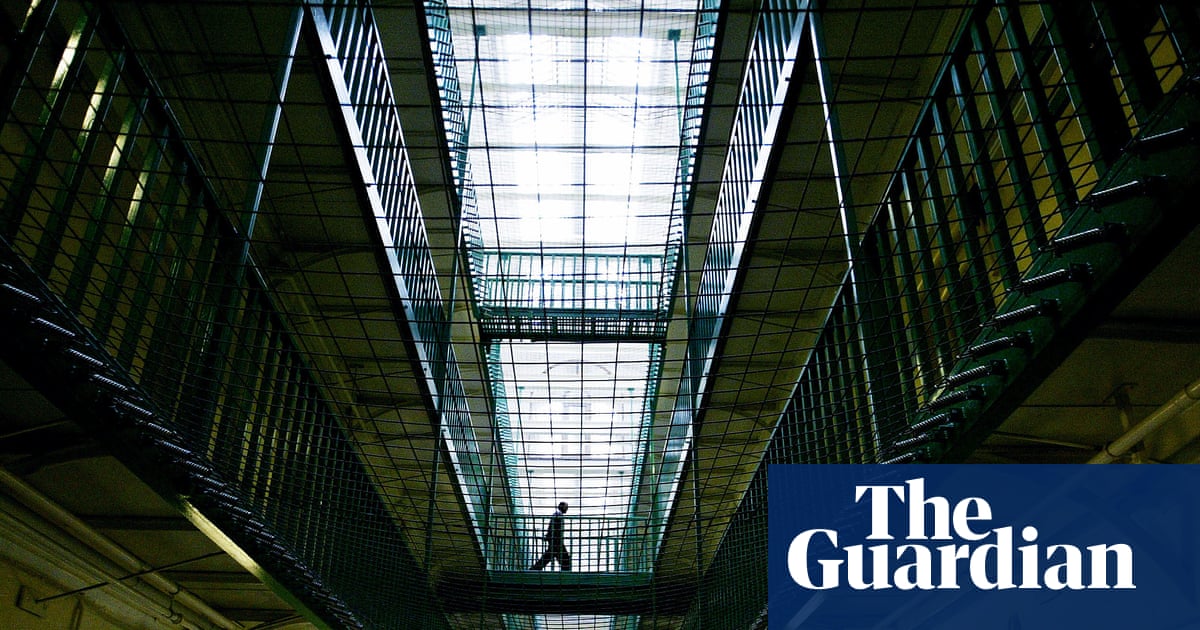
Andy Burnham is taking a “big risk” by seeking to continue running prison capacity to the limit, according to the former justice secretary appointed by Keir Starmer to oversee a review of sentencing.As parliament resumes on Tuesday, the government will confirm its U-turn on its early release scheme, which would have seen thousands of prisoners released early as part of a plan to ease prison overcrowding.About 5,000 prisoners had been due to be released early from October under the plans, down from 6,000 after ministers intervened to exempt rapists and “serious” child sexual abuse offenders.However, David Gauke, the former Conservative minister who led Starmer’s independent review of sentences, warned of the “stresses and strains” from choosing to run prison capacity at a “red hot” level, even as he recognised options available to Burnham were limited.“He is in a bind. I have some sympathy for any government that is wrestling with this, but that is why we came forward with the recommendations we came forward with,” Gauke told the Guardian.“I am going to see what Alex Norris [the justice secretary] says in parliament, but my concern – and I hope this isn’t the case – is that they are essentially taking a big risk on prison capacity.”Gauke said that Burnham’s political strategy was in contrast to his predecessor in that the new prime minister was “very sensitive to public opinion”.David Gauke, a former justice secretary, expressed concern the government was ‘essentially taking a big risk on prison capacity’. Photograph: Anna Gordon/The GuardianHe also said it would be “irresponsible” to release prisoners serving indefinite jail terms, which Burnham has pledged to abolish. The government is pinning some hope of increasing capacity on reducing the number of prisoners serving Imprisonment for Public Protection (IPP) sentences, and deporting more foreign prisoners more swiftly.“In terms of public protection, releasing IPPs comes with much higher risks than the categories excluded from the early release scheme,” said Gauke, who examined them when he was justice secretary in Theresa May’s government but said it was clear from prison disciplinary records why such prisoners had not been released.The intervention came as the government said on Monday night that the largest prison-building programme since the Victorian era would be accelerated through a £110m investment.The funding will go towards speeding up the construction of hundreds of prison places with plans to add 14,000 extra spaces by 2031, and cells being created from existing space within prisons including unused offices, laundry rooms and other areas.The Ministry of Justice also said on Monday there would be investment to buy new land to secure potential sites for future prisons.“This government is serious about fixing the broken prison system we inherited, which is why we’ve already delivered more than 3,200 prison places in just two years,” said Norris.The government plans to add 14,000 extra prison spaces by 2031 in the largest prison-building programme since the Victorian era. Photograph: PA Images/AlamyHowever, the Conservatives sought to keep up political pressure over the early release scheme, saying that it left at least 23 categories of serious violent and sexual offences eligible for automatic early release, including trafficking, strangulation and assault by penetration.“Labour’s plan to stop the release of dangerous criminals is to release a whole new group of dangerous criminals,” said the shadow justice secretary, Nick Timothy, who called for a delay to the scheme and emergency primary legislation to exclude the worst offenders.The victims minister, Alex Davies-Jones, insisted during interviews on Monday that “release does not mean freedom” for those let out under the early release scheme.“When these offenders come out of prison, the presumption will be that they will all be placed on a GPS monitoring tag,” she said.In terms of capacity, she told the BBC’s Today programme: “We will have capacity in the system with those numbers but we will run it very tight, which is why we have been tasked to look at what more we can do.”A leading police chief, meanwhile, warned that tracking people let out of prison under the early release scheme would be an additional challenge on the strained resources of police officers.Jason Hogg, the chief constable of Thames Valley police, told LBC on Monday: “The police haven’t received any additional funding for this additional work, so I’m going to be having to move resources away from one area of business to another to seek out, arrest and bring before the court individuals who don’t follow the restrictions that they will be set.”
Burnham warned running prison capacity near limit is ‘big risk’
Full Article
Original Source
Read the full article at Theguardian →KhanList aggregates and links to publicly available news content. We do not host full articles from third-party sources. Always verify important information with original sources.