
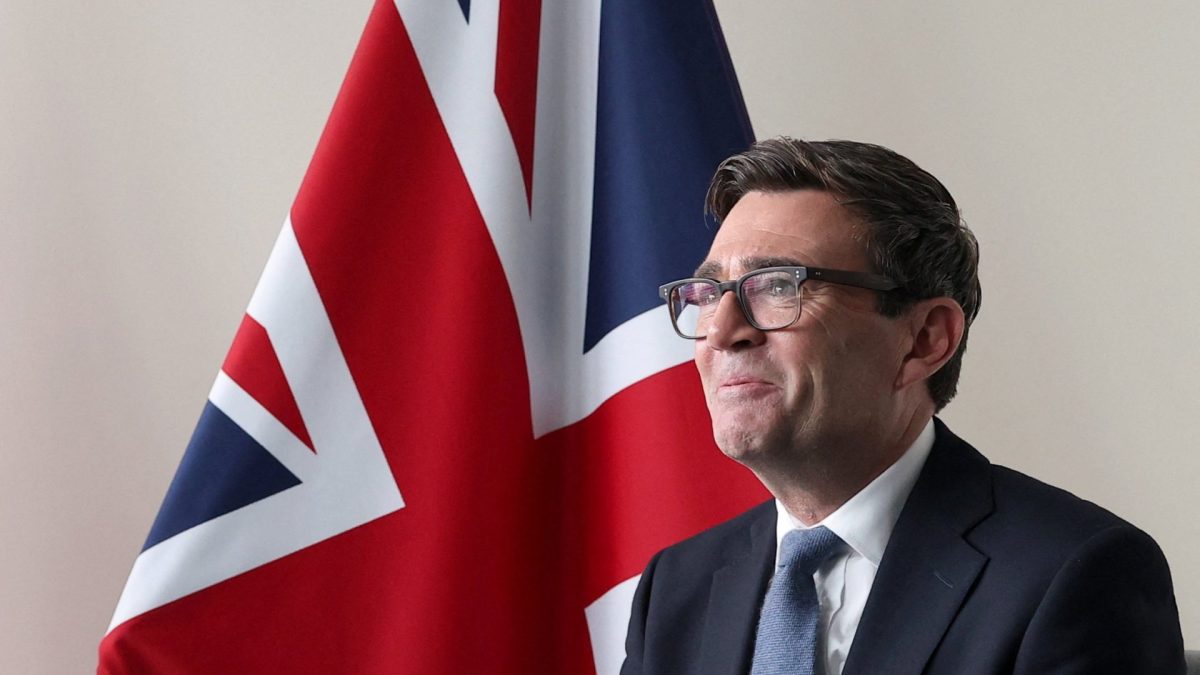
Andy Burnham has opened the door to another major U-turn – this time over the future of the Chagos Islands. The group of islands, thousands of miles away in the Indian Ocean, has been at the centre of a long-running dispute between Britain and Mauritius – with the latter arguing it was unlawfully forced to give them up in 1965. Donald Trump told Burnham at their first meeting that the current deal with Mauritius – which would see Britain hand sovereignty of the islands back but pay to lease a shared US-UK military base – was “terrible”. Shorts Now, the Government is reviewing it – just a day after Burnham promised Mauritius he would do “everything possible” to see the deal through. Any changes could have consequences for British taxpayers and the Prime Minister’s relationship with Trump. What is the Chagos Islands deal? The Chagos Islands are an archipelago in the Indian Ocean, around 300 miles south of the Maldives. Britain took control of them from France in 1814 and ran them as part of its colony of Mauritius – an island around 1,250 miles to the south-west – for 150 years. But in 1965, as Mauritius negotiated its independence, Britain separated the islands from Mauritius and kept them as a British territory so it could build a military base with the US on the largest island, Diego Garcia. Today, around 3,000 UK and US military and civilian personnel are based on Diego Garcia, and its runway can host long-range US bombers such as the B-2 and B-52. But Mauritius has consistently claimed ownership of the islands, arguing it was forced to give them up as the price of independence. In 2019, the International Court of Justice found that Britain had unlawfully separated them, and said the UK should end its administration of them “as rapidly as possible”. The ruling was not legally binding, but successive UK governments feared a future binding ruling could disrupt how the base operates. Eventually, Sir Keir Starmer’s government signed a treaty with Mauritius in May 2025. Under that deal, Mauritius would have full sovereignty – legal ownership – over the whole archipelago, including Diego Garcia. Announcing the agreement, Starmer said it was “absolutely vital” for the “safety and security of the British people”. The UK and US would be able to continue to use the joint military base on the Island for at least 99 years, with an option to extend, and Mauritius could not let other countries use the outer islands without UK agreement. To use Diego Garcia for a military base, the UK would have to pay an average of £101m a year. The deal needs a new law to pass Parliament before it can take effect, but its progress was paused in April following backlash from the US. An aerial view of Diego Garcia in the Chagos Islands (Photo: US Navy/AP) How this deal might change Trump and Burnham met for the first time on Tuesday, on the sidelines of the United Nations General Assembly in New York. Asked about the Chagos deal, Trump said: “I don’t support it. I think it’s terrible.” He added that he thought “the Prime Minister is going to be looking at it”, to which Burnham replied: “Yep.” Trump’s objections go further than the terms of the deal. He questioned Mauritius’s claim to the islands, saying it had suddenly claimed ownership after “decades and centuries”, and called it “ridiculous”. The US President also said the islands were “strategically very important”, complaining that US B-2 bombers had to fly from Missouri during strikes on Iran rather than use Diego Garcia. On Wednesday, Wes Streeting, the Defence Secretary, said the treaty “can’t go ahead without American support”. It is not exactly clear what a new deal might look like. But, to appease Trump, it could involve looking again with Mauritius at the terms of control – and how the US might use Diego Garcia in future. For now, Streeting has said no money will be handed to Mauritius “at this stage”. He said the Government was looking for a deal “that maybe not everyone loves, but everyone can live with”. Why is it so controversial? The Conservatives and Reform UK, as well as many in the US, have opposed the deal from the start. Their arguments fall into three main areas. Security: Opponents of the deal, including the Conservatives and Reform, argue that Mauritius’s close ties with China could allow Beijing to set up on the islands near the base. Before he took office in January 2025, Marco Rubio, now the US Secretary of State, warned the deal could give China “an opportunity for communist China to gain valuable intelligence” on the base. Cost: The Government puts the cost of the deal at around £3.4bn in today’s money, but the Conservatives say it will be closer to £35bn once inflation over the 99 years is factored in. Priti Patel, then the shadow foreign secretary, said in July that the deal meant spending “hard-pressed taxpayers’ cash”. Sovereignty: The Conservatives have described the deal as a “surrender” of British territory, with Robert Jenrick, then the shadow justice secretary, calling it “a strategic disaster for Britain” when the deal was announced. Some native Chagossians living in the UK also opposed it, saying they were not consulted on the decision to cede sovereignty of the islands. A US Air Force B-1B bomber taking off from the Diego Garcia military base on a strike mission against Afghanistan in Diego Garcia in 2001 (Photo: DoD/AFP) What change could mean for the UK-US relationship Trump has made clear he wants the Chagos deal looked at again – something Burnham has agreed to. If changes are made, it could make the US President more amenable to favouring the UK in regard to trade and tariffs. Since returning to the White House, Trump has imposed tariffs – taxes on goods coming into the US – on countries around the world. When his relationship with Starmer was warmer, the UK struck a deal in May 2025 that lowered US tariffs on British steel and cars. But relations soured, partly over Trump’s opposition to the Chagos deal and Starmer’s refusal to let the US use the base for strikes on Iran. Burnham is already seeking his own trade concessions from Trump, having used their meeting to ask for tariff relief for an unnamed factory in the north-east. Reworking the Chagos deal could help keep Trump onside, while pressing ahead unchanged could risk a repeat of the falling-out with Starmer. No timetable has been set for a revised deal to come back to Parliament. Why the deal matters for you It is easy to see the Chagos row as a distant diplomatic spat, but it could have a closer-to-home impact. Money: The UK currently pays nothing to use Diego Garcia, and the US covers the running costs of the military base. Under the proposed deal, the UK would have to pay Mauritius around £101m a year. The Government has said this is less than 0.2 per cent of the annual defence budget. But, in practice, every pound paid to Mauritius is money that cannot be spent on public services, defence or tax cuts. Security: The UK will keep its base on Diego Garcia under the proposed deal, but it could have implications for the UK’s national security. Without a deal, the Government has warned future legal challenges could mean it loses control of the base. But opponents of the treaty are concerned about Mauritius’s close relationship with China, and fear handing over the islands could allow Beijing to set up a presence near the base. That matters to you because the base helps Britain and its allies respond to wars like the one with Iran. Relationship with Washington: The row is also an early test of Burnham’s relationship with Trump. The US is Britain’s closest security ally and one of its biggest trading partners, so any falling-out can have knock-on effects. For you, that could mean the difference between lower or higher US tariffs on British goods.
Burnham has signalled another major U-turn. Here’s what could happen next
Full Article
Original Source
Read the full article at Inews →KhanList aggregates and links to publicly available news content. We do not host full articles from third-party sources. Always verify important information with original sources.