
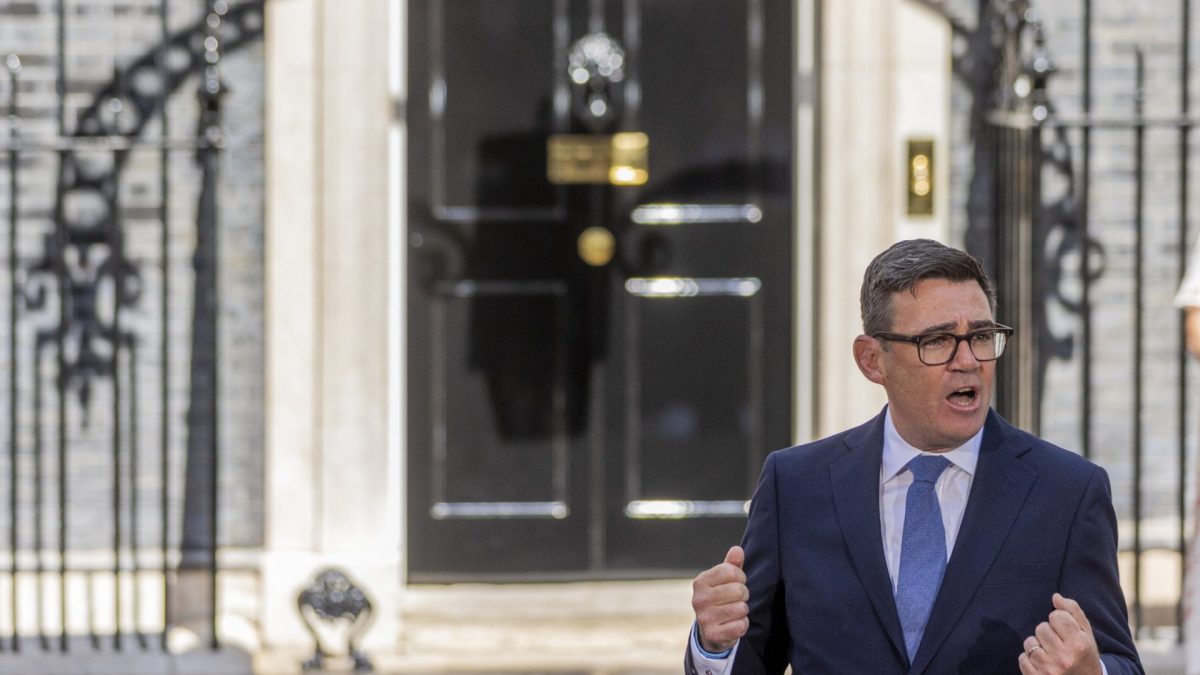
Andy Burnham has not ruled out restoring the 50p top rate of income tax to fund tax cuts for pensioners and lower earners. Speaking at his first press conference since taking over as Prime Minister on Monday, Burnham said he was “looking at” raising the frozen personal tax allowance at which people start paying income tax. Asked directly whether he would look at reintroducing the 50p rate to pay for such a move, Burnham failed to deny it twice. He said that all options would be examined ahead of the Budget, which sources close to the new PM claim could happen as early as October. Last year, outgoing chancellor Rachel Reeves carried out the Budget in late November to allow more time for the public finances to improve. Shorts Pressed again on whether reintroducing the 50p top rate of income tax is “one of the things” under consideration, the new PM replied: “I think that’d be just premature to say that. I’ve barely got my feet under.” Nevertheless, his failure to rule it out will fuel speculation over how he will fund his pledge to help lower earners and pensioners with the cost of living. The 50p additional rate or top rate was introduced under Gordon Brown’s government in 2010, before it was cut to 45p under the Tory-Lib Dem coalition government in 2013. If it was brought back, people earning above a specific high-income threshold would pay 50p in tax on every extra £1 they earn over that level. Burnham has previously argued there is “definitely a case” for restoring the rate for the highest earners. He has also separately floated a 10p starting rate for lower earners, rather than the 20p paid on the first slice of income above the tax-free personal allowance of £12,570. When asked whether he was committed to looking at increasing the threshold at which earners begin paying tax, Burnham said: “Well, certainly. I heard issues related to the personal allowance more than anything on doorsteps in Makerfield. I think it’s been frozen now for a number of years, so it has dragged more people in.” He cited the freeze on income tax thresholds, which have been frozen since April 2022, as a “growing issue” for pensioners and people on the lowest incomes. “All of this will be looked at, though, at the Budget and obviously it’s difficult given the financial circumstances in which we find ourselves,” Burnham added. He stressed that changing the threshold for the personal allowance “is not without significant consequences”. The freeze of the personal allowance at £12,570, which was extended to 2031 by Reeves at the last Budget, gradually increases the number of people paying income tax through something known as fiscal drag. As incomes and pensions rise, while tax thresholds remain unchanged, more individuals are dragged into the tax system or pushed into higher tax bands. Pensioners can be particularly affected. The Office for Budget Responsibility forecasts that up to one million more pensioners could pay income tax by 2030–31 as the state pension rises under the triple lock and approaches the frozen personal allowance threshold. More broadly, frozen tax thresholds are expected to bring 780,000 people into paying income tax for the first time, while pushing 920,000 into the higher-rate band (40% on earnings above £50,270) and 4,000 into the additional-rate band (45% on earnings above £125,140). Asked whether any tax changes would mean higher borrowing, Burnham insisted he would stick to the existing fiscal rules set out by Reeves. “None of this is about taking risks with the economy,” he said. “I’ve never done that in any role that I’ve had. I’ve always taken a very prudent approach.” Burnham is expected to set out further announcements on cost-of-living measures on Tuesday, with the new PM saying that the package was intended to make a difference people would “feel quite quickly” this year. Asked whether his priority would be on reducing bus fares – using his £2 bus fare cap in Greater Manchester as the model – cutting energy bills, or introducing targeted rent freezes, Burnham said: “We are looking at all of those things”, adding: “It won’t solve everything, it won’t take all of the pressure off, but it just shows a direction of travel and we’re serious about helping them out.” Burnham also committed to reforming social care. He said he had “thought a lot” about how to pay for reform since first proposing a National Care Service as health secretary in 2010 – a plan funded by a levy on estates that was branded a “death tax” by the Conservatives at the time. He did not say whether he still favoured that model. Burnham, who has disclosed that his father has Alzheimer’s, said the cost to the NHS of delayed discharges and unnecessary admissions caused by broken social care now ran into “billions” every year, and that Louise Casey, who is chairing the government’s Social Care Commission, was already starting a “national conversation” on how to fund a system run on the same principle as the NHS. He said he would not want to leave office without tackling the problem, saying: “We need to face it, and fix it.”
Burnham could bring back 50p income tax rate – to pay for a cut for lower earners
Full Article
Original Source
Read the full article at Inews →KhanList aggregates and links to publicly available news content. We do not host full articles from third-party sources. Always verify important information with original sources.