
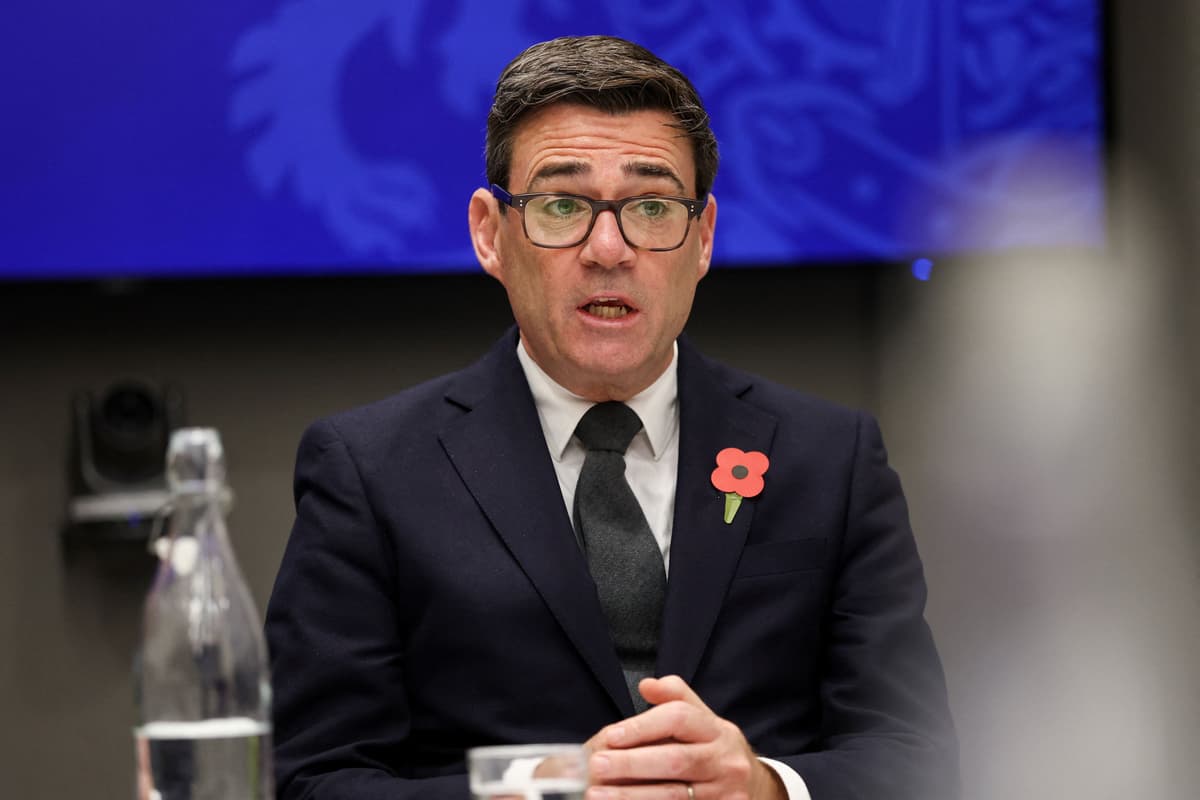
Andy Burnham has acknowledged the Budget was not as radical as he hoped it could have been, because of the impact of the Iran war and prevailing global headwinds.The Prime Minister also appeared to have softened his stance on not holding an election until 2029, saying only that he will not call one next year.Mr Burnham spoke to ITV after his first Budget as Prime Minister, for a documentary marking his first 100 days in office.Chancellor John Healey used the Budget to shore up households and businesses against the price rises caused by the US’s war with Iran, while raising taxes on banks and gambling to pay for the support.But many within Westminster questioned whether the scale of the Budget met the rhetoric of ending 40 years of “flawed thinking” which Mr Burnham espoused in his maiden Labour conference speech as Prime Minister.Asked by ITV if he would describe the Budget as radical, Mr Burnham suggested he did not.He told the broadcaster: “We took a decision on the Budget early on. The Chancellor came to me and said given everything, given the way the world is, and things changing by the, not even week, by the day, he felt it was right to go early and to close down some of the speculation we’ve seen in the past, because that’s added to the difficulties with budgets.“And as we were going through, the numbers were changing a lot because of what was going on in the world. So, to come to your question, the room for manoeuvre wasn’t what I would have hoped it to be.“I guess then the question is, you know, radical within what we were able to do. It was quite a big call to ask the banks to repay the help they had off people 20 or so years ago.”However, the Prime Minister said his plans to give £100 energy bills relief to millions of households at the Budget was “quite a significant, significant step”.Pressed whether it was the Budget he wanted to deliver, Mr Burnham said: “I don’t think any Prime Minister and Chancellor would say that, because a Budget is by definition a very difficult thing.“In the times that we’re currently in, I feel that the volatility of things means you just can’t necessarily deliver the Budget that in an ideal world you would want to deliver.”Mr Burnham also suggested that Labour’s manifesto constrained some of his ambitions for Government, telling ITV: “If you’re asking me a very direct question, if I had held the pen on the current Labour manifesto, would I have written it exactly like it is?“Well, no is the answer to that question.”Asked by the broadcaster when the next election will be, he said: “I said yesterday, no election in 2027. I said that really, really plainly yesterday.Read More“I’ll say it again today to you and the reason I say that is because I am not coming into this job full of political calculation in terms of ‘what do I need to do for how it benefits me or the party?’.“I come into the job genuinely feeling that the country needs a really clear change in terms of the way politics has been done because we’re in a messy position.”The remarks appeared to indicate a change in Mr Burnham’s previous position that an election will not be held until 2029, leaving himself wriggle room for a poll in 2028.Ahead of Labour’s party conference in September the Prime Minister had said 2029 is “when the next election will be”.Elsewhere, Defence Secretary Wes Streeting insisted the Government is moving as fast as possible to increase defence funding after criticism that the Budget did not do enough to map out the route to spend 3.5% of the economy on the military in a decade’s time.At the Budget on Wednesday, Mr Healey filled a £4.7 billion black hole in the defence investment plan, a blueprint that takes Britain’s defence spending to 2.7% of gross domestic product (GDP) by 2027.He also committed to spending 3% of GDP on defence by 2030 as a step towards meeting Britain’s commitment to Nato to spend 3.5% by 2035.But the Chancellor said details of where this cash will come from will be left until the spending review, currently pencilled in for next autumn.Mr Streeting said: “I think we are doing as much as we can, as fast as we can. The biggest sustained increase in defence spending since the end of the Cold War.”He also signalled other areas of Government spending could face constraints as a means of filling defence coffers.
Burnham acknowledges Budget ambitions constrained by global turmoil
Full Article
Original Source
Read the full article at Standard →KhanList aggregates and links to publicly available news content. We do not host full articles from third-party sources. Always verify important information with original sources.