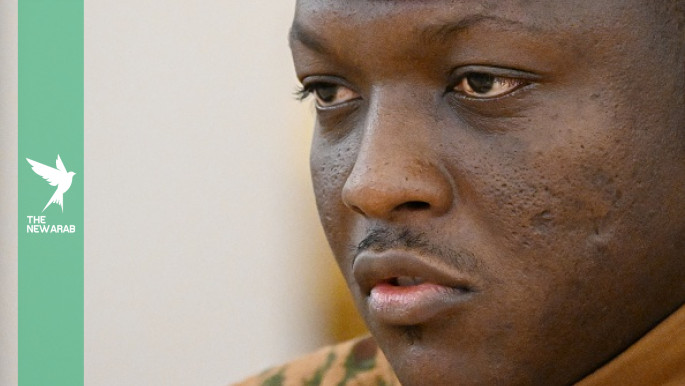
Burkina Faso's military ruler Ibrahim Traore has declared 'the battle has begun' against 'radical Islam', escalating tensions with Muslim scholars. Burkina Faso's military leader Ibrahim Traore has turned against the Muslim scholars who initially supported his rise to power [Getty] Burkina Faso's military ruler Ibrahim Traore has declared that "the battle has begun" against what he described as "radical Islam", marking the latest escalation in a growing confrontation with influential Muslim scholars following the arrests of prominent imams and the passage of a controversial religious law. Addressing Muslim scholars, Traore warned that those promoting what he characterised as extremist interpretations of Islam would face state action. "If this is your Islam, we will fight it. Extremists must change. If they do not, the battle has begun," he said. He also defended the government's Religious Freedoms Law, arguing that it reinforces Burkina Faso's secular character, and warned that imams using sermons to spread "extremist" ideas could be suspended. At the same time, he pledged state support for scholars advocating what he described as a peaceful interpretation of Islam, while accusing foreign powers of exploiting religion to destabilise the country. The remarks come amid an increasingly strained relationship between the junta and sections of Burkina Faso's Muslim community. In late May, authorities arrested Imam Mohamed Ishaq Kindo, one of the country's most prominent Sunni scholars, after he criticised the draft Religious Freedoms Law. Worshippers subsequently gathered to demand his release before authorities closed the largest Sunni mosque in the capital, Ouagadougou, citing public order concerns. According to AFP, around 100 of Kindo's supporters were transferred to a military camp for what officials described as "civic training". Kindo's arrest followed the detention of Imam Mahmoud Barro in the city of Bobo-Dioulasso in mid-April under similar circumstances. The Dakar-based Timbuktu Institute, which specialises in peace and security issues in the Sahel, has said Kindo's whereabouts remain unknown following the suppression of protests demanding his release. The Religious Freedoms Law, adopted unanimously by Burkina Faso's transitional parliament on 20 June, introduces prison terms and fines for practices authorities classify as religious abuses, including the forced begging of children and failures by religious organisations to comply with financial transparency requirements. The government says the legislation is intended to strengthen the country's secular constitutional order. Critics, however, have argued that the law forms part of a broader campaign to tighten state control over religious institutions. According to the Timbuktu Institute, the confrontation represents more than a dispute over legislation. It reflects the breakdown of a tacit understanding that had developed between Traore's government and influential Muslim scholars, whose support helped bolster the junta's legitimacy after it seized power in 2022. The think tank warned that alienating former allies risks undermining an important source of domestic political legitimacy while failing to resolve the jihadist insurgency that has gripped much of the country for years. Traore also announced plans to tighten oversight of religious education abroad, saying Burkinabe students studying Islamic subjects overseas would be required to return home and warning that those who refused could lose their citizenship. The announcement followed a government directive requiring students seeking to study abroad to obtain prior approval from the Ministry of Higher Education. The domestic tensions have coincided with Burkina Faso strengthening ties with Israel. Traore recently received Israel's new ambassador to Burkina Faso, Simon Seroussi, who formally presented his diplomatic credentials after reports that his accreditation had remained pending for months. The move comes as Israeli security agencies expand cooperation with the Alliance of Sahel States, the bloc comprising Burkina Faso, Mali and Niger, whose military governments have expressed interest in Israeli security technology. Traore has presented his campaign as part of a broader effort to counter religious extremism and reinforce state authority. However, his increasingly confrontational approach towards influential Muslim scholars opens a new front for a government already battling a persistent armed insurgency and mounting political challenges at home. Related Articles
Burkina Faso ruler declares 'battle' against Muslim scholars
Full Article
Original Source
Read the full article at Newarab →KhanList aggregates and links to publicly available news content. We do not host full articles from third-party sources. Always verify important information with original sources.