
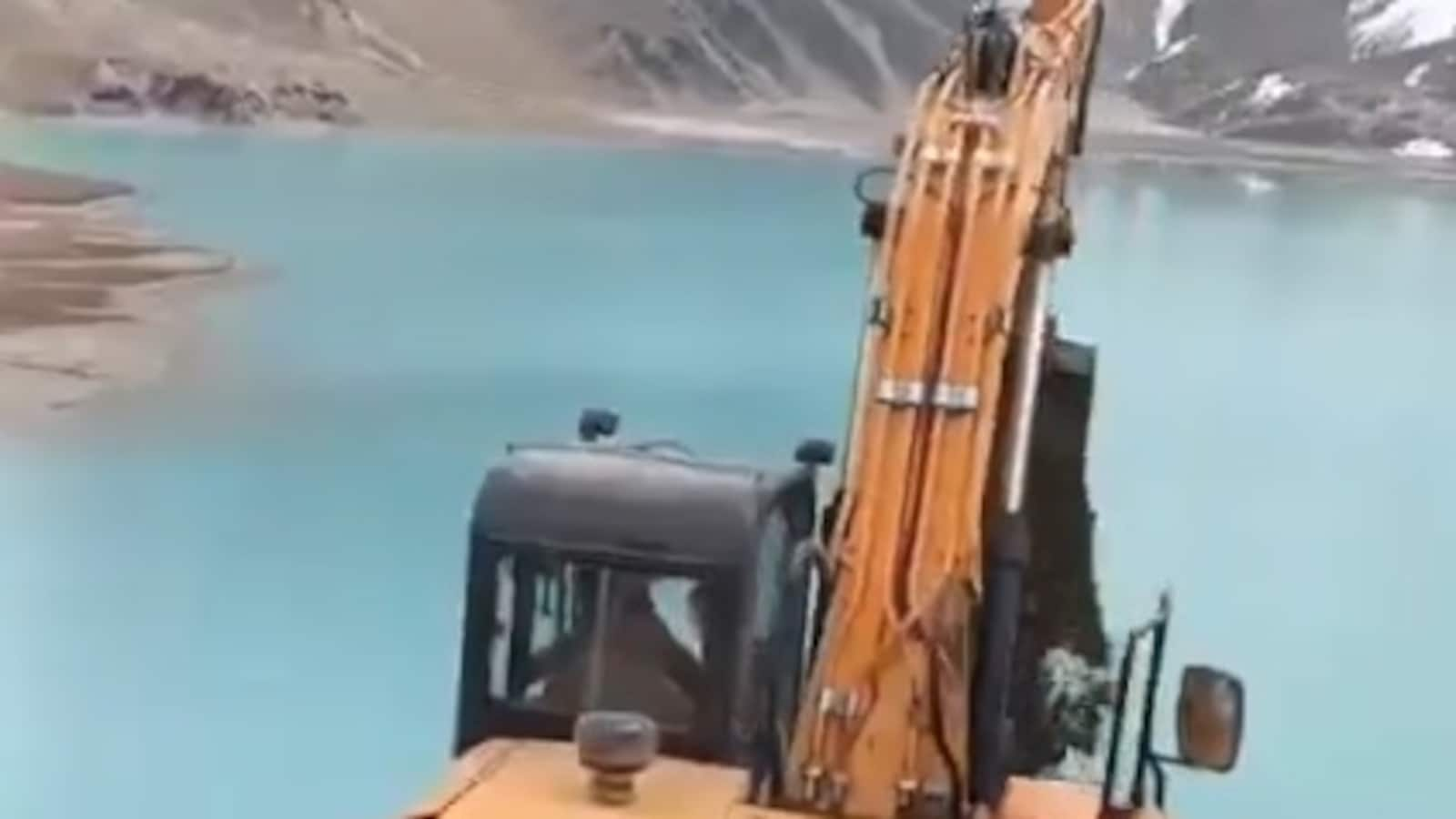
Srinagar: Road construction, using heavy machinery near the Amarnath cave shrine has sparked outrage and concern over the fragile ecology of the Himalayas. The opposition has termed it an "insult to the Hindu faith" and a threat to glacial lakes and fragile mountains en-route to the cave shrine. Officials of the Border Roads Organisation claimed that the construction work is being carried out as per "prescribed norms, environmental safeguards and to serve the larger public interest". Videos showing bulldozers moving soil and rock for road construction right at the Sheshnag Lake are being widely shared on social media. Many appear to be shocked to see JCB excavators at the Sheshnag Lake, which is listed as one of the 14 officially identified high-risk glacial lakes in J&K for GLOF (glacial lake outburst flood) potential.Political leaders and environmental activists have strongly reacted to the use of heavy machinery and demanded an immediate halt to the construction. Mohit Bhan, a Kashmiri Pandit leader of Mehbooba Mufti's People's Democratic Party, has termed it a "crime against Hinduism and faith in nature''. He said both faith and ecology need protection and "you cannot celebrate the sanctity of a pilgrimage while disregarding the sanctity of the landscape through which it passes''. "Sheshnag is not just another lake in the mountains of Kashmir. In Hinduism, it is the sacred landscape where Lord Shiva is believed to have left behind the serpents before proceeding towards the Amarnath Cave to narrate the Amar Katha to Goddess Parvati. For generations, Hinduism has revered rivers, springs, lakes and mountains as sacred manifestations of nature. There is a profound contradiction in invoking Hindu faith while allowing the very landscape associated with that faith to be disturbed through unnecessary construction, road cutting and surface levelling," Bhan said in a post on social media platform X."What is being projected as development must not come at the cost of a fragile alpine ecosystem and a landscape deeply embedded in Hindu religious belief. Faith and ecology are not competing interests. Both demand protection,'' he added in the post.A Crime Against Hinduism and Faith in Nature. Sheshnag is not just another lake in the mountains of Kashmir. In Hinduism , it is the sacred landscape where Lord Shiva is believed to have left behind the serpents before proceeding towards the Amarnath Cave to narrate the Amar Katha to Goddess Parvati. For generations, Hinduism has revered rivers, springs, lakes and mountains as sacred manifestations of nature. There is a profound contradiction in invoking Hindu faith while allowing the very landscape associated with that faith to be disturbed through unnecessary construction, road cutting and surface levelling. What is being projected as development must not come at the cost of a fragile alpine ecosystem and a landscape deeply embedded in Hindu religious belief. Faith and ecology are not competing interests. Both demand protection. You cannot celebrate the sanctity of a pilgrimage while disregarding the sanctity of the landscape through which it passes. If we cannot respect Sacred Sheshnag, what exactly are we preserving in the name of the Amarnath Yatra?— Mohit Bhan ( موہت بھان ) (@buttkout) November 23, 2026Senior Congress leader Pawan Khera accused the government of "playing" with the faith of Hindus and Kashmiri Muslims, and vandalising fragile ecology. Sheshnag is not a construction site. It is a fragile Himalayan ecosystem and a sacred lake for both Hindus and Muslims, he said."Sheshnag is among the 14 high-risk glacial lakes identified in Jammu and Kashmir. The recent glacier-related disasters in Nepal should have been a stark warning: Disturbing the fragile Himalayan ecosystems can have catastrophic consequences," said Khera.Mirwaiz Umar Farooq, head priest of Jamia Masjid Srinagar, has called for protection of mountains, glaciers and water bodies and demanded that the construction work must immediately be stopped."The visuals and reports of heavy machinery operating near the pristine Sheshnag Lake, in the glacial zone of Pahalgam are very disturbing, raising serious concern among people about the ecological impact of construction in this fragile Himalayan region. With our glaciers already retreating, and recent devastating glacier-related floods in neighbouring Nepal reminding us of the growing vulnerability of the Himalayas, such activities raise alarm. Kashmir has always warmly welcomed Amarnath Yatra pilgrims, and improving facilities for them has never been an issue. But not at the cost of our fragile ecosystem,'' Mirwaiz said. The visuals and reports of heavy machinery operating near the pristine Sheshnag Lake, in the glacial zone of Pahalgam are very disturbing, raising serious concern among people about the ecological impact of construction in this fragile Himalayan region. With our glaciers already retreating, and recent devastating glacier-related floods in neighbouring Nepal reminding us of the growing vulnerability of the Himalayas, such activities raise alarm. Kashmir has always warmly welcomed Amarnath Yatra pilgrims, and improving facilities for them has never been an issue. But not at the cost of our fragile ecosystem. Those governing owe answers to people for the serious environmental concerns created by such "developmental projects"! Our precious mountains, glaciers and water bodies need protection not plunder, for now and for the future generations. So this must be immediately stopped.— Mirwaiz Umar Farooq (@MirwaizKashmir) November 23, 2026In a statement, the Border Roads Organisation said it is carrying out post-Amarnath Yatra works in compliance with all applicable safety norms and environmental safeguards. "BRO takes all measures to ensure safe disposal of excavated material , protect natural drainage and minimise disturbance to surrounding terrain,'' it read.Reacting to videos circulating on social media, the BRO said that bulldozers are "not used for new construction work and the works are confined to the existing tracks''."Based on experience of previous Yatra and requirement highlighted for wider road for Shri Amarnath ji yatra, BRO has started focusing on stabilising vulnerable stretches and widening the tracks as prescribed to ease congestion and allow safer passage. The works are confined to the existing tracks,'' the Border Roads Organisation said. An official spokesman said that the BRO's primary objective is to safeguard pilgrims throughout the Yatra. "By making these tracks safer and more accessible for pilgrims, Yatra personnel and everyone else who uses it, the works serve the larger public interest,'' the statement read.
Bulldozers At Sheshnag Lake To Widen Road To Amarnath, Kashmir Fumes
Full Article
Original Source
Read the full article at Ndtv →KhanList aggregates and links to publicly available news content. We do not host full articles from third-party sources. Always verify important information with original sources.