
The Parliament has not met for 88 days, and its Monsoon Session, which started on July 20, is still technically alive. The unusual delay in formally ending the session has set a record and triggered allegations from the Congress that the Centre is preparing another attempt to push through its "dangerous and destructive" delimitation bills. Congress leader Jairam Ramesh has accused Union Home Minister Amit Shah of trying to secure a two-thirds majority for the bills, warning against his "trademark bulldozer tactics".The allegations come nearly seven months after the Opposition defeated the government's attempt to fast-track women's reservations alongside an expansion of Lok Sabha seats from 543 to a maximum of 850.On Monday (November 9), Parliament set a record by remaining formally open for 88 days after its last sitting, surpassing the previous record of 87 days set in 2008. Both the Lok Sabha and the Rajya Sabha had been adjourned sine die on August 13, but neither has been formally prorogued. This means that the Centre retains the option of reconvening the existing session at a short notice.Reacting to the record, the Congress MP Jairam Ramesh said he suspected it was linked to the Centre's proposed delimitation exercise, which could increase the Lok Sabha's strength from 543 to as many as 850 seats. The Centre is seeking to implement 33% reservation for women in the Lok Sabha and state assemblies before the 2029 elections by advancing the delimitation exercise, as the existing law links the rollout of women's reservations to the redrawing of constituencies. The Opposition, including the Congress, have opposed the proposed delimitation exercise, and raised concerns that using the outdated 2011 Census data to redraw seats could alter the balance of political representation between states, particularly disadvantaging southern India.On April 17 this year, the Centre's Constitution (131st Amendment) Bill failed in the Lok Sabha despite securing 298 votes in favour against 230, falling short of the required two-thirds majority of 352 votes. The NDA needed 352 votes for the required two-thirds majority among the 528 MPs who voted. More importantly, since then, subsequent realignments have brought the BJP-led NDA closer to the threshold even as it doesn't guarantee the bill's passage. Since the bill seeks to amend the Constitution, going by Article 368, the government needs to secure a majority of the Lok Sabha's total membership and at least two-thirds of the MPs present and voting. With 528 MPs voting on April 17, the Bill needed at least 352 votes to be passed.WHY CONGRESS SUSPECTS A DELIMITATION PLOTCongress general secretary Jairam Ramesh on Monday alleged that the government had deliberately kept Parliament's Monsoon Session open to buy time for Home Minister Shah to assemble the numbers needed to pass the delimitation bills.These are referred to as "delimitation bills" because the Centre introduced three linked pieces of legislation on April 16 to fast-track 33% women's reservation in the Lok Sabha and state assemblies through delimitation. They included the Constitution (131st Amendment) Bill, the bill to redraw constituencies and expand seats, and the Union Territories Laws (Amendment) Bill to extend related provisions to Delhi, Puducherry and Jammu and Kashmir."And unlike in the past, including in 2008, this record has been set to give time to the Union Home Minister to somehow manipulate a super-tainted two-thirds majority in the Lok Sabha to get the dangerous and destructive Delimitation Bills passed," Jairam Ramesh said in a post on X.He warned that the Opposition's unity, which defeated the delimitation proposals on April 17, would prevail again if Amit Shah repeated his "trademark bulldozer tactics".Ramesh also claimed that Congress president Mallikarjun Kharge had written to Prime Minister Narendra Modi four times in the past six months, seeking an all-party meeting to discuss delimitation before introducing legislation. "The PM has steadfastly refused to do so," Ramesh added.While the prolonged gap does not establish that a special sitting or another vote on delimitation has been planned, the allegation by the Congress concerns the government's intentions.WHAT IS THE 88-DAY PARLIAMENT PROROGATION RECORD?Parliament's Monsoon Session ended its scheduled sittings on August 13, when both Houses were adjourned sine die, meaning without fixing a date for their next meeting.But adjournment sine die is not the same as prorogation. While the former stops sitting indefinitely, prorogation formally ends a parliamentary session.Under Article 85 of the Constitution, the President has the power to prorogue either House. According to PTI, an extended sitting within the existing session can be convened with a minimum notice of two days, compared with at least 14 days for a fresh session.The Centre's sources on October 16 told India Today TV's Himanshu Mishra that the government was likely to convene a special session of Parliament later that month to take up constitutional amendment bills related to delimitation and women's reservation. The source also claimed that the Centre had the numbers required to secure their passage in the Lok Sabha.That is why the delay has acquired political significance and attacks from the Congress. The government can potentially bring MPs back to Parliament without going through the process of summoning an entirely new session.However, the Constitution specifies no deadline for prorogation after adjournment sine die. Keeping a session formally open for an extended period is not, by itself, a constitutional violation.The previous record of 87 days without formally ending a parliamentary session was set in 2008 under the Congress-led UPA government. After the Left parties withdrew support over the India-US nuclear deal, the Lok Sabha met on July 21 and 22 for a confidence vote and was adjourned indefinitely on July 22. However, the session was kept alive, allowing Parliament to reconvene on October 17, meet again in December and finally end the session on December 24.WHAT IS PROROGATION? HOW IS IT DIFFERENT FROM ADJOURNMENT?Parliament does not formally close every time its sittings end. There are different parliamentary procedures for temporarily stopping proceedings, ending a session and dissolving the Lok Sabha, each with distinct constitutional implications.Prorogation is the formal termination of a parliamentary session by the President under Article 85 of the Constitution. It ends the session, but not the life of the House. Parliament can meet again when a fresh session is summoned.Adjournment temporarily suspends a sitting of the House for a specified period, which could be a few hours, days or weeks. The Speaker of the Lok Sabha or the Chairman of the Rajya Sabha exercises this power.Adjournment sine die means ending the sittings of a House without announcing the date of its next meeting. Unlike prorogation, it does not formally end the session. This is what happened on August 13, when both Houses were adjourned sine die, but the Monsoon Session remained technically open.Dissolution, on the other hand, brings the life of the Lok Sabha to an end, either upon completion of its five-year term or earlier. It is different from prorogation because it ends the House itself, not just a session. The Rajya Sabha is an exception here as it is the permanent House and cannot be dissolved.Suspension of a sitting is another temporary interruption, generally used when proceedings cannot continue because of disorder.HOW GOVT'S DELIMITATION BILLS WERE DEFEATEDThe present row has its roots in the special parliamentary sitting held in April this year. The Centre introduced proposals to operationalise the Women's Reservation Act of 2023, which provides for reserving one-third of seats in the Lok Sabha and state assemblies for women.The proposed constitutional changes would allow the government to advance delimitation without waiting for the next Census results and potentially expand the Lok Sabha to 850 seats.Opposition parties criticised the move, saying that using older population data could affect the balance of representation among states, particularly between northern and southern India.The government rejected those concerns. Prime Minister Narendra Modi and Home Minister Amit Shah assured the Parliament that southern states would not be disadvantaged.On April 17, however, when the constitutional amendment was put to the test, it received only 298 votes in favour and 230 against.With 528 MPs voting, at least 352 affirmative votes were required. The government fell short by 54.Following the defeat, the political equations in the Lok Sabha have shifted considerably. Several realignments and switch-overs have brought the BJP-led NDA closer to the required numbers, with further positioning potentially on the horizon.DOES NDA NOW HAVE THE NUMBERS TO PASS DELIMITATION BILLS?The NDA's position in the Lok Sabha has improved considerably since the April 17 defeat of the bill. But it still does not have an assured two-thirds majority.The ruling alliance secured 293 votes during the April voting, with five additional votes coming from outside the NDA.The political arithmetic changed following a rebellion by 20 Trinamool Congress MPs and the defection of six Shiv Sena (UBT) MPs to the Eknath Shinde-led Shiv Sena. By July, the realignments increased the NDA's support to around 318-319 MPs in the Lok Sabha, but it was still short of the 41-42 votes to reach the required threshold.On September 23, Jairam Ramesh had claimed that the government was still at least 26 MPs short of a two-thirds majority, according to PTI.Meanwhile, the BJP is reportedly reaching out to Sharad Pawar's NCP (SP), which has eight Lok Sabha MPs, amid renewed speculation about a merger with the Sunetra Pawar-led NCP and possible cooperation with the NDA.Reports have also suggested efforts to secure support from the DMK, with which the Congress broke its long-time alliance in Tamil Nadu to join the C Joseph Vijay-led government.However, the Centre would not necessarily need 360 votes if some MPs abstained or remained absent on the day of voting. Under Article 368, a constitutional amendment requires at least two-thirds of members present and voting, apart from a majority of the House's total membership.Even if the NDA manages to secure the required two-thirds majority in the Lok Sabha, the constitutional amendment must separately clear the Rajya Sabha with a majority of its total membership and at least two-thirds of members present and voting. This makes the support from parties outside the NDA crucial in the Upper House as well.As of Monday (November 9), the NDA has 319 MPs in the Lok Sabha and 153 in the Rajya Sabha, leaving it 41 votes short of the 360 needed in the Lower House and 11 short of the 164 needed in the Upper House, assuming all 540 and 245 members, respectively, vote on the constitutional amendment.This is where the Congress sees a possible political calculation behind the delay in proroguing Parliament. Keeping the Monsoon Session alive would allow the government to reconvene the Houses quickly in a couple of days if it secures enough support for another attempt at the delimitation legislation. However, the record 88-day gap does not establish that such a sitting is planned by the BJP-led ruling alliance. For now, the government's intentions are unclear, even as the Congress is claiming that the delay is part of Home Minister Shah's attempt to push through legislation that the Opposition defeated in April.- Ends
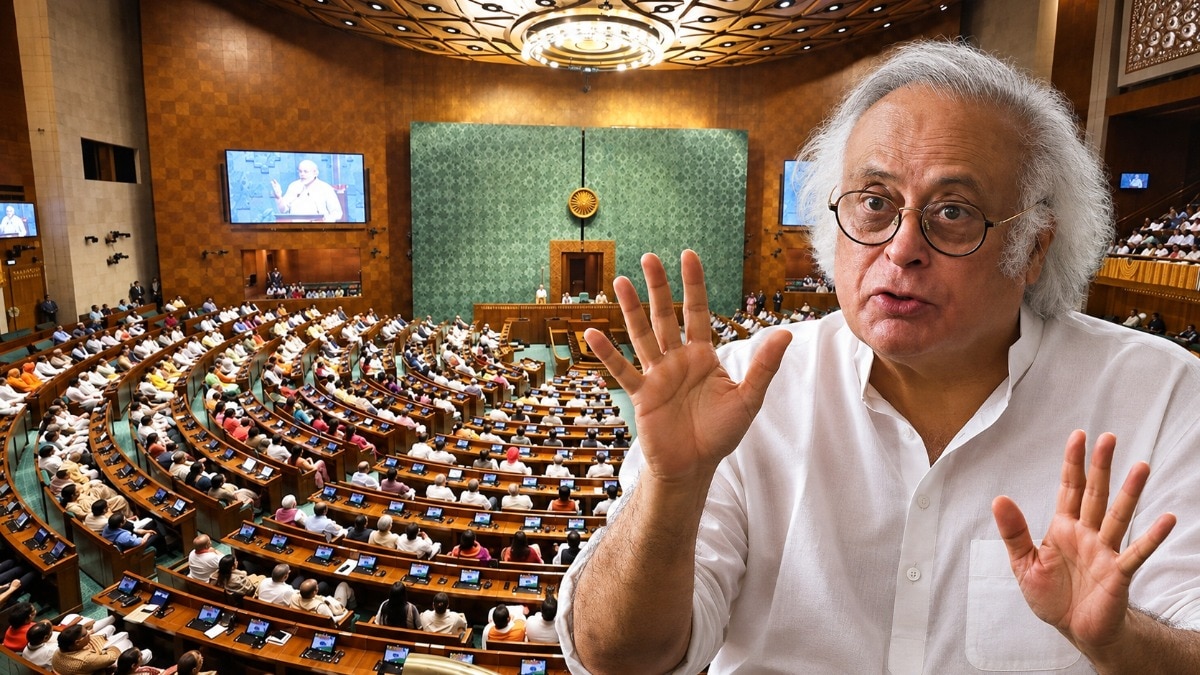
Bulldozer tactics: Why Congress is smelling a plot in Parliament's 88-day record
Full Article
Original Source
Read the full article at Indiatoday →KhanList aggregates and links to publicly available news content. We do not host full articles from third-party sources. Always verify important information with original sources.