
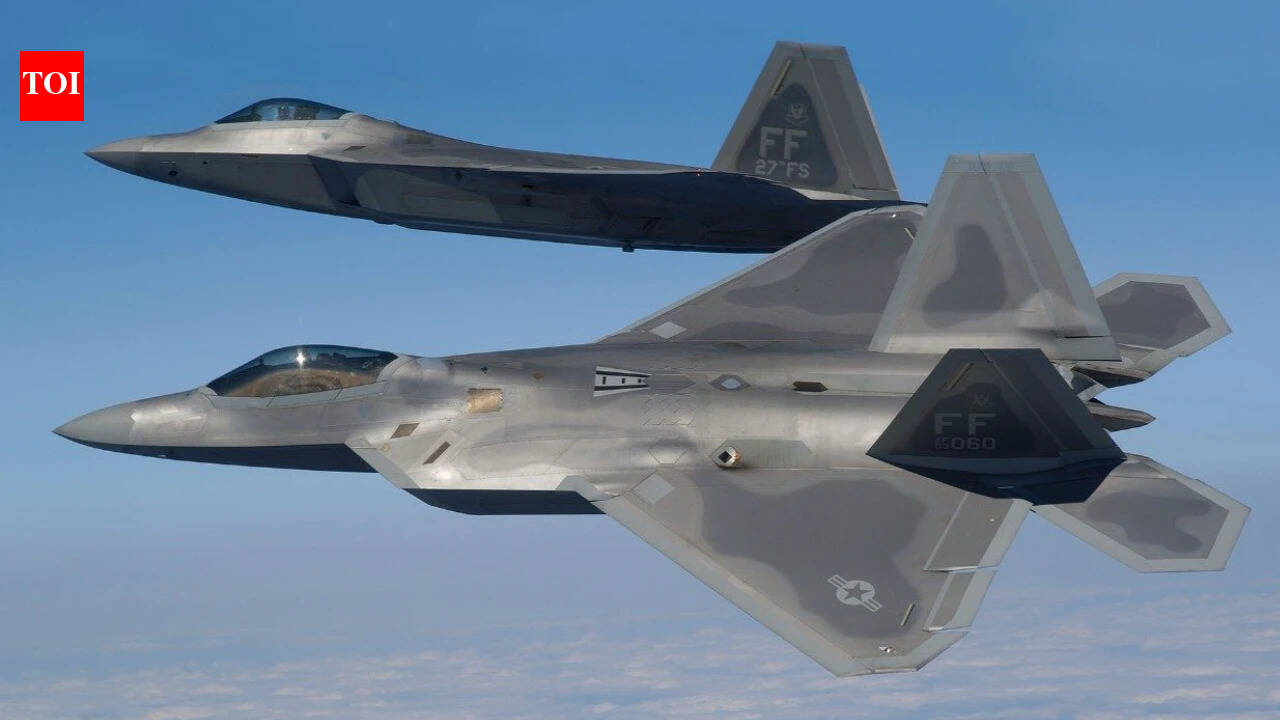
The US Air Force's F-22 Raptor is designed to evade enemy radar, hunt down rival aircraft and dominate the skies with some of the world's most advanced combat technology.But one of America's most sophisticated stealth fighters has an unexpectedly old-school requirement: the US air Force is looking for memory cards with a minimum storage capacity of just 256 MB, using formats dating back to the 1990s.According to a procurement notice published by the US department of the air force on November 16, the F-22 programme is seeking suppliers for flash-storage cards used in its next-generation micro-Data Transfer Cartridge (mDTC) system.The requirement includes PC Standard 95 Type II flash ATA cards and CompactFlash cards with compatible adapters, each offering at least 256 MB of storage. The cards must also support reading and writing data through government-furnished equipment, the notice said.The notice, issued by the F-22 Division's modernization branch, is a market-research exercise to identify potential suppliers.What is flash storage and what does it do in the F-22?Flash storage is a type of electronic memory that can retain information even when the power is switched off. Unlike RAM, which temporarily holds data while a computer is running, flash storage preserves information for later use. It is commonly found in USB drives, memory cards and solid-state drives.CompactFlash, one of the formats specified by the US Air Force, is a removable flash-storage format introduced in 1994. The other option, PC Standard 95 Type II flash ATA cards, belongs to the older PC Card storage ecosystem.In the F-22, the storage cards are being sought for its micro-Data Transfer Cartridge (mDTC) system. The broader role of a data-transfer cartridge is to move information between ground-based equipment and the aircraft's onboard systems.A US Air Force report published in July 2019 described how F-22 maintenance specialists removed the aircraft's Data Transfer Cartridge and downloaded its stored information onto a computer to investigate technical problems and identify faults. This provides an example of how the aircraft's data-transfer system supports maintenance and troubleshooting.Why is the F-22 still using 1990s-era technology?The use of CompactFlash and PCMCIA formats in the F-22 requirement raises a larger question about how advanced military aircraft continue to operate with older electronic systems even as commercial technology moves towards newer standards.One reason is the challenge of maintaining compatibility with existing aircraft hardware. A newer storage device cannot automatically replace an older one simply because it offers greater capacity or faster data-transfer speeds. It must work with the aircraft's existing interfaces and software.The US Federal Aviation Administration (FAA), in a technical paper on avionics obsolescence, explains that replacing discontinued electronic components can range from substituting an equivalent part to undertaking major hardware redesigns and software recertification. Such changes must also preserve the aircraft's continued airworthiness.The problem is not unique to the F-22. A US department of defense presentation on electronics obsolescence identifies the long operational lives of military platforms, dependence on commercial electronic components and the cost and time involved in redesigning and requalifying replacement hardware as major challenges for defence programmes.The F-22 procurement notice itself reflects these concerns. The Air Force is asking potential suppliers about manufacturing origins, component traceability, counterfeit prevention, product end-of-life projections and last-time-buy policies. These questions indicate the importance of ensuring that compatible components remain available over the aircraft's service life.
Built to beat enemy radar, why US F-22 raptor is still stuck in 1990s
Full Article
Original Source
Read the full article at Timesofindia →KhanList aggregates and links to publicly available news content. We do not host full articles from third-party sources. Always verify important information with original sources.