
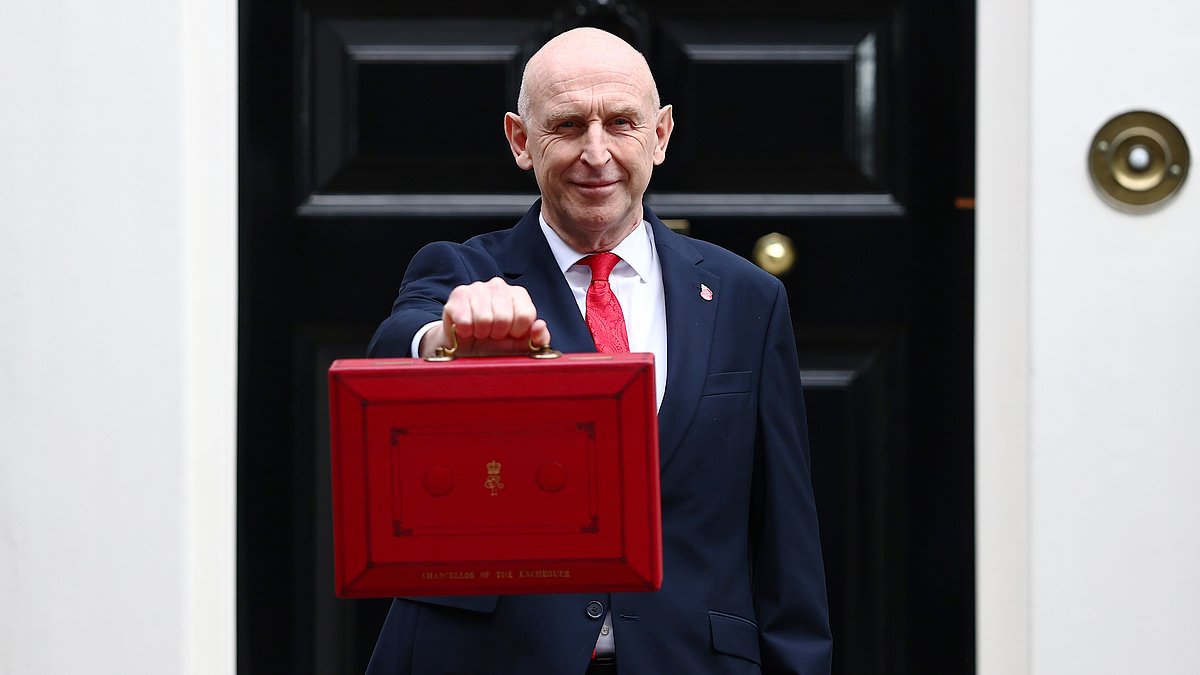
Chancellor John Healey said his aim for yesterday's Budget was to give households 'breathing space'. His measures took a loose aim at those on lower incomes but only some will benefit thanks to a lack of precise targeting.The poorest pensioners will be spared income tax, but others just above them will have to pay up on their state pension. Meanwhile, there was a £100 handout to help with energy bills, but only for households in lower council tax bands.At the same time, lower income households will suffer from frozen tax thresholds, while further up the scale more families risk being dragged into higher rate tax brackets.And middle income families and pensioners could end up footing the bill for some of his measures, via punishing taxes on savers and landlords.We round up the winners and losers from Labour's tax tweaks – and you can calculate exactly how all the measures will affect your money in our Budget Deep Dive. Breathing space: John Healey's measures could lead to moderate cuts in bills for those on lower incomes but will hit the middle class, especially savers and landlords Winners from John Healey's BudgetPeople in council tax bands A-DJohn Healey has said council tax payers in bands A to D will receive a direct £100 payment per household to help with energy bills. The full cost of rising bills is likely to substantially outweigh this.About 20 million people will get it. The news caused a council tax page on the government website to crash as people scrambled to check their band. While giving the payouts to those in Band A to D roughly targets those at the lower end of the scale, there is no direct relationship between income and your home's council tax rating.Resolution foundation chief executive Ruth Curtice said Healey's Budget had been 'scattergun'. She added: 'Cost of living support is being spread far too thinly and will leave even those families receiving help facing higher energy bills than they did during the last energy price shock.'This is Money strongly recommends that you do something about your own bills and consider one of the best fixed energy deals. Low energy use households with gas billsFor all households, standing charges on gas bills will be scrapped as soon as next year. Similar reforms could also be in the works for electricity bills. Standing charges are daily fixed charges added to energy bills that people must pay regardless of how much energy they use. They cost households around £200 a year for electricity and approximately £108 a year for gas.They are used to cover energy firms' costs, including infrastructure and billing. Experts say energy firms will still need to meet these costs and could shift these them on to higher unit rates – what people pay for each unit of gas used. This means it should benefit smaller households who ration their gas use, but could mean large ones who use lots of gas could end up paying more. The poorest pensionersWith the state pension set to rise to £13,036 in April, those who rely on it as their only income would face paying income tax on it for the first time. But John Healey averted this by letting pensioners off paying income tax if their total income – regardless of the source – matches or is below the headline state pension.This Pension Tax Allowance will rise in line with the headline annual payment until at least April 2030.This stalls the problem of the state pension being taxed for now but creates a two-tier system for pensioners, with some let off tax and others paying it. This is Money's pension expert Sir Steve Webb also warns tapering the allowance away will create a new tax trap. You can find out more below in our Budget losers section.Isa savers In a boost for savers, the Chancellor abandoned his predecessor Rachel Reeves' unpopular plans to cut the cash Isa allowance from £20,000 per year to £12,000 for under-65s. This Is Money and the Daily Mail pushed for the change in our Hands off our cash Isas campaign. But savers will also be taxed more, pushing them into our Losers section below too.First-time buyers Details of the Your First Home scheme were announced. It will help people get on the ladder in a new-build property with just a 2.5 per cent deposit, with assistance from a government equity loan. Properties above a certain value are excluded, with the exact limit depending on where you live. There are caps on how much users of the scheme can earn, too. A new First Time Buyer Isa to help people save for a home was also mentioned, and Healey lowered the withdrawal penalty for existing Lifetime Isa holders who buy a home worth over £450,000 to 20 per cent, down from 25 per cent. This means they will only lose the government bonus and not any of their own cash. People who want to start investingThe details were scant, but Healey teased a new investing 'starter Isa' which would encourage people to put money into stocks and shares for the first time. Experts suggested this could mean they are offered a financial incentive. Isabella Galliers-Pratt, senior investment director at investment management firm Rathbones, said it could take the form of a government 'top-up on an initial investment, for example, giving people a tangible reason to take that first step'. Side hustlersThe amount of money people can earn in 'side hustle' jobs before paying tax will treble from £1,000 to £3,000 in the next tax year. It is good news for Vinted sellers, dog walkers and others who make a bit of money on the side, and means many will no longer have to file a tax return. CarersUnpaid carers will no longer face having financial support removed entirely if they earn more than £204 per week but the change will only be made in 2030.Under the current ‘cliff-edge’ rule, Carer's Allowance of £86.45 per week is removed entirely if the carer earns just a penny more than the £204 weekly limit.This discouraged some from taking part-time work for fear of overstepping the limit.Self-employed new dads Paternity pay is being extended to at least 150,000 self-employed fathers and partners who previously received no financial help.They will now be able to claim £194.32 a week, for up to two weeks when their partner gives birth – a total of £388.64.EV drivers without a driveway Healey pledged £100million towards reducing the cost burden for EV owners who are unable to plug in at home. At the moment, public chargers can be much more expensive. The measure, due to be introduced from next spring, is expected to save the average EV driver without a home charger around £150 per year.People who like gherkins...The Chancellor cut import tariffs on foods including baked beans, gherkins and garlic, saying this would save households £21 per year. Losers from John Healey's BudgetLandlordsLandlords were hit with a hammer blow as John Healey handed them a 2 per cent rise in the income tax they pay on rent. It comes on top of an existing 2 per cent hike implemented by Rachel Reeves, meaning that from April 2027 they will see 4 per cent added to their tax rate. A basic rate taxpayer will now pay 24 per cent and a higher rate taxpayer 44 per cent. RentersSome landlords will inevitably pass the tax rise on to their tenants. Spending watchdog the Office for Budget responsibility warned the policy will 'risk leading to a steady rise in rents'.SaversSavers who have money in non-Isa accounts and earn interest on it will be subject to the same 4 per cent income tax hike as landlords from 2027.People pay tax on interest when it exceeds their annual Personal Savings Allowance, which is £1,000 for basic rate tax payers and £500 for higher-rate taxpayers. Additional rate payers pay tax on all their savings interest.It means protecting your money from tax using a cash Isa is more important than ever. Check our five of the best cash Isas. What the Budget really means for you Hi, I'm Simon Lambert, publisher of This Is Money, and now that the Budget has landed, it's important you get your finances in order. We now know exactly what the Budget included and what you need to do to protect your money. But it's not just this Budget we need to worry about, as a painful set of tax raids were already on the way. So, I've enlisted the help of leading financial experts to create a six-week plan. We explain what you need to know and how to protect your finances. > Click here and sign up to Protect Your Money now Homeowners needing mortgagesOne of the headline measures in Healey's Budget was a 3 per cent rise in the surcharge paid by banks on their profits, on top of the normal 25 per cent corporation tax paid by most businesses. The extra levy has temporarily risen to 6 per cent. The Chancellor said the money would be used to reduce the cost of living for households. However, concerns have been raised that lenders will hike the interest rates they charge to customers on mortgages and other loans to foot their higher tax bill.Dan Coatsworth, head of markets at stockbroker AJ Bell, said: 'You could find this reflected in the standard variable rate, because the banks know people on these rates are already putting up with uncompetitive deals, so it’s much easier to extract even more cash from them.'Savers could also face less competitive rates. Graduates In last year's Budget, Rachel Reeves froze the wage at which graduates with Plan 2 loans must start repaying at £29,385, from April 2027 until April 2030. It means more students will be dragged into starting repayments earlier as wages rise. Snowballing interest means they will also pay more over their lifetime, with many predicted to never clear the debt. The education secretary Lucy Powell has described the Plan 2 loan system as 'unfair' and graduates were hoping Healey would use his Budget to give them a reprieve. However, no mention of student loans was made. Pensioners on modest incomesWhile those on just the state pension have benefited from this Budget, those who have an income that is very slightly higher could pay more thanks to a bizarre tax quirk. This is Money's pension columnist Steve Webb says that around 200,000 pensioners with incomes between £13,037 and £13,319 will face an effective tax rate of 53 per cent on a slice of their income.They will find that each £100 of annual private pension they have built up above the rate of the new state pension will add £53 to their income tax bill. The biggest losers... everyone with an income Thanks to frozen income tax thresholds, we are all technically worse off. The amount at which someone starts to pay income tax has remained frozen at £12,570 since 2021, meaning more people are dragged into paying tax when their earnings increase in what is often called a stealth tax rise. Frozen upper thresholds also mean more people enter the 40 and 45 per cent tax bands. There has been a colossal rise in people paying higher and additional rate tax – and this is set to continue.People see more of any pay rise taken by tax, while at the same time their wages buy less because the cost of goods and services are rising faster due to higher inflation. Healey did nothing to address this at the Budget and as it stands, the thresholds will remain frozen until 2031. SAVE MONEY, MAKE MONEYUp to £300 cashbackUp to £300 cashback£25-£300 cashback on at least £3004.87% cash Isa4.87% cash IsaTrading 212: 1.27% fixed 12-month bonus£2,500 cashback£2,500 cashback£250-£2,500 cashback when opening SippUp to £150 cashbackUp to £150 cashbackOpen a savings account with at least £5,000Welcome bonusWelcome bonusGet up to £200 when you invest £100Affiliate links: If you take out a product This is Money may earn a commission. These deals are chosen by our editorial team, as we think they are worth highlighting. This does not affect our editorial independence. Terms and conditions apply on all offers.
Budget winners and losers : Some get a £100 energy handout... but landlords and savers are hammered
Full Article
Original Source
Read the full article at Dailymail →KhanList aggregates and links to publicly available news content. We do not host full articles from third-party sources. Always verify important information with original sources.