
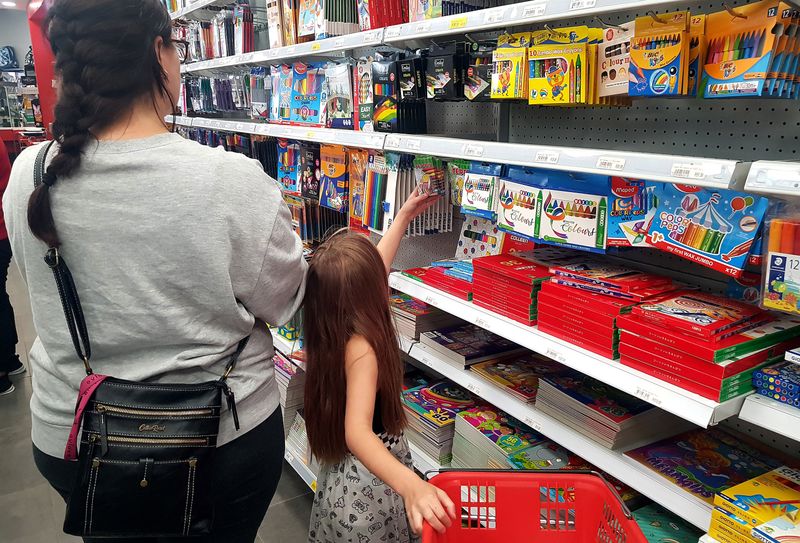
For many South African families, the cost of sending a child to school begins long before the first bell rings. Uniforms, stationery, transport, meal costs and school fees can arrive in the same month, forcing households to decide what can be postponed and what cannot.That pressure is growing. Public primary school fees rose by 6% and public secondary school fees by 5.7% between 2025 and 2026, according to the Competition Commission.According to Riaan van der Bergh, Deputy Chief Executive Officer of the Federation of Governing Bodies of South African Schools (Fedsas), many fee-charging public schools are expected to raise fees by between 7% and 10% in 2027.“A range of increases between 7% and 10% seems applicable in various schools that we interacted with,” he said. “Outliers at the top will increase fees by 12% and 15%.”Van der Bergh said more parents were expected to apply for fee exemptions in 2027, with some already indicating at the admission stage that they intended to apply for relief before their child had even started school.Why school costs are outpacing inflationAccording to the Fedsas Centre for Finance and Risk Management, school fees often rise faster than the Consumer Price Index because headline inflation does not reflect what it costs to run a school. A school’s biggest expenses – staff salaries, municipal rates, electricity and water – have climbed faster than general inflation, eating into the money left over for textbooks, learning support and basic upkeep.While schools can temporarily plug the gap by delaying maintenance or cutting programmes, Fedsas warned that doing this year after year created a growing backlog that eventually undermined teaching quality.Principals at fee-paying schools say the pressure is coming from several directions at once.A principal at a Gauteng-based school said that, like households and businesses, schools were experiencing increasing financial pressure because of rising operational costs, citing fuel prices, municipal tariffs, electricity, water, maintenance and educational resources.“The cost of providing quality education continues to rise, while schools must remain mindful of the financial circumstances of the families they serve. It is not possible to function without an increase,” said the principal, who asked not to be named as he was not authorised to speak to the media.Another Gauteng-based principal said his school was increasing fees by 7% to cover rising operational expenses and maintain standards.“To attract and retain top talent, the school must offer salary packages and increases that are competitive. Water security, upgraded facilities, laboratories, computer centres, software licences and digital learning platforms were also becoming more expensive,” he said.What parents are sayingWhile public schools operate under governing body budgets and statutory exemption rules, parents across both public and independent schools face the same squeeze – and the pressure goes well beyond tuition fees alone, with uniforms, stationery, transport, meal costs and “optional” extras arriving all at once.Daily Maverick spoke to a mother with two children at a Johannesburg private school. She explained that one of her children was in matric and, in addition to school fees, required IEB examination fees and start-of-year levies.“To be honest, my salary, school fees and stationery demands are not balanced at all,” said the mother, who asked not to be identified to protect her children’s privacy.She said fee increases had become a yearly reality, forcing the family to cut back on groceries, clothing and family holidays, while frequently dipping into savings to cover back-to-school costs.“It went up again, the way it did last year and the year before, and you will probably pay it, because the alternative is uprooting a child who has friends, a routine and one more year to get through, and you want them to have the best education possible,” she said.The pressure is also creating barriers at public schools. In one case documented by SECTION27, a Grade 8 learner was initially unable to enrol at a fee-paying public school after being told that a R12,000 registration fee had to be paid upfront. The school reportedly did not offer instalments and said fee-exemption applications would only open later in the year. After SECTION27 intervened, the learner’s caregiver was granted a full fee exemption and the registration fee was waived.Under the South African Schools Act, parents who cannot afford fees at a fee-paying public school may apply for a full or partial exemption. Schools may not charge registration or administration fees beyond school fees, nor may they unfairly discriminate against a learner in admission because their family cannot afford fees. Parents who are denied a fee-exemption form, told to pay an upfront registration fee, or threatened with exclusion over unpaid fees can appeal directly to their provincial education department’s head of department – or approach legal advocacy groups such as SECTION27 for support. Until those rules are enforced consistently, however, many households will continue absorbing the rising cost of keeping their children in class. DM
BUDGET SQUEEZE: School fee hikes force parents to dip into savings and cut essentials
Full Article
Original Source
Read the full article at Dailymaverick →KhanList aggregates and links to publicly available news content. We do not host full articles from third-party sources. Always verify important information with original sources.