
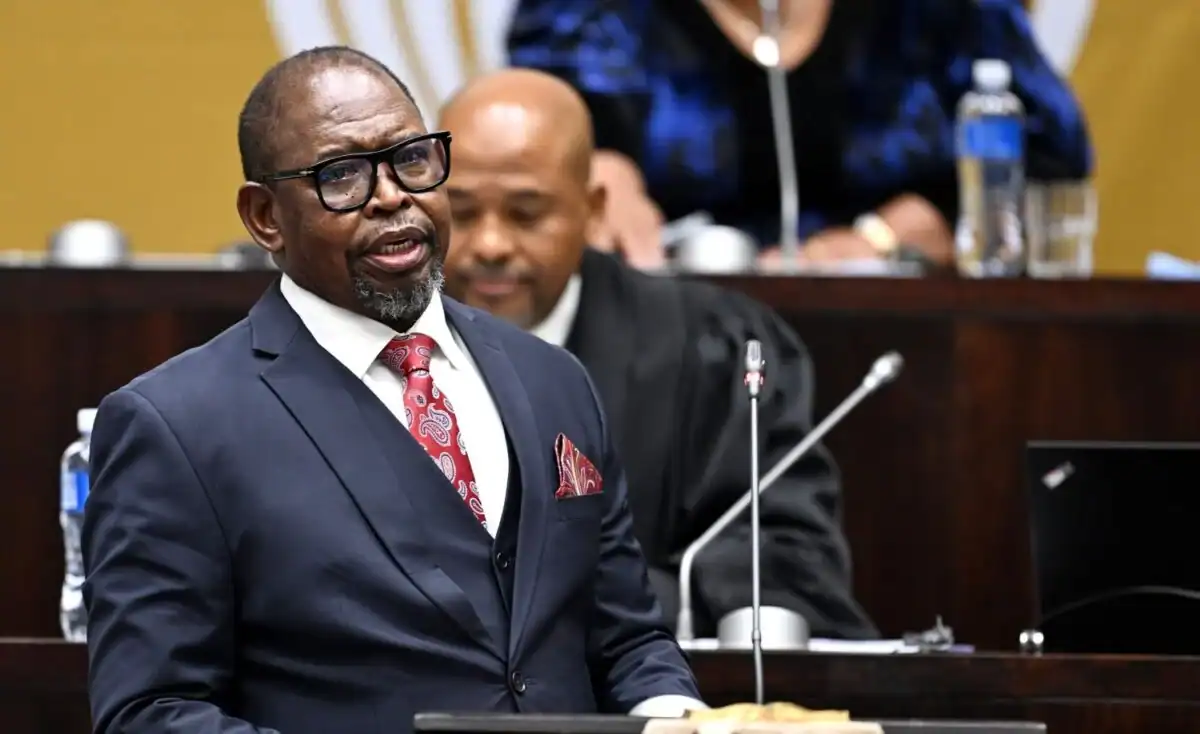
Civil society organisations lambasted Finance Minister Enoch Godongwana's MTBPS for failing to address the needs of the poor. Civil society organisations have lambasted Finance Minister Enoch Godongwana’s medium-term budget policy statement (MTBPS), accusing him of failing to address the needs of the poor. But economists struck a more positive note. Tax relief windfall and temporary fuel levy cut will burden ordinary taxpayers Civil society bodies said even the tax relief windfall and temporary fuel levy cut will ultimately burden ordinary taxpayers, as government continues to raid public pockets while reducing spending on essential services, worsening the situation for the most vulnerable. United Democratic Front (UDF) national convener Jo Mboweni said the minister had “forgotten the downtrodden,” particularly the 54% of youth unemployed. He criticised the budget for sidelining black and informal businesses and non-profit and non-governmental organisations that support vulnerable groups. Mboweni said the speech was delivered amid widespread retrenchments under Section 189 of the Labour Relations Act, while MPs themselves had just approved salary and perk increases for themselves. The UDF, a struggle-era movement which repositioned itself as a citizen’s mouthpiece during its 40th anniversary, blamed South Africa’s ballooning sovereign debt on reckless borrowing from international lenders such as the World Bank and International Monetary Fund. It said servicing the debt would mean harsher tax enforcement, especially for black businesses, and lamented the absence of subsidies for township economies. Budget entrenches austerity and market-first policies The organisation also highlighted the neglect of the National Health Insurance, collapsing education centres and the plight of unemployed graduates. Aliya Chikte, of the Alternative Information and Development Centre, said the budget entrenches austerity and market-first policies. “Growth has been cut to 1.2% this year, down from an already paltry 1.6% forecast in February,” said Chikte. “The fuel levy relief will be wiped out by an even larger fuel price hike in November. She added the celebrated primary surplus comes at the expense of collapsing municipalities, overcrowded clinics and shrinking free basic services. She said the new principles-based fiscal anchor Godongwana announced threatens to hard-wire austerity into the state, forcing any new spending to be offset by cuts elsewhere. “The R70.8 billion tax windfall goes straight into the pockets of bankers and lenders, not into public services,” said Chikte. Govt’s books are healing faster than household’s budgets She added promises of relief after debt stabilisation have been broken, with surpluses now projected until 2030. But economists struck a more nuanced tone. Wealth manager at Consult by Momentum Jurgen Eckmann said the government’s books are healing faster than households’ budgets. “Debt has stabilised at 78.4% of gross domestic product and is now falling, and the deficit is a little better than February’s forecast. That’s good news for the long run, but doesn’t put money back in your pocket this month,” he said. Eckmann hailed the fuel levy cut but urged perspective: “It takes R1.50 a litre off petrol from 4 November, about R75 on a 50-litre tank. But forecasts point to another increase in November, so the cut may only soften the blow. “Diesel gets more help, at R3 a litre, but relief ends in January, right when bills pile up.” Warning against relying on temporary tax windfalls He also warned against relying on temporary tax windfalls, advising households to build emergency savings in a slow economy. Nkosinathi Mahlangu, employment and entrepreneurship specialist at Momentum Group Foundation, said stabilising public finances is encouraging, particularly the commitment to infrastructure investment. But he questioned how this would translate into jobs. “With growth revised down to 1.2%, the challenge is turning fiscal progress into meaningful employment opportunities for young South Africans,” he said. From the energy sector, David McDonald, CEO of SolarAfrica, said the MTBPS shows progress on commitments. He highlighted the incorporation of the Credit Guarantee Vehicle, with $553 million (around R9.2 billion) in conditional capital commitments, as a step towards unlocking private investment in infrastructure.
Budget slammed for forgetting poor as organisation criticise MTBPS
Full Article
Original Source
Read the full article at Citizen →KhanList aggregates and links to publicly available news content. We do not host full articles from third-party sources. Always verify important information with original sources.