
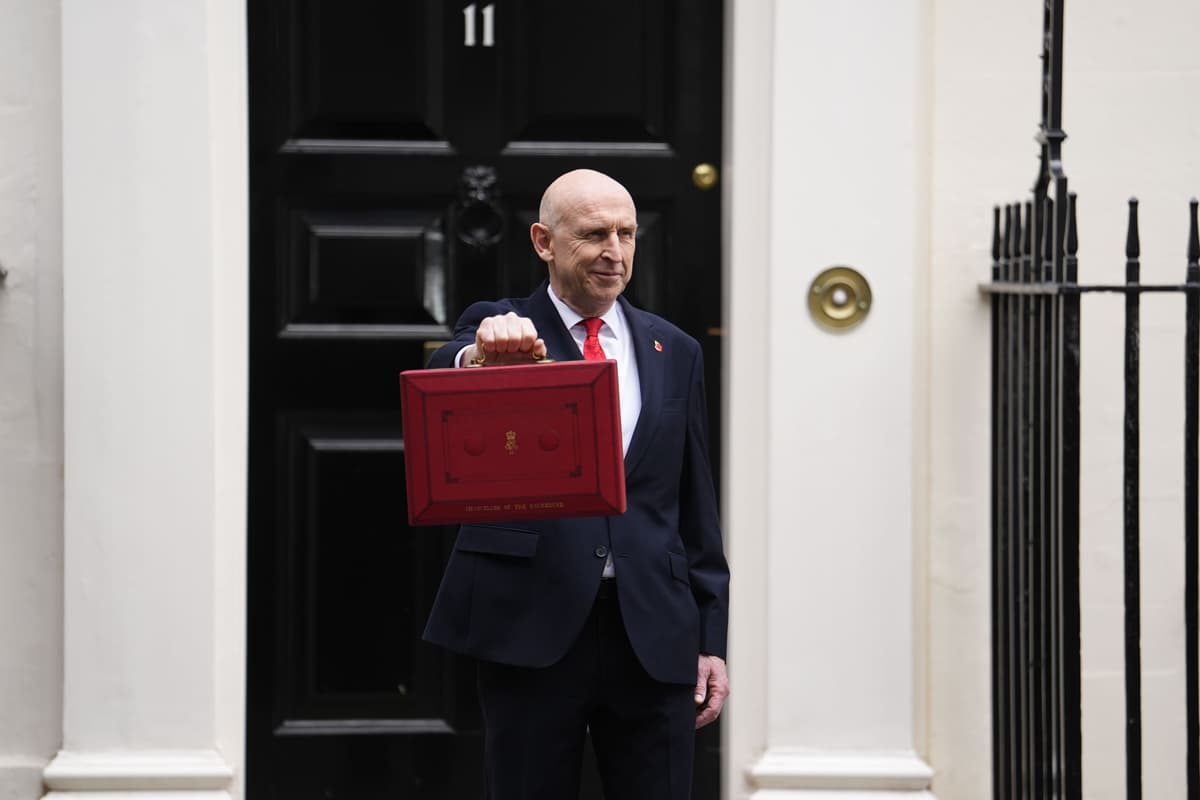
John Healey is due to set out the Government’s tax and spending plans, in full from 12.30pm today as he delivers his first Budget as Chancellor on Wednesday.One of the key announcements was shared just before 7am: Standing charges on gas bills, which cover the cost of delivery to homes and businesses, will be scrapped from 2027 “or as soon as possible after”.This chimes with the Chancellor’s promise of introducing some “breathing space” for households and businesses.The Chancellor has begun delivering his Budget in the House of Commons.It is John Healey’s first autumn statement since taking over the role from Rachel Reeves after Andy Burnham became Labour leader and Prime Minister.The Chancellor has left No 11 Downing Street, where he posed for the traditional photos holding his red Budget box and flanked by his Treasury ministers, including minister for pensions Torsten Bell, economic secretary to the Treasury Lucy Rigby, financial secretary to the Treasury James Murray, chief secretary to the Treasury Emma Reynolds, exchequer secretary to the Treasury Dan Tomlinson and treasury Lords minister Lord Pitt-Watson.John Healey with his Treasury team (Jordan Pettitt/PA)PA WireHolly Mackay, chief executive officer of Boring Money, believes the U-turn on Isa limits will be “hugely beneficial to the nation’s overall financial health”.She said: “If indeed the Chancellor reverses this change, I think that’s a hugely positive move. This was going to add cost and complexity with little evidence of any behavioural change.“Fear of loss is the main deterrent to investing and we will not fix this by restricting access to cash.”Meanwhile, Katie Horne, banks relationship manager at Flagstone, said: “We’re continually told we don’t save enough, and cutting the threshold would only have punished rather than rewarded those who do.“Saving and investing are not mutually exclusive adversaries. They are collaborative partners in an active financial management plan.“On top of needing to understand market dynamics to some degree, investing requires a certain risk appetite too – something that, for many, takes years to build, and then declines significantly as they get older.”Mr Healey is reportedly planning to reverse the decision to slash the annual Isa allowance from £20,000 to £12,000 in his inaugural Budget.Read MoreMr Healey is said to believe the allowance cut was the wrong tool to persuade Britons to invest more in stocks and shares and would rather look to educate savers on the benefits of equity investing, according to the Financial Times.Rachel Reeves before delivering her budget last November (PA)PA ArchiveFormer chancellor Rachel Reeves announced the Isa cut for savers aged under 65 at the autumn budget last year, with the change set to come into effect in April 2027, as she looked to encourage investment in the stock market.Prime Minister Andy Burnham said: “Abolishing gas standing charges is about basic fairness and giving people more control over their bills.“I am determined to reform our broken energy market, so it better serves the public interest.”An early visitor to No 11 Downing Street was MoneySavingExpert founder Martin Lewis. The consumer champion has been urging the Government to remove standing charges to make energy costs more fair.In a video message ahead of the autumn statement, the Chancellor said: “This Budget is designed to give households breathing space from some of the everyday costs, provide targeted support for businesses and self-employed people, and to start the long-term action needed to get energy costs down for good.”He acknowledged the country was facing a “difficult moment” and promised changes would be made “responsibly” within Labour’s fiscal rules.Mr Healey will have limited scope for big giveaways because of stretched public finances, made worse by international market turmoil caused by the Iran war.He is sticking with the fiscal rules set by predecessor Rachel Reeves, requiring day-to-day spending to be financed by taxes rather than borrowing by 2029/30 and that public debt as a share of the economy should fall in the same year.
Budget Live: Chancellor John Healey to set out ‘breathing space’ plans
Full Article
Original Source
Read the full article at Standard →KhanList aggregates and links to publicly available news content. We do not host full articles from third-party sources. Always verify important information with original sources.