
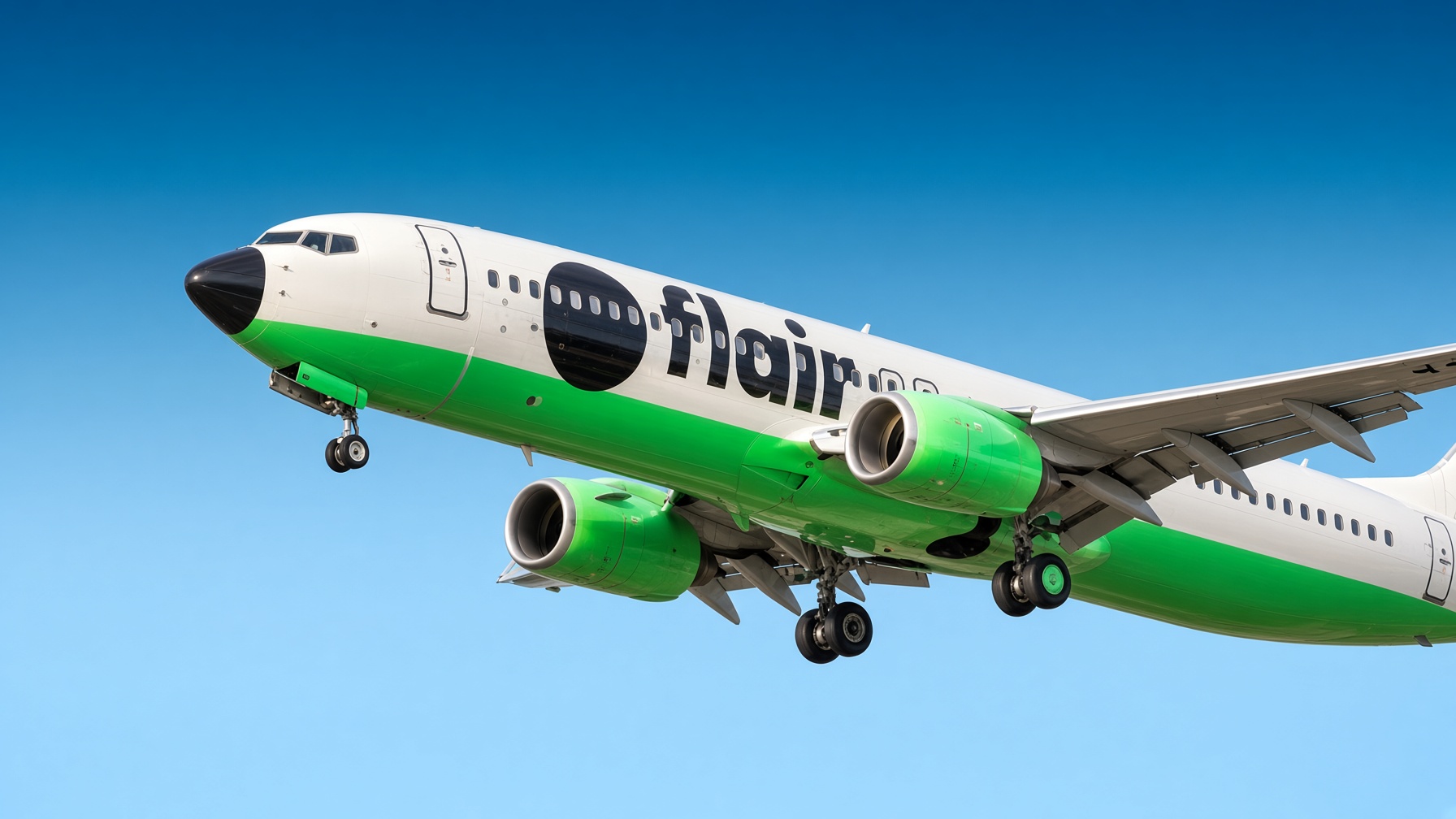
The financier behind Australia’s failed Bonza and a major backer of Canada’s Flair has pleaded guilty to a $500 million fraud. Prosecutors tied his firm’s Boeing jet purchases to money obtained using bogus collateral, while other lenders were shown bank records doctored with Microsoft Paint. Josh Wander, the 45-year-old co-founder of Miami-based 777 Partners, pleaded guilty Thursday to wire fraud and securities fraud. He’s agreed to forfeit at least $500 million. His plea agreement specifies a sentencing range of 27 to 40 years, although the judge will decide his sentence on March 1, 2027. 777 was supposed to help build a collection of discount airlines around the world. They’d order aircraft in bulk, supply planes and financing to their airlines, and grow. In March 2021, Boeing announced an agreement for 24 MAX 8s, with purchase rights for another 60. By the July 2022 Farnborough Airshow, Boeing was announcing orders and commitments reaching up to 134 MAX aircraft. Boeing’s then-commercial airplanes chief Stan Deal praised 777’s “tremendous success establishing new carriers worldwide.” According to the Financial Times, prosecutors say 777 obtained an additional $40 million from a lender to help finance the 2021 Boeing deal by listing structured-settlement assets it claimed to own but hadn’t purchased. I flagged questions about 777’s airline investments back in July 2023. Less than a year later, Bonza stopped flying when its aircraft were repossessed. 777’s original business was buying the right to receive future payments from legal settlements. Someone entitled to years of payments could take a smaller amount of cash today. Through SuttonPark Capital, the group bought those payment streams, borrowed against them, and packaged them into securities. The Securities and Exchange Commission’s complaint says SuttonPark generated $184 million in net income in 2020, while the combined group generated only $69 million. Its other businesses were consuming much of the profit. Wander expanded into airlines, football clubs and entertainment. The group didn’t have enough money for everything he wanted to buy, so restricted financing from the settlement business went toward acquisitions and expenses elsewhere. According to prosecutors, employees warned him about the spending and the restrictions on using those funds. The criminal indictment describes how they concealed the shortfalls: 777 pledged assets it didn’t own. They pledged the same assets to more than one lender. Employees altered bank records to show cash that wasn’t there. Before a lender visited to inspect its collateral, assets already pledged elsewhere were temporarily reassigned in the company’s records, then moved back. One fake screenshot, prepared using Microsoft Paint, purported to show roughly $8 million in cash when the relevant accounts actually held less than $500,000. When a lender confronted Wander about double-pledged assets in 2023, he blamed the firm’s old computer system and said it had been inadvertent. The group was also raising money from investors. The securities regulator alleges that a $237 million preferred-equity offering was sold on the claim that profits would support a 10% annual dividend, while a roughly $300 million credit facility overdraw was concealed. About $33 million of offering proceeds allegedly went personally to Wander and co-founder Steven Pasko. Meanwhile, 777 had acquired interests in football clubs across Europe, Brazil and Australia. There was insurance money behind the expansion, too. Advantage Capital Holdings, known as A-CAP, was a major financier of 777 and controlled life insurance and annuity companies. I covered the fight over downgrading those insurers in 2024. Money supporting insurance promises had become exposed to the fortunes of an investment group buying airlines and sports teams. 777 and related entities filed for Chapter 11 protection in August. The bankruptcy disclosures laid out $2.7 billion of financing obligations. Bonza began passenger flights in early 2023 and lost its aircraft on April 30, 2024. Its local managers said they believed the business was progressing toward being cash positive later that year, until the planes were taken away. The administrators’ report found recurring losses, insufficient funding from 777, poor decisions about ticket distribution, costly wet leases and inadequate financial modelling. And some of Bonza’s apparent capital hadn’t actually been paid in. Oops. Topics on this page
Budget Airline Group Ordered Boeing Jets—Now A Co-Founder Is Guilty Of A $500 Million Fraud
Full Article
Original Source
Read the full article at Viewfromthewing →KhanList aggregates and links to publicly available news content. We do not host full articles from third-party sources. Always verify important information with original sources.