
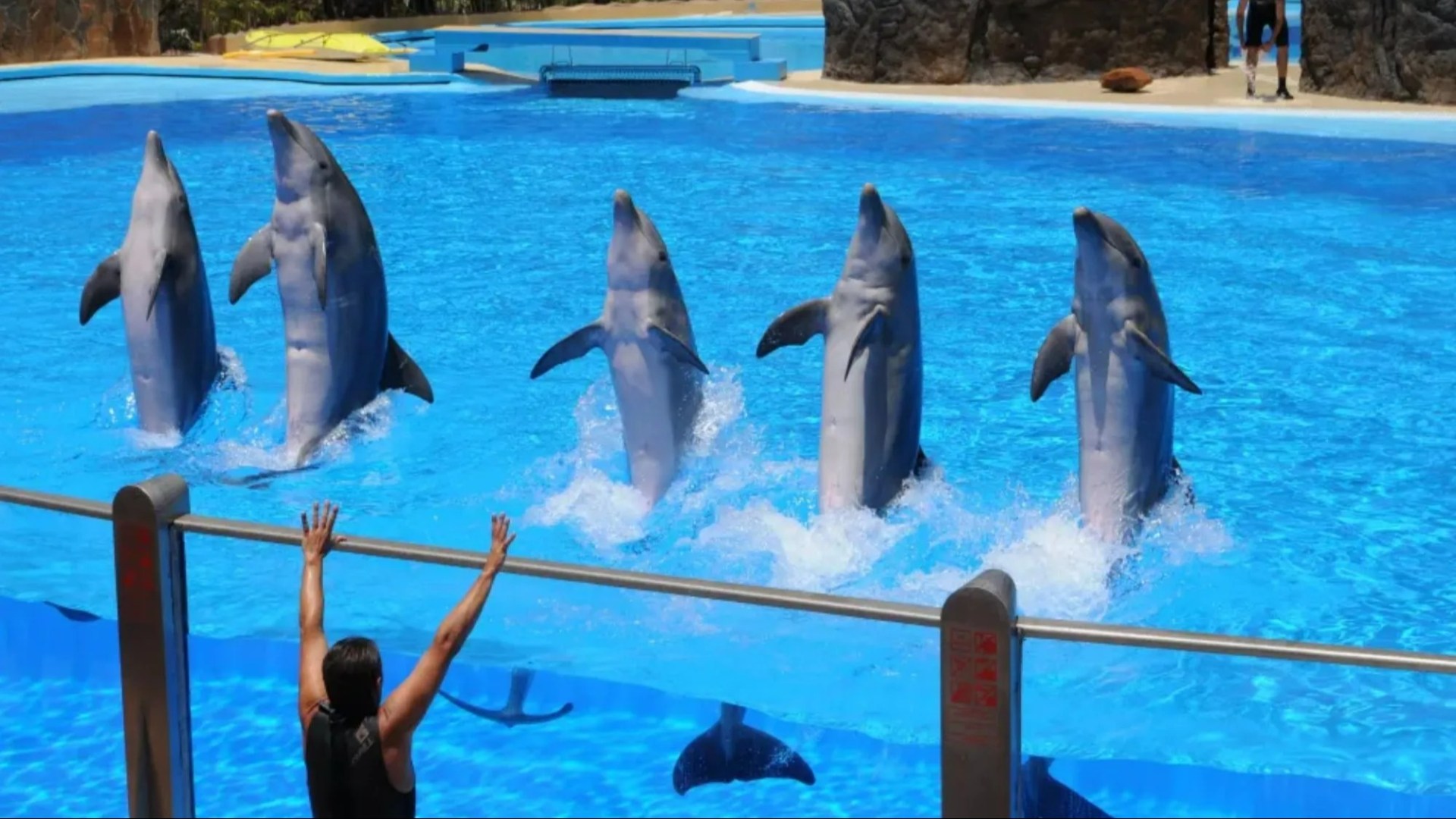
COVERED in scars and visibly distressed, a bottlenose dolphin poses for photos with tourists before being forced to perform tricks to a cheering crowd. Later, they’re returned to a tiny concrete tank, where loud music blares constantly. This is the brutal reality behind Europe’s dolphin shows, with unwitting Brit tourists paying to watch them. PETA says using dolphins as ‘ride-on toys’ can cause serious harm to the animals Credit: Shutterstock Dolphins at attractions across Europe are forced to perform Credit: Getty It is estimated that more than 3,700 whales and dolphins are being held captive across 345 facilities in 56 countries around the world – many snatched from the wild for entertainment, with bottlenose dolphins the most commonly held species. Confined to tiny tanks, the animals can become so distressed that they self-harm – including slamming their heads against their enclosures, teeth grinding and refusing to eat – with animal rights campaigners describing their existence as a “living death”. While the UK’s last Dolphinarium closed its doors in March 1993 and Canada, Chile, India and Costa Rica also banning dolphin shows, many European countries still allow them – and continue to flog tickets to the public, including Brits. Scores of celebs, including Kim Kardashian, Kimberley Walsh and Wayne and Coleen Rooney, have also faced criticism for paying to swim or pose with dolphins on luxury trips. PETA’s Vice President of Programmes Elisa Allen says: “These bright, complex, ocean-going mammals experience living death in tiny cement boxes and, unlike the tourists whose money keeps these attractions running, they never get to leave. “Instead of exploring vast stretches of ocean, caring for their young, forming lifelong bonds, and conversing with each other, captive dolphins are forced to perform tawdry tricks and subjected to noise, stress and unwanted human handling. “PETA urges everyone to keep their money in their pockets or risk keeping these pits of animal misery afloat.” In the wild, dolphins can roam freely in territories spanning more than 100km, but in captivity, they are often confined to tanks of less than 5,000 square feet. Animal rights campaigner Marketa Schusterova says many captive dolphins have damage and scars on their bodies Credit: SeaWorldOfHurt.com She claims dolphins are often not medically well looked and appear thin Credit: DolphinProject.org According to PETA, the result can lead to severe mental distress, with dolphins displaying repetitive behaviours, such as head bobbing and pacing. In May, horrifying drone footage was shared of six dolphins at The Hyatt Ziva Cancún resort, where the former swimming pool is rented to dolphin experience company, Delphinus. The dolphins were seen floating listlessly, and swimming in circles. While Mexico is one country to ban dolphin shows, due to a 18-month legal transition phase which ends later this year, dolphins are still being held captive. “These dolphins are in shallow tanks, have no escape, no shade, suffer from a constant barrage of disco music, and then at night a laser show keeps them awake,” says Marketa Schusterova, co-founder of animal rights group TideBreaker, who captured the footage. “They are not medically looked after well, appear thin, have damage and scars on their bodies, and they are clearly distressed.” Responding to the claims, a spokesperson for Hyatt Ziva Cancún previously said a third party Delphinus was responsible for the creatures, saying: “We understand the concerns raised regarding the dolphins at the resort. “Delphinus is an organisation accredited by Mexican authorities and international agencies and is responsible for the care of the dolphins, including support from trained animal care and veterinary professionals.” Palmitos Park in Gran Canaria, which has six male dolphins, has also come under fire from tourists who claim they witnessed trainers dragging the mammals and allowing children to kick them. One visitor said: “The dolphins were in the pools with the tiniest amount of space to roam free and in the show they looked uncomfortable.” Another said: “The dolphins were made to take pictures with the public for up to 40 mins before the show, the trainers towards the end were dragging the dolphins by their mouths to get them into position, one kid actually kicked the dolphin twice.” Another park using the animals for entertainment is Loro Parque, Tenerife, which advertises trick shows with their dolphins Pacina, Luna, Ilse, Clara, Achille, Ulisse and Ebu. With 2.7million Brits visiting Tenerife each year, many are likely to visit the park, probably not knowing the true scale of alleged cruelty behind the shows. In 2023, The Dolphin Project publicly criticised the way the 33-acre wildlife park and zoo treated and paraded its aquatic mammals in front of an 1,800-capacity theatre. PETA says being confined to tanks can cause severe mental distress Credit: DolphinProject.org In 2016, former Towie star Sam Faiers came under fire for posting pictures of herself taking part in a swim experience in Portugal Credit: ITVBe Kim Kardashian is one of many celebs to have swam with dolphins Credit: Instagram Danny Groves from Whale and Dolphin Conservation says there is no ethical reason to keep dolphins in a concrete tank Credit: Shutterstock The performances were said to include dolphins jumping over poles, spinning on platforms and balancing upside down in the water while waving their tail flukes at the audience. In one shocking stunt, trainers would even use the dolphins as ‘ride-on toys’, which PETA has warned can cause serious harm and damage to the creatures, including impairing their hearing. Dolphin encounters are not just popular with tourists – celebrities have also helped give the controversial attractions a glossy image by posing for pictures and swimming alongside the animals. Reality TV star Sam Faiers found herself at the centre of a social media storm some time ago, after posting pictures of herself and her family taking part in a Dolphins Emotions swim experience at the controversial Zoomarine in Guia, Portugal in 2016. The park had faced animal welfare allegations, including claims that dolphins were made to tow a small boat carrying children around the pool and were used as selfie props, with visitors able to kiss, hug and stroke them. Speaking at the time, Sam defended the experience, saying: “To me they were being well looked after and fed, they had the biggest swimming pool to swim in.” However, Zoomarine has since appeared on World Animal Protection’s list of 12 zoos globally to avoid. The £950million Atlantis, The Palm on Dubai’s glitzy Palm Jumeirah is another celebrity hotspot for dolphin encounters. When the mega-resort opened its doors in 2008, it pulled in a glittering crowd of celebs and royals, including Oprah Winfrey and The Duchess of York, but its dolphins soon became the centre of a storm over animals being used for entertainment. Danny Groves from Whale and Dolphin Conservation, says: “There is no ethical reason in today’s world to keep dolphins and whales imprisoned in a concrete tank for their entire, shortened lives where they are forced to perform tricks to entertain us. “What people who go to these shows often do not realise is the cruelty that their ticket money helps to perpetuate.” And it appears attitudes are changing towards using dolphins as tourist attractions. For example, UK holiday firms Jet2 and Easyjet have ended ticket sales to marine parks and other attractions offering dolphin experiences – while TUI has come under fire for not doing the same.
Brutal world of dolphin shows with tormented ‘self-harming’ animals crammed into tiny concrete tanks and kicked by kids
Full Article
Original Source
Read the full article at Thesun →KhanList aggregates and links to publicly available news content. We do not host full articles from third-party sources. Always verify important information with original sources.