
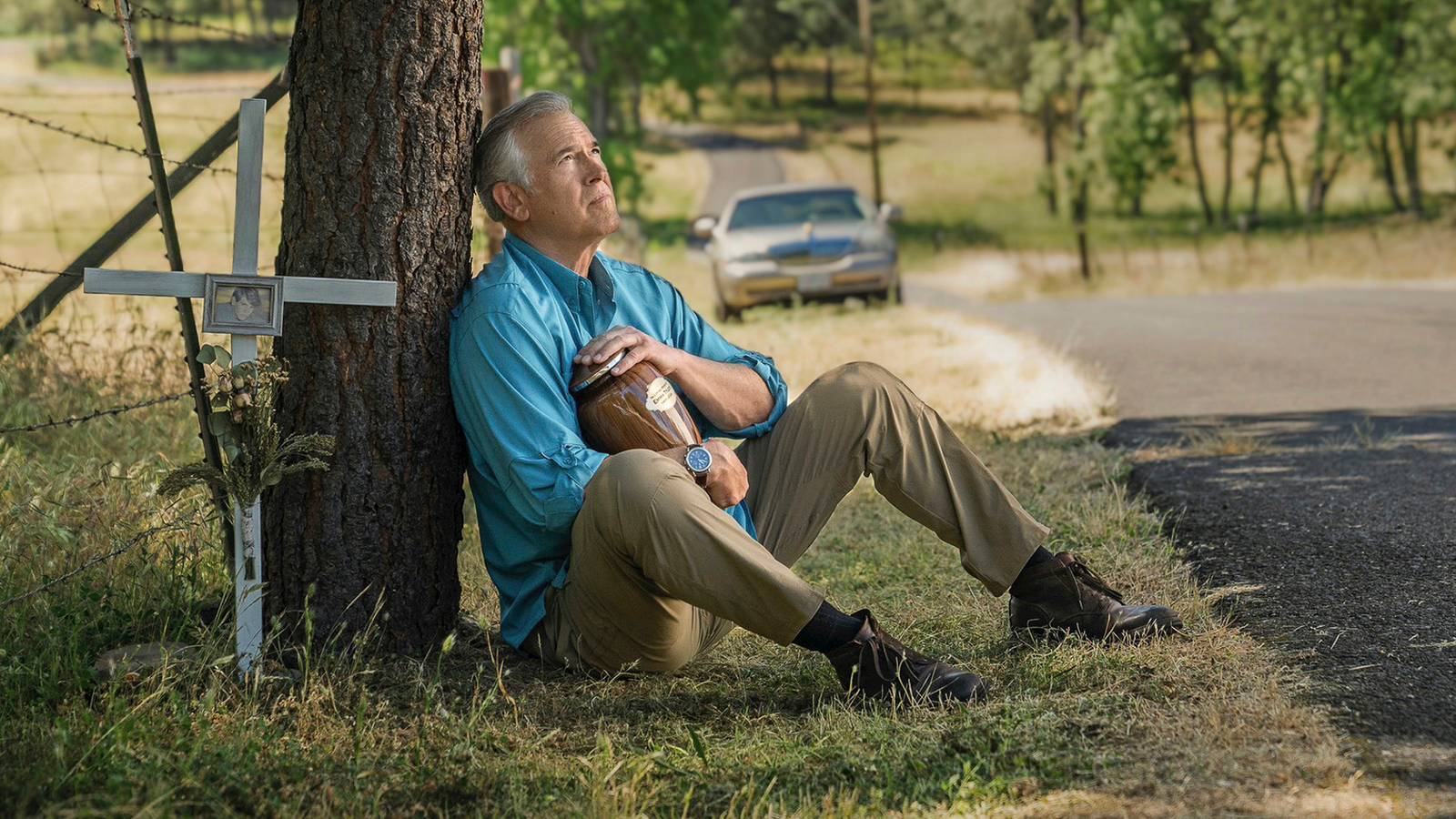
Published Aug 15, 2026, 10:00 AM EDT Grant Hermanns is a TV News Editor, Interview Host and Reviewer for ScreenRant, having joined the team in early 2021. He got his start in the industry with Moviepilot, followed by working at ComingSoon.net. When not indulging in his love of film/TV, Grant is making his way through his gaming backlog and exploring the world of Dungeons & Dragons with friends. Sign in to your ScreenRant account After nearly 20 years, Bruce Campbell is back in the director's chair for Ernie & Emma. Campbell memorably broke out in the world of acting thanks to his leading turn in Sam Raimi's original Evil Dead trilogy as the chainsaw-wielding Ash Williams, while also gradually expanding his involvement behind-the-camera as a producer on the horror franchise and other projects. He would later make his feature directorial debut with the 2005 sci-fi comedy Man with the Screaming Brain, and followed it up shortly thereafter with the meta horror-comedy My Name is Bruce. Now, Campbell has returned with Ernie & Emma, in which he wrote, directed, produced and stars as Ernie Tyler, a former pear salesman whose life is thrown into disarray with the death of his wife from a terminal illness. In the midst of his grief, he receives a letter from Emma, in which she directs him to a safe deposit box full of letters, in which she directs him to different locations from their past to spread her ashes, as well as encouraging him to try new experiences, giving him a new lease on life. As the movie gears up for its nationwide Alamo Drafthouse tour, ScreenRant's Grant Hermanns interviewed Bruce Campbell to discuss Ernie & Emma. When asked about how personal the film was compared to his previous directorial projects, Campbell acknowledged that one of the key inspirations for his new dramedy is his real-world marriage to producer Ida Gearon, being married to her for 35 years, the same amount of time the eponymous characters are: Bruce Campbell: There's no way in hell those are all going to be good years, because professionally, I'm going through stuff. Personally, I'm going through stuff. She's going through stuff. Marriages sometimes go like that [makes hand gesture of both hands drifting apart] over the course of 10 years. You don't even know what happened. Next thing you know, you go, "Wow, where'd you go?" So, long marriages, I can relate to that, I'm in a long marriage. Campbell further cited his father as being a major point of inspiration for Ernie & Emma, sharing that, similar to his titular character, his dad was "a Detroit Mad Man," particularly in working as the account supervisor for Marathon Oil. Unfortunately, also like Ernie, Campbell's father "got fired" beyond his prime in the industry, namely due to the fact he lost the once-prominent oil company account, and led to the star having "watched him shaking in his boots" as he tried to figure out his next steps. Campbell's father went on to "reinvent himself" and got "his last job at this lower-rent ad agency," where the genre icon went on to "do a crappy commercial for him," but that he was "very happy" to be part of them, given he was a young actor at the time. He even sought to pay tribute to this by including a brief clip from one such commercial in his new film: Bruce Campbell: I took a couple of shots from one of those commercials [and put them] in the movie. When Ernie's watching TV at night, he flashes through one of those commercials, where my dad is the old ad guy, and I'm the young actor. So, I had a lot of sympathy for that. I also watched the auto industry take a s--t in front of my eyes. I used to go to all the factories as a production assistant, working on commercials, and industrial training films and stuff. The pear industry where I live now, in Southern Oregon, is taking a s--t. Climate change, all that, everything's coming in. So, it used to be beer and meth in my valley, now it's weed and wine. So they're clicking up. They're a couple clicks up now, but I've seen it change. We have Ernie walking through an old orchard, where all the pear trees have been cut on their side. We just shot it as it was. They're cutting these orchards down, ripping them up, and putting in wine. Bigger cash crop. And weed. You can have a life in the pear industry if you have infrastructure, you have equipment, you have fields, [but] Harry & David's not buying from you anymore, because they can't. That's got to be weird, because I think American farmers aren't walking around with stacks of cash in their pockets. These people are living pretty close to the bone, and when that happens, what do they do? As an actor, I'd go, "Well, I'll do community theater, or I'll go do radio spots." There's stuff that you can try and do, but if you're a farmer, what do you do next? Farm, I guess, farm something else. Farm wheat, farm wine. One of the things that further enticed Campbell to finally make the jump back into the director's chair for Ernie & Emma is, as he puts it, "who's writing the big fat parts?" He clarified that while he does get plenty of offers for genre fare, he generally "turn[s] the sci-fi/horror/fantasy stuff down," citing the Sharknado sequels as an example, and feeling that "people are amazed that I would turn that down." But it's not just about having a big meaty role for him to play. Campbell is now "more interested in doing real stories about people," and also prefers "to work a lot differently than modern directors," explaining that he "can move so much faster," particularly in putting together "a lean crew" rather than an extensive roster. Wanting to be a director who works efficiently so that "your crew can go home and get some sleep" rather than "driving into a ditch because you worked them so hard," the Evil Dead alum even cited Christopher Nolan's The Odyssey as an example of a style of filmmaking he never wants to be part of: Bruce Campbell: I hear on The Odyssey, they had to stop filming because everyone was basically dead. They had killed their crew, they killed their cast. It's like, that's fine, and I'm sure the movie's amazing. I haven't seen it, but that's not the experience I'm looking for. I'm looking for a very short, intense burst of creative output, and then boom, you walk away from it, and you fight with the army you got. Would there be things I'd change about that movie? Hell yes. But am I gonna? No, I'm not gonna do a George Lucas and go back and fix stuff. I'm willing to accept it. It's a time capsule. Every movie that people make is a time capsule. Evil Dead, seeing the rubber, green garden hose spewing the blood, that's a perfect time capsule of the army that we fought with when we shot that night. We thought that was good enough, that it was going to work. Campbell Brought 1 Major Lesson From Previous Directing Experience Into Ernie & Emma Screen Rant: Bruce, this film was so charming. I love little slice-of-life movies like this, it got me emotional in parts, I was laughing in plenty of other parts. To start with, this is your first time directing in almost 20 years since My Name is Bruce, and you have worked with so many directors in the time since, both in film and TV. I'm curious if you learned or gleaned any lessons from those other directors in the time since you brought to Ernie & Emma. Bruce Campbell: Oh yeah, always. I steal stuff. I steal techniques, I steal procedures, I steal methodologies. New Zealand ruined me a lot, because it taught discipline. I started directing Hercules and Xena in '94, and I did about six years of both of those shows. They like to go home. The crew likes to go home at 7 p.m., so you don't get to do all these hours. It taught me to be a very disciplined filmmaker, because you write your shotlist out, and the assistant director could actually put a time next to each shot and go, "This is where you kind of want to be, buddy." And you could look at that three times a day and go, "Whoa, whoa! I got to pick up the pace here!" Or you go, "Oh, good! I can mess around with this scene a little more," because you can plan out your day. You get back to the States, every Friday was "Fraturday," because they would shoot such long hours. They couldn't force your call [time] as an actor, so they had to keep pushing and pushing it and pushing it, because it costs them $950 if they break your turnaround. So, if you shoot 14–16 hours, you have to let the actor have 12 hours off, or you pay them. So, each call time rolls later and later during the week, so Friday, your call time is at noon, you're going to work till two in the morning [on Saturday]. It's a Fraturday. That's stupid. That's stupid filmmaking, and I don't know why these guys get away with it. It's even worse now. The last TV show I did was the worst culprit of all, as far as time-wasting, and taking way too long to do s--t that they didn't need. It's sort of part of the reason why, out of my rage, I go, "Okay, f--k this. I'm doing my own thing. This is ridiculous. It doesn't have to be like this." I was starting to become the guy, the fist-shaking older guy. You know, "In my day, in my day, this is how we did it." I learned discipline in New Zealand. I learned to be relaxed from France. I did a movie in France called La Patinoire, The Ice Rink. Completely weird, random movie. On Monday, you started at noon, because they figured you would want to come back from wherever you were over the weekend. You might need time to get back into town. Rosé on the table at lunch. I'm like, "Wait, isn't everyone supposed to be yelling at each other on a film set?" So, they showed a different way to do it, and that was very, very eye-opening. A buddy of mine had worked with Clint Eastwood. The way he works is incredibly efficient. He's done it, you know, 3 o'clock every day. I think we did like 7–5. We did about 10-hour days, because filmmakers love to brag, "We did 18-hour days." I'm like, "Then you're an idiot, and you're not trained, and you don't have your s--t together, because it shouldn't take that long." It only takes that long if you're trying to figure stuff out on the day. Making Evil Dead, we got one shot a day. We'd be fired now. We'd all be fired if that wasn't private money. We would have all been fired, every single one of us, except me, because I'm on camera. It would be too expensive to replace me. Campbell Did One Thing He Laments Never Getting To Do On His Genre Projects Screen Rant: So, talking about wanting to tell real stories and play real people, one thing that I loved about this film was just the way that you explore different variations of grief, from the highs of making jokes and getting on the other side of things, to the lows of confronting past demons. I'd love to hear, when you were writing it, what was it like really finding that perfect balance in the tone? Bruce Campbell: I think I dictated most of it, most of the movie, because a lot of it is talking, so I could just get ruminating from Ernie about certain stuff. I've worked on movies that are so disjointed, because special effects movies are a series of a million little pieces, and so you make a movie [like] Army of Darkness. "And action," boom, boom, clank, clank, clank, swoosh, "Cut! That's scene 3220 8E, storyboard 1A." You get no sense of momentum. You have to rely on guys like my buddy Sam Raimi, that he's going to see the pieces of the puzzle that you're going to be where you need to be in that piece. I like getting continuity in a scene. I've got long scenes that play out, and Ernie basically goes to this abandoned pear facility to have his Willy Loman speech about how he got fired because he stopped giving a s--t. He just didn't give a s--t about his job anymore, and it's a fairly long piece. I thought, "Well, I'm going to get the different angles, but every angle, I'm going all the way through the scene. I'm doing the whole scene, every word of it, all the way through from every angle, so that I have choices in editing, but also so that I can get the flow." I hate not being able to get into the rhythm of a scene. Ash vs. Evil Dead, the last hurrah for Ash and all that, you have 20 seconds of dialogue, and then something's going to happen. You'd have to stop and reset, bring the demon in, hook up the blood tubes, reset. Nothing ever played all the way through, nothing flowed, and you have to accept that as an actor. That you're going to be in little tiny pieces all day long. That's just the way it is, and after a while, you go, "Okay, I don't really matter. You do your little bits, your little gags, and then move on." So, it's just a completely different style of acting and directing. I like to get out of there, man. I want my crew to be happy and healthy and satisfied. So, I don't want to waste their time. I don't want them wasting my time. So, I hired the guys that I needed to in order to get it done. My buddy Kurt Rauf, who shot the movie, he's got a whole Vegas camera team. I'm like, "Kurt, bring your whole team. Let's go. We're making the movie, because I need to get it. I need to hire professionals who are going to get your work when you need them to get it." Not, "Oh sorry, Bruce. We got to go again. Something happened halfway through." If you hire the right people, that doesn't happen. So, that was important to me. If I got the scene right, I wanted to be able to know that we got it. It's like working with Ted Raimi. Ted has a lot of unexpected joys, and you want to get his coverage, and you want to get it, you want to capture it. Ted's lightning in a bottle. You want to catch it, and same with me. I gotta run at it. There's a scene where Ernie's at the hospital, and he's gonna go spread her ashes, but then he turns back, and he just let her have it. "Screw you for going first. You f---ed me up." The take that's in the movie is probably the middle of three takes, because the first one, I got to get up, I got to get going, I got to get up to speed. So, no one cuts it until I say cut. So after the first take, I'm like, "Okay, go back to one." So now, my blood's already pumping, and I can start to see it again, a little more engaged. Directors don't know that if they're not me, they don't know what I'm thinking, and they don't know what would work best for me. That's no fault of theirs. Everyone has their systems, but sometimes you can use the first take to get yourself ready, to get yourself like I'm not there yet, and then to do another one. On Ash vs. Evil Dead, we did that. My buddy Rick Jacobson, who directed some of the best ones, I would go, "Rick, let's do three. I'm saying goodbye to the team, so I'm going to give you a high, a medium, and a low. One is a straight, tough guy goodbye. One is somewhere in the middle, and the third one is where he has a real problem saying goodbye to these people." So, we did all of it while the camera's rolling, because it just keeps the crew active. Guy with a boom pole, he's not going to have a cigarette. He's right there. He can't move either. So, it really helps compress that. Campbell's Creative Freedom On Ernie & Emma Has Left Him Wanting To "Do [My] Own S--t" Bruce Campbell: And not every director works that way. I like working how I like to work. So, the only way to really do that is just do your own s--t. So, I think from here on out, I will. It's very unlikely for me to be on somebody else's film set, and I'm trying not to sound like an a----le. I just like my own thing now, and I've been ruined along the way by certain things. This project has really ruined me completely, because it's given me the freedom that I've always wanted since the first Evil Dead. We have never had this much creative freedom since the first Evil Dead. First Evil Dead was private money; they couldn't even come on set if we didn't want them to, because they had no administrative duties. We were the general partners, it says it on a piece of paper, legal document. "You're a limited partner. You're limited to what you can do. We're general partners." So, starting with our second movie, I got kicked out of the lead. They recut the whole movie. They wouldn't use Joe Loduca, on and on and on and on. And after that second movie, Crimewave, which no one has really seen because it bombed so horribly, I was like, "Oh my God, is this the business? I think this is the business." We hadn't seen the business, because Evil Dead was our poster. Sam goes, "You're going to star in it." It's his cut. There's no director's cut for Evil Dead. There's one cut. It's our cut as partners, as filmmakers. It's the one that we want. It's our logo, it's our title. We took the photograph for the poster. I mean, everything was ours. And then the second movie, nothing was ours. I have to say, it was incredibly depressing. Aside from getting kicked out of the part, that was its own wake-up call of like, "Wait, this isn't a slam dunk?" I had to audition for it. On camera, Sam shot a 16 millimeter audition, which I'd love to see. That would be gold. And they said no. They saw the audition, and they're like, "No." And I was like, "Oh my god." So there's been this 40-year period where we've been operating in a world, even famous guys like Sam Raimi, who are very successful, have a lot of approvals of their movies. You don't control it all. So, this is the first time in 40-some-odd years that I'm crawling back into the womb. [Chuckles] That's what I call it, because that's when it was fun, and I wanted to be fun again, and I want the process to make sense. I sat in on one of these development meetings for one of these Evil Dead movies, and the director turned in a 10-page outline of, "Act One, Act Two, Act Three. This is how it might progress." And he got 20 pages of notes on the 10-page outline. I'm like, "I don't have time to sit through all this." I looked at the director about halfway through the notes, and we both started laughing. We couldn't help it. We were like, "This is so absurd." Because development people do what they do, right? No harm, no foul. You're hired to read a script and give notes. If you don't give notes, they fire you. So you're going to give notes. Not all of them are good. Some are good, many are just not appropriate or too early or whatever. So, to not have to go through that process was really fun. Campbell Avoided Test Screening Ernie & Emma For 1 Particular Reason Bruce Campbell: We got to the point where I even think I had a crew member comment on a scene that they weren't too sure about, and I went, "Okay, I need to lock this picture, because I'm not getting any outside ideas." At one point I thought, "Let's do some test screenings at an old folks' home and a university." I had both near me, so I did a real simplified questionnaire, because I thought, "These studio ones are too obnoxious. I'm going to do a good one." And halfway through it, I went, "What are you doing? Do you really care what someone at a rest home thinks about Act Two?" [Chuckles] "Or that there's a guy at the university that goes, 'Your structure is a little weak.' Do you really care what someone who's not in your business thinks?" Because that's what they do at previews. They get unemployed people and recruit them to come and see a free movie, and then they ask them all kinds of questions. "What's your favorite scene? What's the scene you hated the most, and why? What's your favorite character? Which character did you like the least?" There are responses that can get actors cut out of movies from unemployed people at malls. That's not right. And look, [this is not a] perfect movie, not a chance, not even close. But it's my movie, and if you're in the arts, why the hell are you in the arts if you can't do your art? I really want to act how I want to act. I want to write what I want to write. I want to direct how I want to direct. It's kind of that simple. And for filmmakers, all you have to know: put up your own money. And if it's not your own, make it private. Get a private investment, find an uncle who's a banker in your family. You're going to find a banker somewhere in your family. Go talk to him. Investment guy, go talk to him. Somebody, go find a lawyer, put a thing together, because it will be the only thing that gives you freedom. And this is no aspersions on the studios, but they will not give you creative freedom, because there's too much at stake, because they put up the money. Every dollar that's higher that they put up — they put up $100 million, they're going to have 100 million reasons to be nervous. You put up a million, you're going to have a million reasons to be nervous. So, you're still going to get someone breathing down your neck, and the studios assign someone to you. And maybe they're a good assignee, but maybe they're an idiot. You can't control that, either. So, I like not being able to complain. I love to complain, and I put myself in a position where I can no longer complain. Because I would stomp around the house telling my wife, "One day, you know, one day," and she was like, "When's that happening, dude? Don't you think it should happen sooner rather than later?" I'm like, "Are you serious?" She's like, "Are you serious?" I'm like, "Yeah, I'm serious." She goes, "Then shut up and do it, but shut up." So, she was good about making me shut up. Ernie & Emma begins a nationwide Alamo Drafthouse tour on September 4, starting in Los Angeles and ending on November 14 in Denver! Release Date September 4, 2026 Runtime 88 minutes Director Bruce Campbell Producers Ida Gearon Cast Ted Raimi Persnickety Dance Instructor Robin McAlpine Emma (voice)
Bruce Campbell Is Back To Directing After 19 Years With Ernie & Emma, And He Doesn't Want To Go Back
Full Article
Original Source
Read the full article at Screenrant →KhanList aggregates and links to publicly available news content. We do not host full articles from third-party sources. Always verify important information with original sources.