
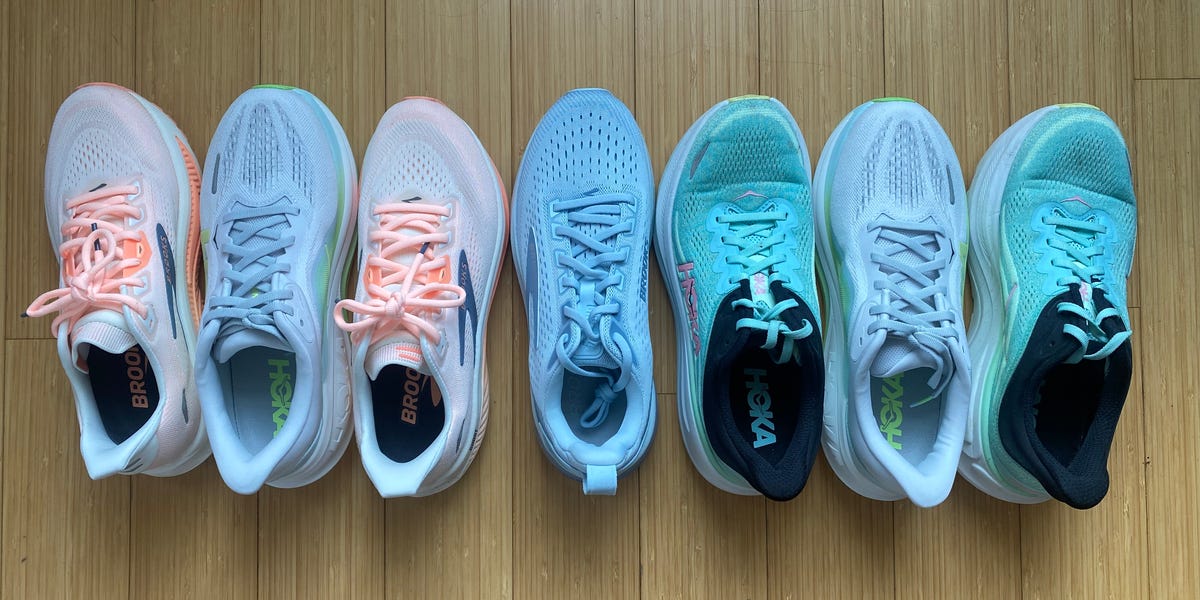
10 min readFor years, I ran cross country and track for a sponsored team. Meaning, I was told the running shoe brand I needed to wear all day, every day, and that was that. But once I graduated, I was able to choose whatever running shoes I wanted—and I had no clue what to wear.I know I’m not the only runner who has faced the dilemma of picking a new running shoe. But while there are a ton of amazing brands out there, many people find themselves weighing the Brooks vs. Hoka decision. Both brands have phenomenal reputations thanks to the durable, quality shoes each makes. And both have an arsenal of shoes that are certified by the American Podiatric Medical Association (APMA) to support foot health, so there really isn’t a wrong decision.But while you’ll find hardcore stans of each brand, they are different. Hoka has really carved out a name for itself with its highly cushioned shoes, points out Melissa Lockwood, DPM, a podiatrist at Heartland Foot and Ankle Associates in Bloomington, Illinois. “That continues to be a big part of [the] appeal,” she says. “Many runners love that feeling of having more cushioning between their foot and the ground, particularly if they are logging a lot of miles or spending long periods of time on their feet.”Korin MillerLet the testing begin.Brooks shoes have more of a reputation for being a workhorse. “Brooks is one of the tried-and-true running shoe brands,” says Richard H. Graves, DPM, a podiatrist at Sol Foot & Ankle Centers in Long Beach, California. While these serve up plenty of cushioning, the midsole (middle layer of the shoe) tends to be more of a standard thickness, he says.Another perk of Brooks, per Graves: “They’re known for staying consistent with [the] popular core models and making only minor changes and updates when they bring out the new product lines each year.”But each running shoe is designed to meet a need, points out Suzanne C. Fuchs, DPM, a podiatrist at Luxe Podiatry in Jupiter, Florida. That’s why she recommends that you, “think about the problem, not the brand.” If you’re not dealing with any injuries or concerns, Fuchs suggests focusing on how you plan to use your shoes and working your way up from there. Because the best shoe for trail running is very different from what you’ll need if you’re planning to do speed work.All of that said, you don’t necessarily need to choose sides. I have multiple Brooks and Hoka shoes in my closet, and each serves a different purpose. Choosing the right running shoe is a big deal—these will support your training (and your feet), after all.To help you narrow the field, we’re breaking down the best options for Brooks and Hoka across a range of categories. We leaned heavily on personal experience, along with input from podiatrists and a running coach. Start your search here.Brooks vs. Hoka: Best Daily TrainerA daily trainer is a workhorse shoe. This is the shoe you reach for most days. It can handle long miles, along with speed work. But most of all, this shoe is durable and comfortable. A daily trainer is here to support. If you only have room in your budget for one shoe, this should be it.Korin MillerTesting the Brooks Ghost 18The Brooks Ghost 18 is my go-to daily trainer and has been since it rolled out in May. Brooks’ Ghost line is a neutral shoe, making it a good fit for most people.It feels soft but not overly plush, and delivers support without feeling like it’s corrective. Basically, you can consider this the Goldilocks of daily trainers. Brooks built a crash pad—a section of foam built into the bottom of the shoe—to support smooth transitions as you run, and there’s RoadTack rubber on the outsole for durability and traction.I’ve worn the Ghost 18 on regular runs on wet and dry pavement, along with light trails and sand. I’ve never had an issue with footing or the shoe wearing down. But my favorite thing about the Ghost 18 is that I forget I’m wearing them. These shoes are here to support my daily runs, and it’s a role they do well.Korin MillerTesting the Hoka Clifton ProDon’t confuse the Hoka Clifton Pro with the Clifton 11. While they share the Clifton name, these are different shoes.The Clifton Pro is a performance-driven shoe with a more pronounced rocker shape on the bottom that gently rolls you forward with each step. You can feel the shoe nudging you on as you go, which makes you feel just a little faster on those daily runs.I find that’s especially helpful on days when I’m tired or just had a hard speed workout. It almost feels like it’s doing some of the work for me. The toe box is roomy and you still get that signature Hoka cushioning, making this a solid choice for those daily runs when you feel like you could use a little something extra.Brooks vs. Hoka: Best for WalkingIf walking is more your speed, both brands have plenty of options to consider. A good walking shoe should feel supportive and cushiony, but not overly cushioned. (You don’t need as much padding underfoot with a walking shoe, and too much cushioning can lead to instability.) But many running shoes work great as walking shoes with no issue, which is why you’ll see brands like Brooks and Hoka have shoes that serve double duty.Korin MillerTesting the Brooks Ghost Max 4Brooks’ Ghost Max line has been a favorite for years of people who crave a sturdy, stable shoe. This shoe will help to keep you in line without feeling overly corrective.You can wear the Ghost Max 4 for walking and running, too. The sneaker has a rocker bottom sole with a slight curve to help propel you forward with each step.As the name implies, it’s also well cushioned. But the Ghost Max 4 uses Brooks’ signature GuideRails technology, which delivers firm foam on either side of your heel for a stable, locked-in feel you won’t necessarily get with other highly cushioned shoes.It’s comfortable and lightweight, and the Ghost Max 4—which just rolled out—is even lighter than past versions.Clifton is one of Hoka’s most popular lines for walking and running. “Hoka has done a great job with styling, so staples like the Clifton have become a go-to for young runners for running and for everyday wear,” says running coach Kim Clark. The Clifton 11 just rolled out, with a slightly lighter weight than the Clifton 10. It also feels a little more plush under your feet and has a slightly smoother ride, whether you’re walking or running.This shoe is comfortable enough for all-day wear thanks to a soft, compression-molded EVA foam midsole. Overall, the Clifton 11 is a great walking shoe that can handle runs whenever you want to pick up the pace.Brooks vs. Hoka: Best for Tempo RunsThe best shoes for tempo runs are lightweight and snappy, giving you a good energy return without feeling overly bouncy. You still want support and cushioning, but in a lighter package. A stable base is also important, allowing you to take curves and turns at a fast pace.Brooks released the Hyperion Max 4 in July, although the line has been around for years. This shoe is considered a “super trainer,” allowing you to seamlessly transition between tempo runs, fast workouts, and even long runs.But the Hyperion Max 4 really shines on tempo runs thanks to its bouncy midsole with a flexible nylon plate for a snappy feel when you pick up the pace. It also has a more aggressive rocker shape than some other shoes, which helps to propel you forward and make speed work feel a little more seamless.If you liked the Hyperion 3, just be aware that the upper is redesigned in the Hyperion 4—there’s a separate tongue and plusher padding around the collar over the former sock-like bootie design. It’s a slightly more comfortable feel without sacrificing any of the speed or responsiveness the Hyperion line is known for.Hoka’s Mach 7 toes the line between delivering the brand’s signature cushioning and a speedy shoe. Since too much cushioning can give you a sunken-in feeling with each step—the opposite of what you want when you’re trying to move fast—Hoka scales back a little with this sneaker without sacrificing comfort.The Mach 7 is lightweight, with a grounded feel, allowing you to have more controlled movement and traction on your tempo runs. It also creates a smooth, responsive ride, allowing you to pick up the pace in a natural way.One major highlight of the Mach 7: It has durable rubber at the heel and stickier rubber up front, giving you a really nice grip. That makes this shoe extra helpful on wet tempo days.Brooks vs. Hoka: Best for Distance RunsCushioning is king for distance runs to keep you comfortable as you rack up the miles. But you also want a stable feel and secure fit, so you’re not stressed about your footwear moving around you as you go. Naturally, durability is a must—these shoes have to be up for a lot.The Brooks Glycerin Max 2 is one of Brooks’ most highly cushioned shoes, making it a natural fit for long runs. This is a neutral shoe—meaning, it works well for most people who aren’t struggling with foot or gait issues.The Glycerin Max 2 uses Brooks’ signature GlideRoll rocker for smooth transitions, giving you an easy ride. The shoe is soft, but not so plush that it feels like your sneakers are swallowing your feet.It also offers maximum support, which you’ll appreciate as your mileage goes up. Because this shoe has extra cushioning, it’s slightly heavier than some others on the Brooks line. But I found the comfort this shoe delivers is worth the slightly extra weight.Like the Clifton line, Hoka’s Bondi 9 has a devoted fanbase. This shoe is super cushiony—it’s Hoka’s most cushioned road running shoe—and is made to feel incredibly comfortable and cozy underfoot. Like the Glycerin Max 2, all that extra cushioning means slightly more weight. But it’s not so much that it drags you down or even really feels noticeable.The Bondi 9 has a wide base for extra stability and it delivers an almost bouncy feel on runs. (That’s not for everyone, but I really appreciate it underfoot when I start to get tired.)This shoe also runs slightly big, so keep that in mind if you decide to go with the Bondi 9. Because it’s so plush, I also really enjoy walking around in the Bondi 9 after long runs—it just feels good.Brooks vs. Hoka: Best for TrailsTrail running shoes are just built differently. They tend to be slightly heavier than road shoes, with deeper lugs (those nodes that protrude out of the bottom) for extra grip. Many will have thicker, higher rubber in the toe cap to protect your footwear, along with added features to keep pebbles and dirt away from your feet. Trail shoes don’t usually work well on roads, but you’ll appreciate their special qualities when you’re running on uneven ground.Trail running shoes can sometimes miss the mark, ending up with a hefty weight and bulky build that seems to drag you down. But Brooks really nails it with the Cascadia 20, which has everything you want for running shoes in a trail-ready package. This sneaker has Vibram Megagrip traction, which uses high-performance rubber to help you get and keep your footing.The shoe uses nitrogen-infused DNA FLASH v2 foam for a soft impact and good energy return. But while it delivers a grounded feel, you don’t notice every rock and pebble underfoot.There’s a sturdy, high toe cap that protects and extends the life of your shoes, too. The upper feels breathable and the overall feel of the shoe is lightweight (for a trail shoe). While I wouldn't wear it on road runs, this is my go-to while tearing through trails near my home.Trail running shoes come in a wide range of cushioning levels, but the Speedgoat 7 manages to deliver plenty of signature Hoka support underfoot without sacrificing speed. This shoe is a lower profile option than most other Hoka shoes, keeping you closer to the ground (and creating a more stable feel in the process).This sneaker offers a firm, locked-in feel, so you don’t feel like you’re sliding around while you’re navigating rocky terrain. A Vibram Megagrip outsole creates a sticky feel on wet and dry ground, so footing just isn’t an issue. These shoes are also surprisingly comfortable, which I can’t say of all trail shoes.A nice perk: The Speedgoat 7 is gaiter compatible, so you can attach one before especially messy runs and simply remove it when you don’t need it.Brooks vs. Hoka: Best for Race DayThe right shoes for race day offer qualities that are pretty unique. You want something lightweight and incredibly responsive, allowing you to feel more like a gazelle as you bound your way to a PR. Good rocker geometry is important to give you a feeling that you’re propelling forward with each step. Naturally, comfort and a good fit is crucial, too.Brooks just dropped the Hyperion Elite 6 in early August, making it the latest in this line of race day-ready shoes. The Hyperion Elite 6 has a redesigned carbon plate—which is basically like a springboard for your shoes—and RapidRoll rocker for a faster feel and smooth forward motion.It’s really lightweight (under 7 ounces) and just feels fast. Of course, the price tag isn’t for everyone. If you’re craving a speedy shoe but are more of a beginner or budget racer, consider the Brooks Ghost Amp. It’s lightweight and springy—and significantly cheaper.Hoka’s Cielo X1 3.0 manages to combine impressive cushioning with that carbon-plated springiness you want in a race shoe. The end result is something that’s comfortable enough for half marathons and marathons, but still speedy enough to wear while working your way through a 5K.This shoe has a refined heel geometry to keep you stable as you go, along with a MetaRocker to support your stride. Like the Brooks Hyperion Elite 6, this is not a cheap shoe. If you like the sound of the Cielo X1 3.0 but hate the price, consider the Hoka Mach X 3. It has a snappy carbon plate and lightweight feel to support your race-day speed.Korin Miller is a seasoned freelance writer specializing in general wellness, sexual health and relationships, and lifestyle trends, with work appearing in Men’s Health, Women’s Health, Everyday Health, Food & Wine, and more. She has a master’s degree from American University and lives by the beach.Natascha is an editor and writer covering health, fitness, and the ways people move through the world. She’s been a NASM-certified personal trainer for more than a decade, with a background in functional strength training, corrective exercise, nutrition, and behavior change. She has additional CES, CNC, BCS, and SFC certifications. She is also a level-2 certified Spinning instructor. Her work has appeared in Bicycling, Runner’s World, and other outlets, and her experience spans both editorial and hands-on work across the fitness industry. Whether she’s writing about training, health, or performance, she’s most interested in making complicated topics useful, approachable, and helpful.
Brooks vs. Hoka: How Do the Two Running Shoe Brands Compare?
Full Article
Original Source
Read the full article at Womenshealthmag →KhanList aggregates and links to publicly available news content. We do not host full articles from third-party sources. Always verify important information with original sources.